Scientists Discovered a Supplement That Repairs Aging Mitochondria (500–1,000 mg)
FoundMyFitnessPublished on September 14, 2026
Summary authored by editor@wellifi.com
TLDR Summary
Urolithin A is a compound linked to improved mitochondrial health and potential anti-aging benefits, primarily derived from ellagitannins in certain foods. Due to individual differences in gut microbiome composition, supplementation may be a more effective way to achieve therapeutic doses.
Key Points
- Urolithin A is produced from ellagitannins found in foods like pomegranates and walnuts.
- The conversion of ellagitannins to urolithin A depends on gut microbiome composition.
- Supplementation is a reliable way to achieve therapeutic doses of urolithin A.
- Effective doses range from 500 mg to 1,000 mg daily.
- Urolithin A enhances mitochondrial health through mitophagy, improving energy production and exercise performance.
Understanding Urolithin A: Benefits and Sources
Introduction
In the quest for longevity and enhanced health, urolithin A has emerged as a compelling compound worth exploring. Recently, it has gained attention for its potential anti-aging properties, support for mitochondrial health, and anti-inflammatory effects. In this post, we will delve into what urolithin A is, its natural sources, the importance of gut microbiome, and the benefits of supplementation.
What is Urolithin A?
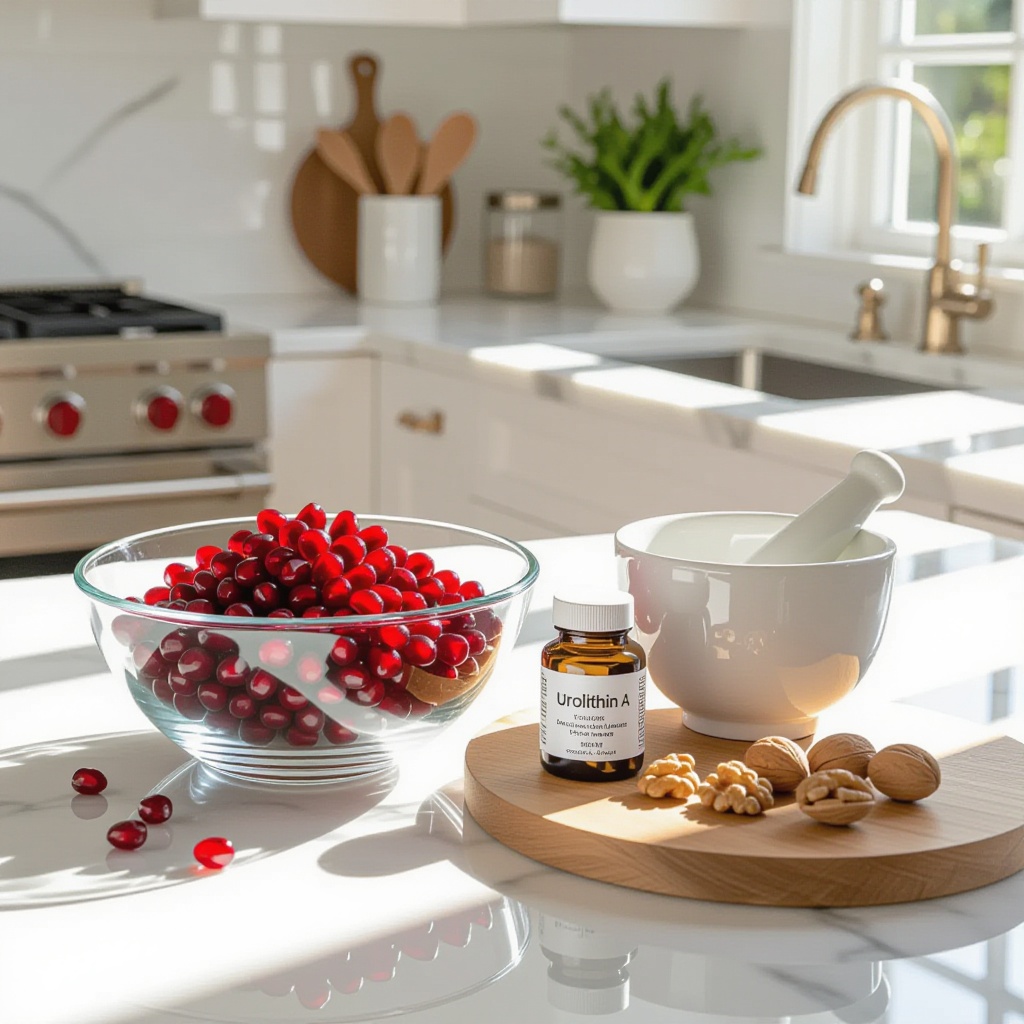
Urolithin A is a naturally occurring molecule that our bodies produce from specific polyphenols known as ellagitannins. These polyphenols are found in various fruits and nuts, such as pomegranates, raspberries, walnuts, and pecans. However, the conversion of ellagitannins into urolithin A depends heavily on the composition of our gut microbiome, meaning not everyone can efficiently produce this compound from dietary sources.
Gut Microbiome and Individual Variation
Recent studies indicate significant individual variation in urolithin A production. For instance, a 2022 crossover study found that only 12% of participants had detectable levels of urolithin A at baseline. Even after consuming pomegranate juice, only 40% of participants produced high levels of urolithin A, while 30% produced none. This variability highlights the importance of having a diverse gut microbiome, particularly a favorable Firmicutes to Bacteroidetes ratio, which can enhance the odds of urolithin A production.
Supplementation: A More Predictable Approach
Given the challenges of obtaining urolithin A through food alone, supplementation offers a more reliable method for achieving therapeutic doses. Research suggests that an effective dose ranges from 500 mg to 1,000 mg per day, with 1,000 mg likely providing the most benefits. To match 500 mg of urolithin A through food alone, one would need to consume approximately 1.5 liters of pomegranate juice daily—a daunting task, especially for those who are low producers of this compound.
The Benefits of Urolithin A
Urolithin A is primarily recognized for its role in enhancing mitochondrial health through a process called mitophagy. This process involves the removal of damaged mitochondria, which is crucial for maintaining cellular energy production and overall health. Mitochondrial dysfunction is associated with various health issues, including neurodegenerative diseases like Parkinson’s disease.
Research Findings
- Preclinical studies in aging mice show that urolithin A improves muscle function and increases running capacity.
- A randomized controlled trial indicated that middle-aged adults taking 500 mg of urolithin A daily for four months experienced improvements in mitochondrial markers in muscle biopsies.
- Another study found that athletes taking 1,000 mg of urolithin A could perform more repetitions before fatigue, suggesting enhanced exercise performance.
- Urolithin A has been associated with reductions in oxidative stress and inflammation, promoting better overall metabolic health.
Conclusion
Urolithin A presents a promising avenue for improving mitochondrial function, enhancing exercise performance, and potentially supporting longevity. While more research is needed, individuals interested in exploring this compound may consider supplementation, particularly in doses ranging from 500 to 1,000 mg daily. As with any supplement, it is advisable to consult with a healthcare professional before starting.
The brand currently being discussed for supplementation is MitoPure, although individuals may want to research other quality options that might be more affordable.