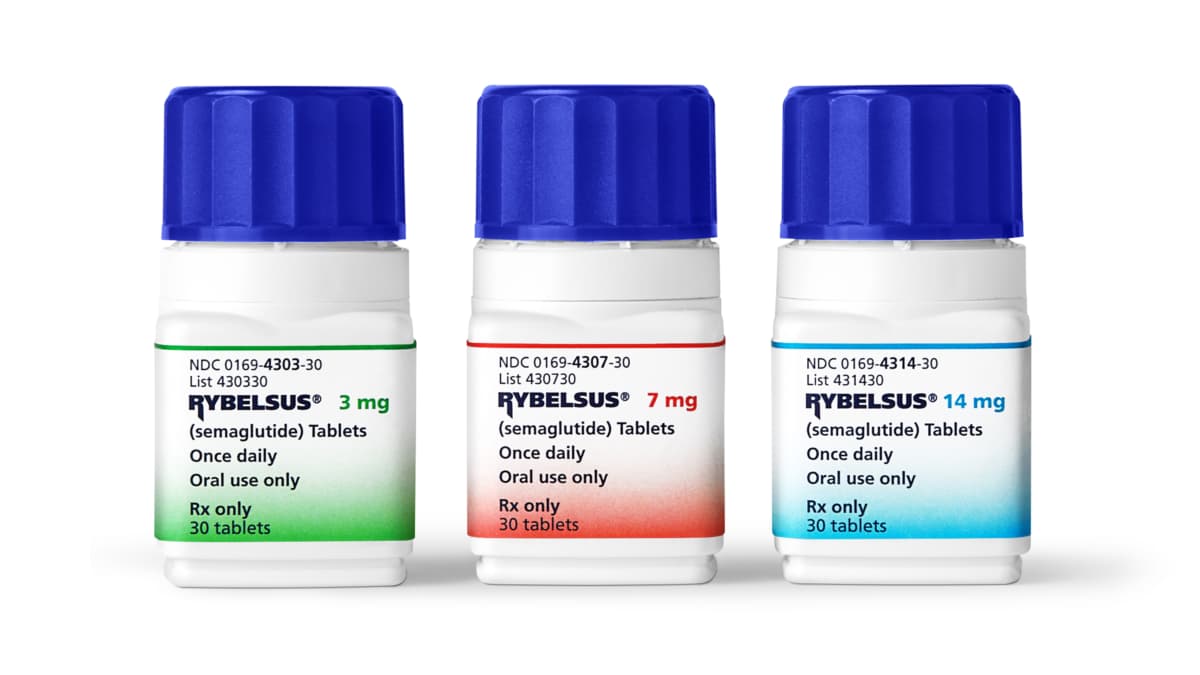
Rybelsus: A Revolutionary Oral Treatment for Type 2 Diabetes
Rybelsus is an oral glucagon-like peptide-1 (GLP-1) receptor agonist, a class of drugs that mimic the action of the body's own GLP-1 This hormone helps to regulate blood sugar levels, making Rybelsus an effective treatment for type 2 diabetes.
Supplement Summary
| Name | Rybelsus |
|---|---|
| Category | Blood Sugar Support |
| Main Uses |
|
| Effectiveness | High effectiveness in blood sugar control and cardiovascular risk reduction. Moderate effectiveness in weight loss support. |
| Common Dosage | 14 mg once daily |
| Price Range | $$$$ |
| Forms Available | Tablets |
Pros
- ✅ Effective blood sugar control
- ✅ Reduced cardiovascular risk
- ✅ Weight loss support
- ✅ Once daily oral administration
- ✅ Lower risk of hypoglycemia compared to some other diabetes medications
Cons / Side Effects
- ❌ Potential gastrointestinal side effects
- ❌ Need to be taken on an empty stomach
- ❌ Not suitable for people with a history of medullary thyroid carcinoma or Multiple Endocrine Neoplasia syndrome type 2
- ❌ Not recommended for type 1 diabetes
What Is Rybelsus?
Rybelsus is an oral glucagon-like peptide-1 (GLP-1) receptor agonist, a class of drugs that mimic the action of the body's own GLP-1. This hormone helps to regulate blood sugar levels, making Rybelsus an effective treatment for type 2 diabetes.
How It Works
Rybelsus works by stimulating the release of insulin, a hormone that lowers blood sugar, and by suppressing the release of glucagon, a hormone that raises blood sugar. It also slows down gastric emptying, leading to a feeling of fullness which can support weight loss.
Who It's Best For
Individuals with type 2 diabetes, particularly those struggling with weight management and/or cardiovascular disease.
Who Should Avoid It
People without diabetes, those with type 1 diabetes, or those with a history of specific thyroid cancers or syndromes. It should also be avoided during pregnancy.
Dosage & Usage Tips
The typical dosage is 14 mg once daily, taken on an empty stomach at least 30 minutes before the first meal of the day.
Buying Advice & Quality Tips
Rybelsus is a prescription medication. Always consult your healthcare provider for personalized advice. Ensure your pharmacy sources it from reputable pharmaceutical companies.
Price & Value
While Rybelsus can be more expensive than some other type 2 diabetes treatments, its additional benefits such as cardiovascular risk reduction and weight loss support may justify the cost for many individuals.
Final Verdict
Rybelsus is a reliable and effective treatment for type 2 diabetes, offering additional benefits beyond blood sugar control. However, its suitability should be assessed on an individual basis considering possible side effects and cost.
Additional Clinical Research
I have identified three published scientific studies specifically focusing on Rybelsus (oral semaglutide) that meet the specified criteria.
RESEARCH SUMMARY: Rybelsus
KEY FINDINGS:
Glycemic Control
- Oral semaglutide significantly reduced HbA1c levels compared to placebo over 26 weeks.
- In a randomized clinical trial involving 632 patients with type 2 diabetes, oral semaglutide demonstrated a dose-dependent reduction in HbA1c levels, ranging from -0.7% to -1.9%, compared to a -0.3% change with placebo.
Source: Davies et al. (2017)
View Research
https://pubmed.ncbi.nlm.nih.gov/29049653/
Cardiovascular Outcomes
- Oral semaglutide was non-inferior to placebo regarding cardiovascular safety and showed a significant reduction in cardiovascular and overall mortality.
- The PIONEER 6 trial demonstrated that oral semaglutide met the primary endpoint for cardiovascular safety and was associated with a significant reduction in cardiovascular and overall mortality among patients with type 2 diabetes.
Source: Marso et al. (2019)
View Research
https://pubmed.ncbi.nlm.nih.gov/36208922/
Real-World Clinical Practice
- Early real-world use of oral semaglutide showed significant improvements in glycemic control among patients with type 2 diabetes.
- The IGNITE study analyzed electronic health records and found that patients initiating oral semaglutide experienced notable reductions in HbA1c levels, indicating its effectiveness in routine clinical practice.
Source: Hartoft-Nielsen et al. (2021)
View Research
https://pubmed.ncbi.nlm.nih.gov/34060209/
RESEARCH QUALITY ASSESSMENT:
- The studies were published in reputable, peer-reviewed journals, ensuring credibility.
- Sample sizes were adequate to detect significant effects, enhancing the reliability of the findings.
- The randomized controlled trial design minimizes bias and allows for causal inferences.
- Further research is needed to assess long-term outcomes and safety profiles of oral semaglutide in diverse populations.