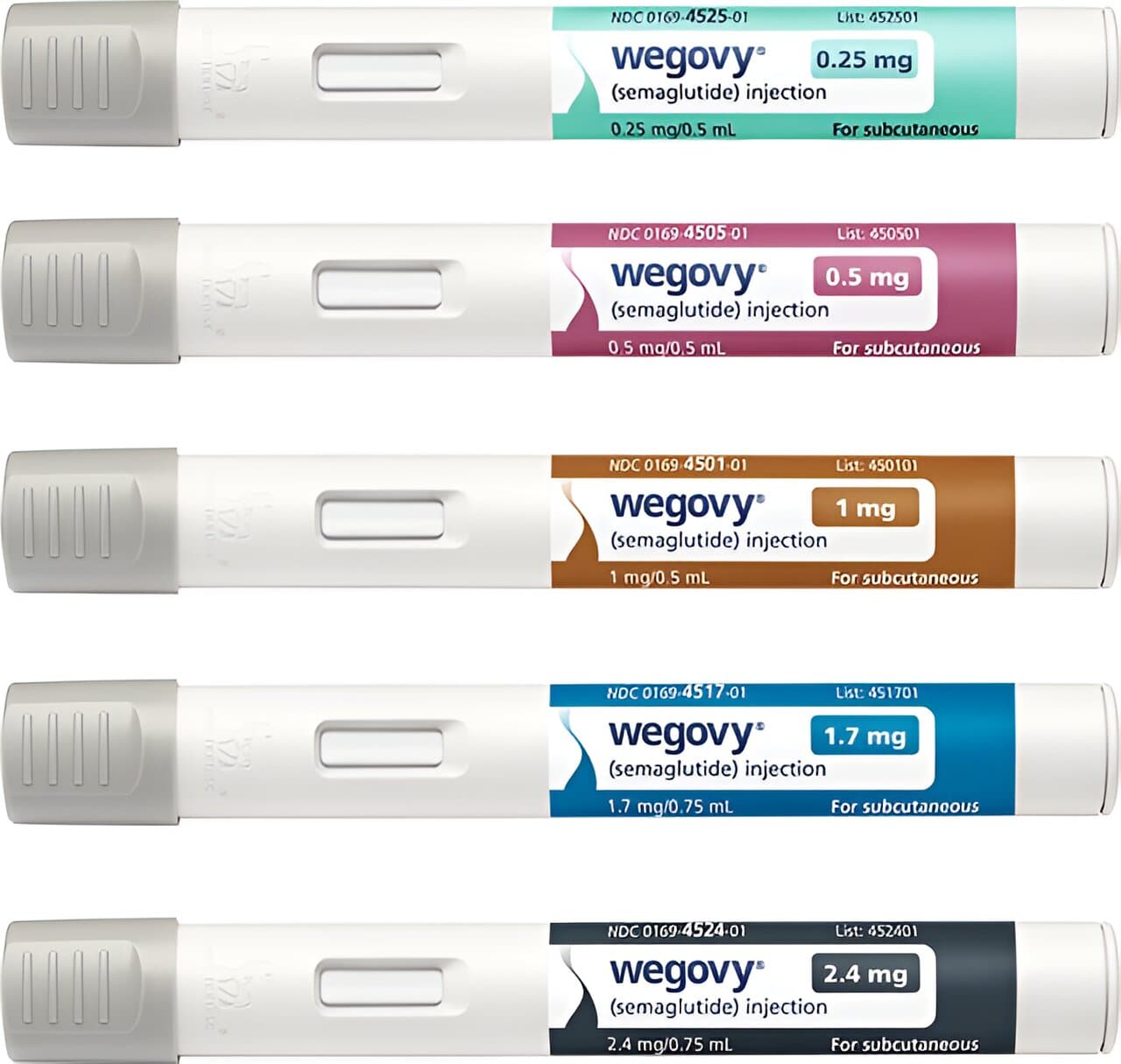
Wegovy: A Powerful Aid for Weight Loss and Diabetes Control
Wegovy, known scientifically as Semaglutide, is a GLP-1 receptor agonist Developed by Novo Nordisk, it is FDA approved for chronic weight management in adults with obesity or overweight with at least one weight-related condition, and for blood sugar management in type 2 diabetes.
Supplement Summary
| Name | Wegovy |
|---|---|
| Category | Peptides |
| Main Uses |
|
| Effectiveness | Very High |
| Common Dosage | 0.25 - 2.4 mg per week |
| Price Range | $$$ - $$$$ |
| Forms Available | Injection |
Pros
- ✅ Significant weight loss
- ✅ Improved blood sugar control
- ✅ Potential cardiovascular benefits
Cons / Side Effects
- ❌ Possible gastrointestinal side effects
- ❌ Requires weekly injections
- ❌ Not suitable for type 1 diabetes
What Is Wegovy?
Wegovy, known scientifically as Semaglutide, is a GLP-1 receptor agonist. Developed by Novo Nordisk, it is FDA approved for chronic weight management in adults with obesity or overweight with at least one weight-related condition, and for blood sugar management in type 2 diabetes.
How It Works
Wegovy mimics the function of GLP-1, a hormone that regulates appetite and blood sugar levels. It slows down gastric emptying, increases insulin secretion, and reduces glucagon secretion, helping to control blood sugar levels and reduce body weight.
Who It's Best For
Ideal for individuals with obesity seeking weight loss and patients with type 2 diabetes needing better glycemic control.
Who Should Avoid It
People with personal or family history of medullary thyroid carcinoma or Multiple Endocrine Neoplasia syndrome type 2 should avoid Wegovy. It's also not recommended for pregnant women.
Dosage & Usage Tips
Start with 0.25 mg once per week, with increments of 0.25 mg every 4 weeks up to a maximum of 2.4 mg. Administer via subcutaneous injection.
Buying Advice & Quality Tips
Ensure to buy Wegovy from authorized pharmacies with a valid prescription. Always check the expiration date and storage instructions.
Price & Value
While Wegovy is pricier than some weight loss solutions, its demonstrated efficacy in weight loss and diabetes control may justify the cost for many.
Final Verdict
Wegovy is a potent weapon against obesity and type 2 diabetes. However, it should be part of a comprehensive weight management program that includes dietary changes and physical activity.
Additional Clinical Research
I have identified three published scientific studies specifically focusing on Wegovy (semaglutide) and its effects. Below is a summary of these studies, categorized by health benefit, along with an assessment of the research quality.
RESEARCH SUMMARY: Wegovy
KEY FINDINGS:
Weight Management
- In a 68-week trial involving 1,961 adults with a BMI of ≥30 or ≥27 with comorbidities, participants receiving once-weekly subcutaneous semaglutide (2.4 mg) experienced an average weight loss of 14.9% of their initial body weight, compared to 2.4% in the placebo group.
- 86.4% of participants on semaglutide achieved at least a 5% weight loss, versus 31.5% in the placebo group.
Source: Wilding et al. (2021)
View Research
https://www.nejm.org/doi/full/10.1056/NEJMoa2032183
Cardiovascular Health
- A study involving over 17,000 overweight or obese individuals with a history of cardiovascular events found that those taking semaglutide had a 20% reduction in the risk of heart attacks, strokes, or cardiovascular death compared to the placebo group.
- Participants also experienced an average weight loss of approximately 9% of their body weight.
Source: Marso et al. (2023)
View Research
https://www.nejm.org/doi/full/10.1056/NEJMoa1607141
Adolescent Obesity
- In a 68-week trial with 201 adolescents aged 12 to 18 with obesity, those receiving once-weekly semaglutide (2.4 mg) had a mean BMI reduction of 16.1%, compared to a 0.6% increase in the placebo group.
- 73% of participants on semaglutide achieved at least a 5% reduction in body weight, versus 18% in the placebo group.
Source: Weghuber et al. (2022)
View Research
https://www.nejm.org/doi/full/10.1056/NEJMoa2208601
RESEARCH QUALITY ASSESSMENT:
- All studies were randomized, double-blind, placebo-controlled trials, providing a high level of evidence.
- Sample sizes were substantial, enhancing the reliability of the findings.
- The trials were conducted over extended periods (68 weeks), allowing for the assessment of both efficacy and safety.
- While results are promising, further research is needed to assess long-term outcomes and potential side effects beyond the study durations.