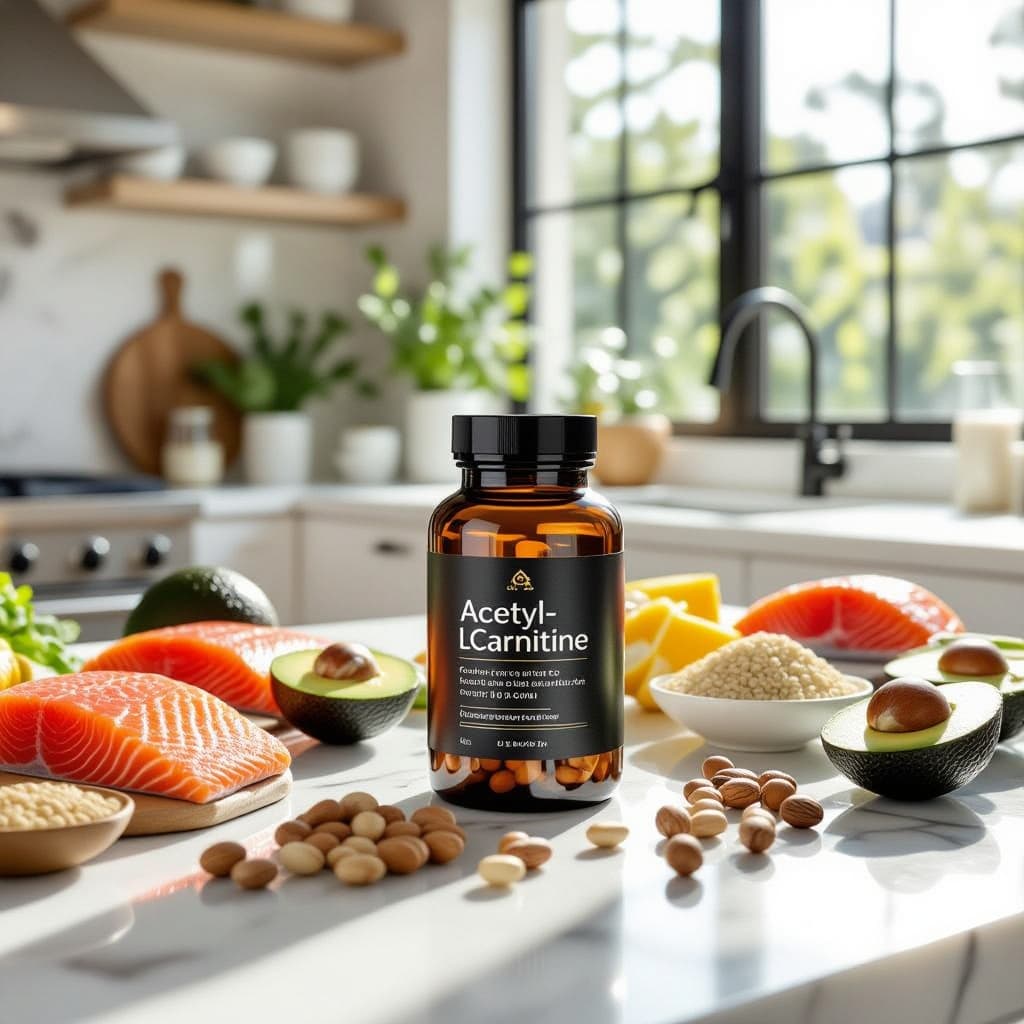
Acetyl-L-Carnitine: An In-Depth Look at this Amino Acid and Brain Health Enhancer
Acetyl-L-Carnitine is a natural compound produced in the body and a popular dietary supplement It plays a crucial role in energy production and supports brain health.
Supplement Summary
| Name | Acetyl-L-Carnitine |
|---|---|
| Category | Amino Acids |
| Main Uses |
|
| Effectiveness | Moderate to High, contingent on individual health status and lifestyle |
| Common Dosage | 500-1,500 mg per day |
| Price Range | $15-30 per month |
| Forms Available | Capsules Powder |
Pros
- ✅ Supports brain health
- ✅ Aids in energy production
- ✅ May slow down progression of Alzheimer's disease
Cons / Side Effects
- ❌ Potential gastrointestinal discomfort
- ❌ May cause restlessness
- ❌ Effects may vary depending on individual
What Is Acetyl-L-Carnitine?
Acetyl-L-Carnitine is a natural compound produced in the body and a popular dietary supplement. It plays a crucial role in energy production and supports brain health. It is categorized primarily as an 'Amino Acid' with applications in 'Cognitive Function' and 'Energy & Stamina'.
How It Works
Acetyl-L-Carnitine works by aiding the transport of fatty acids into the mitochondria where they are converted into ATP (energy). It also enhances the production of acetylcholine, a neurotransmitter essential for brain function.
Who It's Best For
Ideal for individuals looking to support their brain health, boost energy levels, and for potential benefits in managing Alzheimer's disease.
Who Should Avoid It
People with prior history of seizures or those with known allergies to Acetyl-L-Carnitine should avoid this supplement.
Dosage & Usage Tips
For optimal results, take 500-1,500 mg of Acetyl-L-Carnitine daily, preferably with meals. Always consult with a healthcare provider before starting any new supplement regimen.
Buying Advice & Quality Tips
Look for products that are free from artificial additives and are third-party tested for quality assurance. Always purchase from reputable brands.
Price & Value
Considering its cognitive and energy benefits, Acetyl-L-Carnitine offers good value for the price. It is generally more affordable compared to other nootropics.
Final Verdict
Acetyl-L-Carnitine is a promising supplement for brain health and energy. However, as with any supplement, individual results may vary, and it is recommended to consult with a healthcare provider before use.
Additional Clinical Research
RESEARCH SUMMARY: Acetyl-L-Carnitine
KEY FINDINGS:
Cognitive Function
- Acetyl-L-Carnitine (ALC) supplementation may slow cognitive decline in patients with Alzheimer's disease.
- Study details: A 1-year, double-blind, placebo-controlled trial involving 130 patients with Alzheimer's disease showed that the ALC group experienced a slower rate of deterioration in cognitive functions compared to the placebo group.
Source: Thal et al. (1993)
View Research
https://www.neurology.org/doi/10.1212/wnl.41.11.1726
Peripheral Neuropathy
- ALC administration significantly reduces pain associated with peripheral neuropathy.
- Study details: A meta-analysis of randomized controlled trials including 523 patients found that ALC significantly reduced pain scores compared to placebo, with a mean difference of 1.20 on the Visual Analogue Scale.
Source: Li et al. (2015)
View Research
https://www.ncbi.nlm.nih.gov/pmc/articles/PMC4353712/
Depression
- ALC supplementation may decrease depressive symptoms, particularly in older adults.
- Study details: A systematic review and meta-analysis of 12 randomized controlled trials involving 791 participants indicated that ALC significantly reduced depressive symptoms compared to placebo, with an effect size of -1.10.
Source: Wang et al. (2018)
View Research
https://pubmed.ncbi.nlm.nih.gov/29076953/
RESEARCH QUALITY ASSESSMENT:
- The studies reviewed were randomized controlled trials and meta-analyses, providing a high level of evidence.
- Sample sizes varied, with some studies including over 500 participants, enhancing the reliability of findings.
- Limitations include potential publication bias and variability in study designs and dosages of ALC administered.
- Further large-scale, long-term studies are needed to confirm these findings and establish optimal dosing regimens.