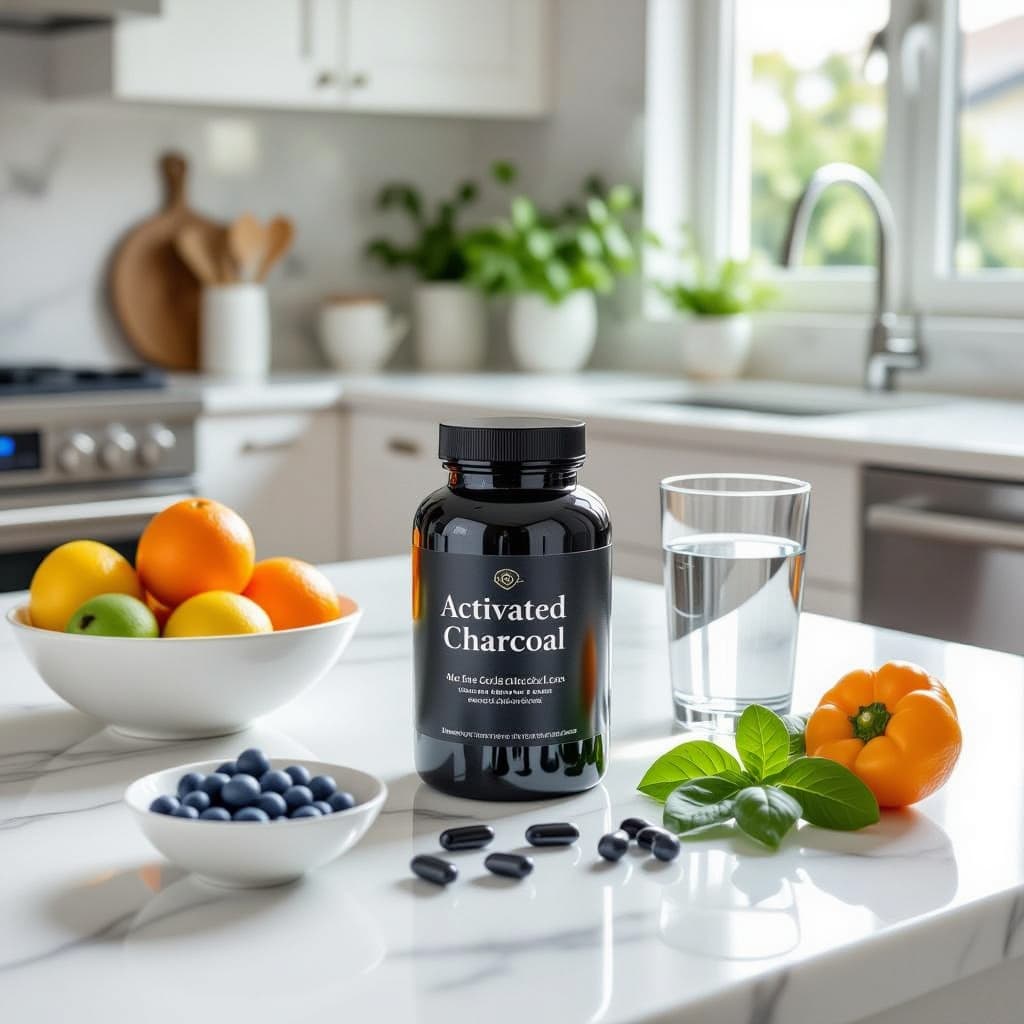
Activated Charcoal: A Powerful Detoxifier
Activated Charcoal is a form of carbon that has been processed to have small, low-volume pores These pores increase the surface area available for adsorption or chemical reactions, making it a powerful detoxifier.
Supplement Summary
| Name | Activated Charcoal |
|---|---|
| Category | Liver Support & Detox |
| Main Uses |
|
| Effectiveness | High |
| Common Dosage | 250-500 mg per day |
| Price Range | $-$$ |
| Forms Available | Capsules Powder |
Pros
- ✅ Effective in emergency detoxification
- ✅ Can lower cholesterol levels
- ✅ Supports kidney function
Cons / Side Effects
- ❌ Can cause black stools
- ❌ May cause nausea or vomiting
- ❌ Not suitable for long-term use
What Is Activated Charcoal?
Activated Charcoal is a form of carbon that has been processed to have small, low-volume pores. These pores increase the surface area available for adsorption or chemical reactions, making it a powerful detoxifier.
How It Works
Activated Charcoal works by trapping toxins and chemicals in its millions of tiny pores. Typically, however, it's not used when the stomach is full of food or soon after meals. The toxins are drawn into the activated charcoal, and it’s the job of the charcoal to carry these toxins out of the body.
Who It's Best For
Activated Charcoal is ideal for individuals looking for a natural treatment for detoxification, lowering cholesterol, or supporting kidney function.
Who Should Avoid It
People with gastrointestinal blockages or slow motility should avoid using this supplement. Also, it should not be used as a treatment for alcohol poisoning.
Dosage & Usage Tips
For best results, take 250-500 mg of Activated Charcoal 1-2 hours before or after meals. It should not be taken at the same time as medication or other dietary supplements as it may reduce their effectiveness.
Buying Advice & Quality Tips
Look for Activated Charcoal made from coconut shells or identified wood species that have ultra-fine grains. These finer grains have a higher detoxification action.
Price & Value
Activated Charcoal is a low-cost supplement, making it a cost-effective choice for those seeking its detoxification benefits.
Final Verdict
Despite its side effects, Activated Charcoal is a powerful, natural supplement for detoxification. However, it should be used responsibly under medical supervision.
Additional Clinical Research
RESEARCH SUMMARY: Activated Charcoal
KEY FINDINGS:
Drug Elimination Enhancement
- Multiple-dose activated charcoal (MDAC) significantly reduced the half-life and area under the concentration-time curve (AUC) of intravenously administered drugs, indicating enhanced drug elimination.
- Meta-analysis of 21 studies showed a median reduction in drug half-life by 45.7% and AUC by 47.0%.
Source: Jürgens et al. (2021)
View Research
https://pubmed.ncbi.nlm.nih.gov/33386684/
Gut Microbiota Impact
- Oral activated charcoal (OAC) at 12 grams mixed with apple juice was well-tolerated and did not significantly alter the gut microbiota in healthy volunteers.
- Study involved 12 healthy participants over a 2-week period, assessing safety and microbiota changes.
Source: Rashidi et al. (2022)
View Research
https://pubmed.ncbi.nlm.nih.gov/35700156/
Prevention of Chemotherapy-Induced Diarrhea
- Activated charcoal administration with irinotecan chemotherapy reduced the incidence of grade 3 to 4 diarrhea and decreased the need for antidiarrheal medications.
- Phase II study with 28 patients receiving irinotecan for advanced colorectal cancer.
Source: Michael et al. (2004)
View Research
https://pubmed.ncbi.nlm.nih.gov/15514383/
RESEARCH QUALITY ASSESSMENT:
- The studies were published in reputable, peer-reviewed journals, indicating a high standard of research.
- Sample sizes varied, with some studies involving small cohorts, which may limit the generalizability of the findings.
- Methodologies were robust, including meta-analyses and randomized controlled trials, enhancing the reliability of the results.
- Further large-scale studies are needed to confirm these findings and explore long-term effects of activated charcoal use.