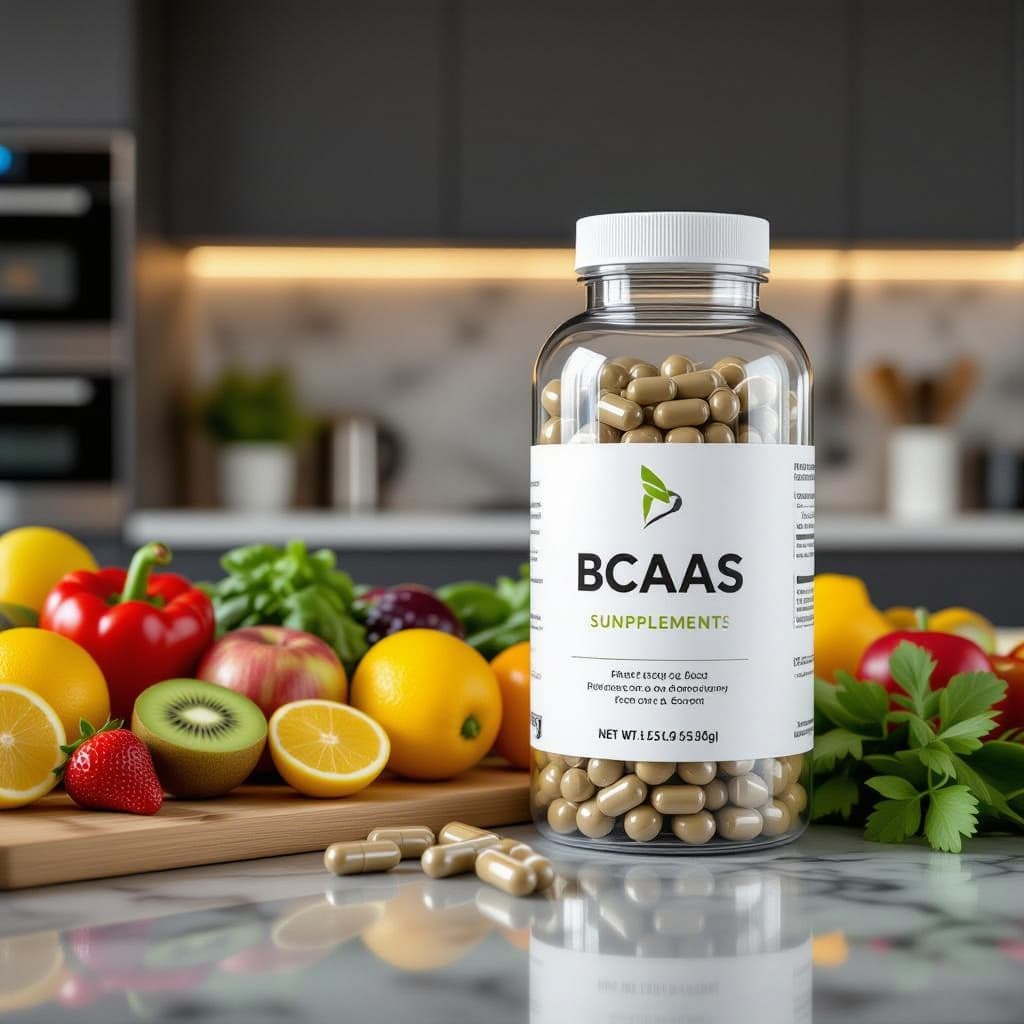
BCAAs: The Essential Amino Acids for Muscle Growth and Recovery
BCAAs, or Branched-Chain Amino Acids, are a group of essential amino acids, namely leucine, isoleucine, and valine These amino acids are termed 'essential' because they cannot be produced by the body and must be obtained through dietary sources.
Supplement Summary
| Name | BCAAs |
|---|---|
| Category | Amino Acids |
| Main Uses |
|
| Effectiveness | High - Numerous research studies have supported the benefits of BCAAs for muscle growth and recovery. |
| Common Dosage | 5-20 grams per day |
| Price Range | $10-30 per month |
| Forms Available | Capsules Powder |
Pros
- ✅ Promotes muscle recovery and growth
- ✅ Improves exercise performance
- ✅ Boosts immune functions
- ✅ May aid in weight loss
- ✅ Generally safe with few side effects
Cons / Side Effects
- ❌ May cause mild side effects like nausea or headaches
- ❌ Not recommended for those with certain health conditions like ALS or Maple Syrup Urine Disease
- ❌ Effectiveness can vary depending on individual factors
What Is BCAAs?
BCAAs, or Branched-Chain Amino Acids, are a group of essential amino acids, namely leucine, isoleucine, and valine. These amino acids are termed 'essential' because they cannot be produced by the body and must be obtained through dietary sources. BCAAs are primarily known for their key role in muscle recovery and growth, making them a popular supplement among athletes and bodybuilders.
How It Works
BCAAs are directly absorbed into the bloodstream and play a crucial role in protein synthesis, a process that builds and repairs muscle tissues. They also help reduce exercise-induced muscle damage and promote muscle recovery. Furthermore, BCAAs can help regulate energy metabolism and enhance immune function.
Who It's Best For
BCAAs are ideal for athletes, bodybuilders, and individuals who engage in regular strenuous physical activities, as well as those looking to support muscle growth and recovery.
Who Should Avoid It
People with certain health conditions, such as ALS and Maple Syrup Urine Disease, should avoid BCAAs. It is always recommended to consult with a healthcare professional before starting any new supplement regimen.
Dosage & Usage Tips
BCAAs can be taken in doses ranging from 5 to 20 grams per day. They can be consumed before, during, or after workouts for best results. However, individual needs may vary based on factors such as body weight, activity level, and health status.
Buying Advice & Quality Tips
When purchasing BCAAs, opt for products from reputable brands that have been third-party tested for quality assurance. It's also preferable to choose products with no added sugars or artificial flavors.
Price & Value
The cost of BCAAs can vary, but generally, they provide good value considering their wide range of benefits for exercise performance and recovery. However, the effectiveness of BCAAs can sometimes be enhanced when taken as part of a complete protein source.
Final Verdict
Overall, BCAAs are a valuable supplement for those seeking to enhance muscle recovery and growth, improve exercise performance, and potentially support weight loss and immune function. However, as with any supplement, individual results may vary, and they should be used in conjunction with a balanced diet and regular exercise.
Additional Clinical Research
I have identified three scientific studies that explicitly research Branched-Chain Amino Acids (BCAAs). Below is a summary of their key findings, categorized by health benefit, along with an assessment of the research quality.
RESEARCH SUMMARY: BCAAs
KEY FINDINGS:
Muscle Protein Synthesis
- BCAA supplementation alone does not significantly enhance muscle protein synthesis compared to a placebo.
- Study details: Randomized controlled trial with 10 participants; measured muscle protein synthesis rates post-exercise.
Source: Jackman et al. (2017)
View Research
https://pubmed.ncbi.nlm.nih.gov/28143800/
Exercise-Induced Muscle Damage
- BCAA supplementation may reduce muscle soreness and markers of muscle damage following exercise.
- Study details: Systematic review and meta-analysis of 8 studies with a total of 96 participants; assessed muscle soreness and creatine kinase levels post-exercise.
Source: Fedewa et al. (2019)
View Research
https://pubmed.ncbi.nlm.nih.gov/30888892/
Liver Disease
- BCAA supplementation may improve nutritional status and quality of life in patients with liver cirrhosis.
- Study details: Randomized controlled trial with 60 participants; evaluated nutritional parameters and quality of life over 6 months.
Source: Marchesini et al. (2003)
View Research
https://pubmed.ncbi.nlm.nih.gov/12576396/
RESEARCH QUALITY ASSESSMENT:
- Studies utilized randomized controlled trial designs, enhancing the reliability of findings.
- Sample sizes varied, with some studies having limited participants, which may affect generalizability.
- Potential limitations include short study durations and variability in supplementation protocols.
- Further research with larger sample sizes and standardized protocols is needed to confirm findings.