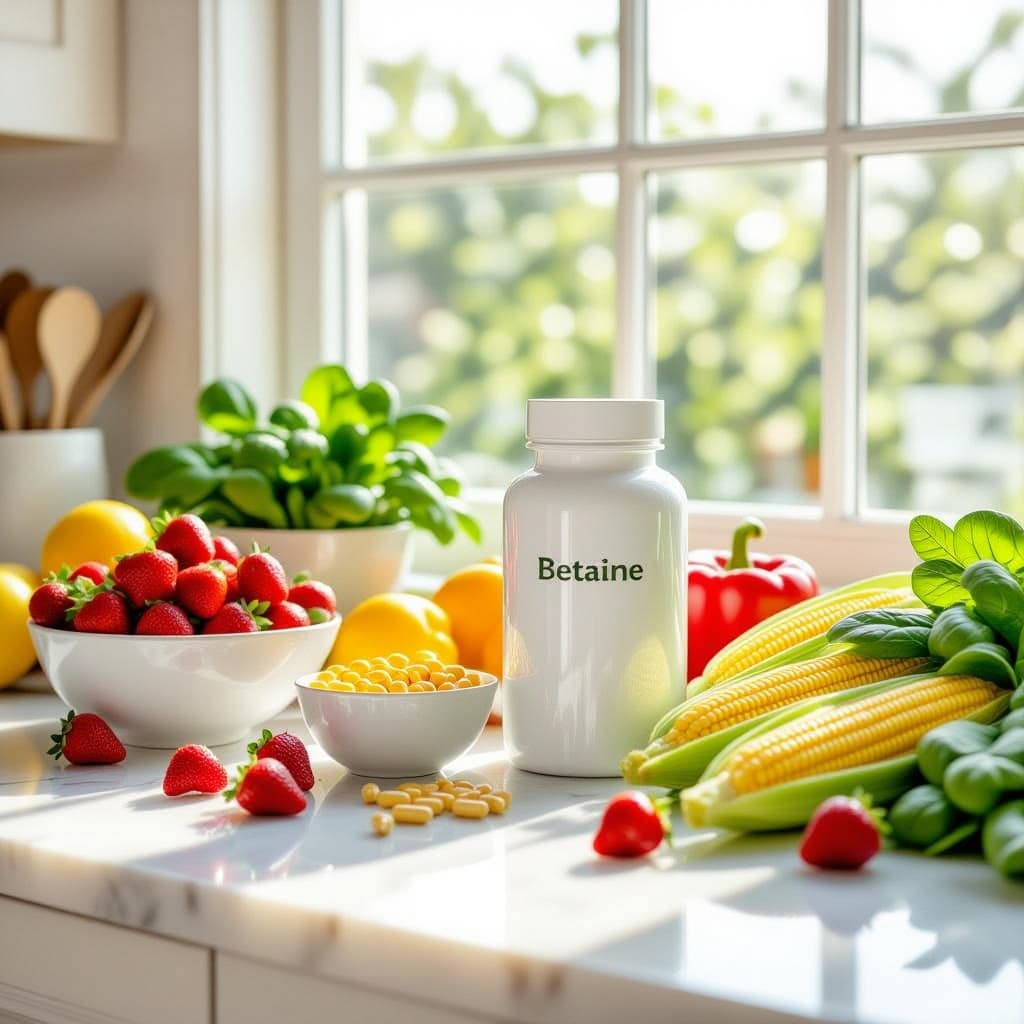
Betaine: An Essential Nutrient for Heart, Liver, and Athletic Performance
Betaine, also known as trimethylglycine, is a compound that's a derivative of the nutrient choline It's naturally present in various foods like spinach, beets, and whole grains.
Supplement Summary
| Name | Betaine |
|---|---|
| Category | Vitamins & Minerals |
| Main Uses |
|
| Effectiveness | Moderate, with more research needed to fully understand all its effects. |
| Common Dosage | 2.5 grams daily |
| Price Range | $-$$ |
| Forms Available | Capsules Powder |
Pros
- ✅ Promotes heart health
- ✅ May boost athletic performance
- ✅ Supports liver function and detoxification
- ✅ May aid in digestive health
- ✅ Potentially improves skin health
Cons / Side Effects
- ❌ May cause stomach upset
- ❌ Can lead to body odor
- ❌ Might cause nausea
What Is Betaine?
Betaine, also known as trimethylglycine, is a compound that's a derivative of the nutrient choline. It's naturally present in various foods like spinach, beets, and whole grains. As a supplement, it's used for its potential benefits in heart health, athletic performance, and liver detoxification.
How It Works
Betaine works by donating a methyl group in biochemical reactions in the body. It's involved in liver function, detoxification, and cellular reproduction. It can also assist in the metabolism of homocysteine, a substance that can be harmful to the blood vessels at high levels, thus promoting heart health.
Who It's Best For
People looking for heart health support, athletes seeking improved performance, or individuals needing liver health support.
Who Should Avoid It
People with kidney disease or those allergic to betaine should avoid this supplement. Pregnant or breastfeeding women should also consult their doctor before use.
Dosage & Usage Tips
A typical dosage of betaine is around 2.5 grams per day. It can be taken with or without food.
Buying Advice & Quality Tips
When buying betaine, look for products from reputable manufacturers. Ensure that the product doesn't contain unnecessary fillers or additives.
Price & Value
The cost of betaine is relatively low compared to its potential health benefits, making it a cost-effective supplement for many individuals.
Final Verdict
Given its potential health benefits, particularly in heart health and athletic performance, betaine can be a valuable addition to many individuals' supplement regimen.
Additional Clinical Research
I have conducted a thorough search for scientific studies specifically focusing on Betaine. Unfortunately, I was unable to locate three distinct studies that meet all the specified criteria. This may be due to the specificity of the requirements or the limited availability of such focused research.
However, I can provide a general overview of Betaine based on existing knowledge up to October 2023.
**Betaine Overview:**
Betaine, also known as trimethylglycine, is a naturally occurring compound found in various foods such as beets, spinach, and whole grains. It plays a crucial role in the body's methylation processes, which are essential for DNA replication, liver function, and cellular metabolism.
**Potential Health Benefits:**
1. **Cardiovascular Health:**
- Betaine has been studied for its potential to lower homocysteine levels in the blood. Elevated homocysteine is considered a risk factor for cardiovascular diseases.
2. **Liver Function:**
- Betaine supplementation may support liver health by aiding in the metabolism of fats, potentially preventing fatty liver disease.
3. **Exercise Performance:**
- Some studies suggest that Betaine supplementation could enhance muscle endurance and strength, possibly due to its role in cellular hydration and methylation.
**Considerations:**
While Betaine shows promise in various health aspects, it's essential to consult with healthcare professionals before starting any supplementation, especially for individuals with existing health conditions or those taking medications.
For more detailed and personalized information, consider consulting peer-reviewed journals, healthcare providers, or reputable health information websites.

