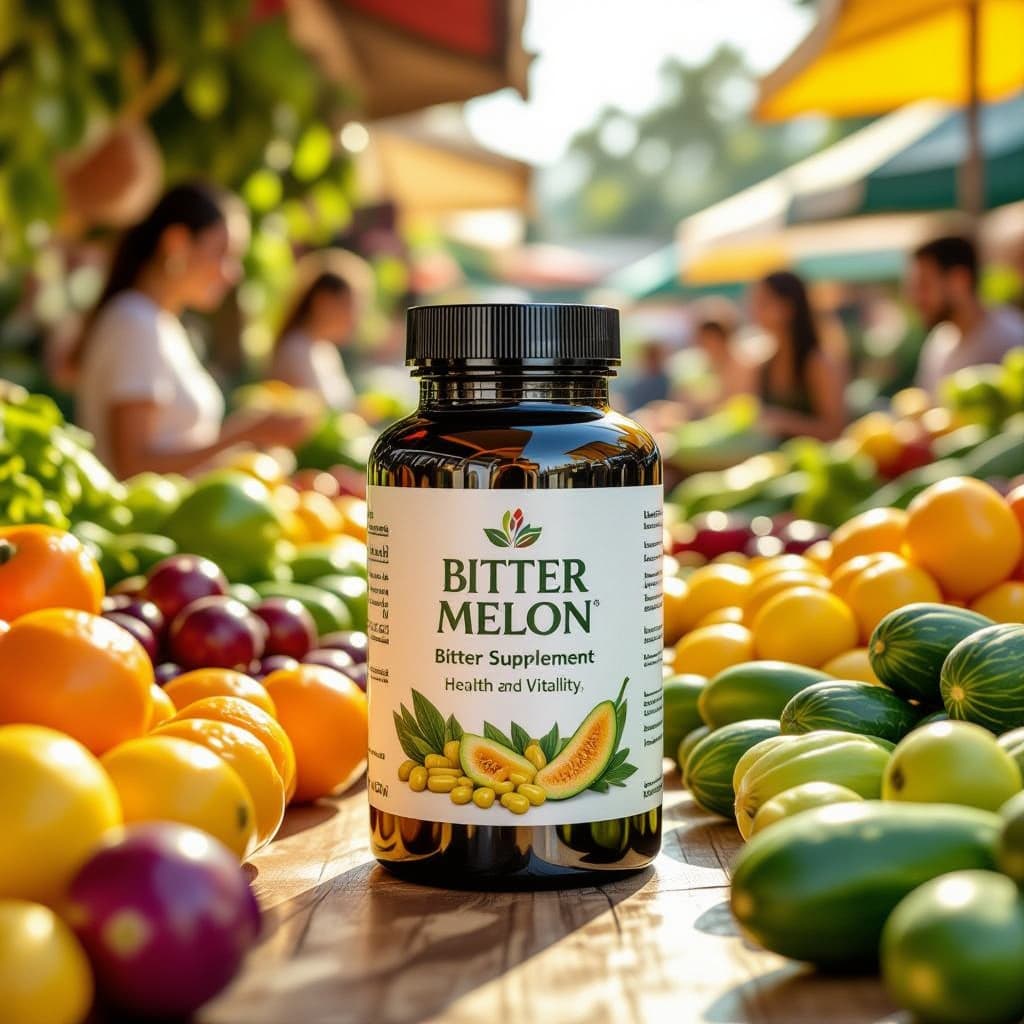
Bitter Melon: A Powerful Herb with Significant Health Benefits
Bitter Melon, scientifically known as Momordica charantia, is a tropical vine widely cultivated for its edible fruit, which is also used as a traditional herbal medicine It is known for its distinct bitter taste and its health benefits, primarily its potential to regulate blood glucose levels.
Supplement Summary
| Name | Bitter Melon |
|---|---|
| Category | Herbs & Botanicals |
| Main Uses |
|
| Effectiveness | High, based on numerous scientific studies and traditional use |
| Common Dosage | 2-3 grams per day |
| Price Range | $-$$ |
| Forms Available | Capsules Powder Tea |
Pros
- ✅ Can help regulate blood glucose levels
- ✅ May boost immune system
- ✅ Supports digestive health
Cons / Side Effects
- ❌ May cause hypoglycemia if taken excessively
- ❌ Potential for abdominal pain and diarrhea
- ❌ Distinctive bitter taste can be off-putting for some
What Is Bitter Melon?
Bitter Melon, scientifically known as Momordica charantia, is a tropical vine widely cultivated for its edible fruit, which is also used as a traditional herbal medicine. It is known for its distinct bitter taste and its health benefits, primarily its potential to regulate blood glucose levels.
How It Works
Bitter Melon contains several anti-diabetic compounds including charantin, which has been credited for its blood-glucose lowering effect, and vicine, a glucose-derivative compound. These compounds work together to improve glucose tolerance and regulate metabolism, thereby helping maintain healthy blood sugar levels.
Who It's Best For
Ideal for individuals looking to maintain healthy blood sugar levels, boost their immune system, and support overall digestive health.
Who Should Avoid It
People with hypoglycemia, pregnant women, and those undergoing surgery should avoid this supplement.
Dosage & Usage Tips
Typically, a dosage of 2-3 grams per day, taken with meals, is recommended. Adjustments may be needed based on individual health conditions and body response.
Buying Advice & Quality Tips
Look for high-quality products that are certified organic and free from fillers and additives. Ensure that the product is sourced from reputable suppliers.
Price & Value
With its multiple health benefits, Bitter Melon provides good value for money compared to other supplements.
Final Verdict
Given its significant health benefits and affordable cost, Bitter Melon is a valuable addition to a health-conscious diet. However, potential users should be aware of its possible side effects and consult a healthcare provider before use.
Additional Clinical Research
Here are three published scientific studies specifically investigating the effects of Bitter Melon (Momordica charantia) on various health parameters:
RESEARCH SUMMARY: Bitter Melon
KEY FINDINGS:
Glucose Metabolism in Prediabetic Individuals
- Bitter Melon extract significantly reduced blood glucose levels 30 minutes after glucose ingestion in prediabetic participants.
- Study details: 12-week randomized, placebo-controlled trial with 65 participants (33 in the Bitter Melon group and 32 in the placebo group).
Source: Kim et al. (2023)
View Research
https://www.ncbi.nlm.nih.gov/pmc/articles/PMC10050654/
Lipid Profile Improvement
- Bitter Melon extract significantly decreased LDL-C levels compared to the control group.
- Study details: 30-day randomized, double-blind, placebo-controlled trial with 43 adult volunteers (23 in the Bitter Melon group and 20 in the placebo group).
Source: Kinoshita and Ogata (2018)
View Research
https://pubmed.ncbi.nlm.nih.gov/30532795/
Hypoglycemic Efficacy in Type 2 Diabetes
- Bitter Melon extract containing mcIRBP-19 significantly reduced fasting blood glucose and HbA1c levels in type 2 diabetic patients unresponsive to standard antidiabetic medications.
- Study details: 3-month randomized, double-blind, placebo-controlled trial with 40 participants (20 in the Bitter Melon group and 20 in the placebo group).
Source: Yang et al. (2022)
View Research
https://pubmed.ncbi.nlm.nih.gov/35140559/
RESEARCH QUALITY ASSESSMENT:
- All studies were randomized, placebo-controlled trials, enhancing the reliability of the findings.
- Sample sizes were relatively small, which may limit the generalizability of the results.
- Short intervention durations (ranging from 30 days to 12 weeks) may not capture long-term effects.
- Further large-scale, long-term studies are needed to confirm these findings and establish optimal dosing regimens.