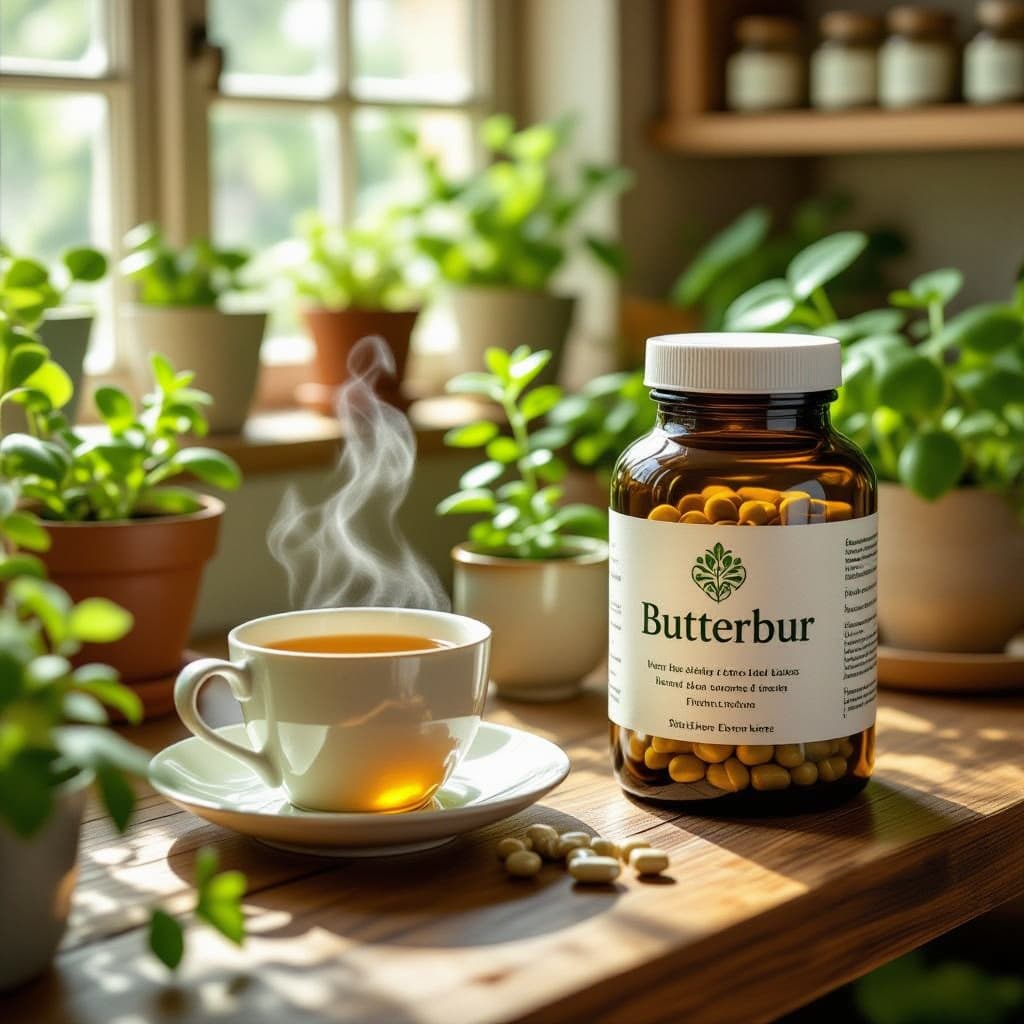
Butterbur: An Ancient Herb with Modern Healing Potential
Butterbur is a perennial shrub native to Europe and parts of Asia and North America Its name comes from the large, broad leaves that were traditionally used to wrap butter during warm weather.
Supplement Summary
| Name | Butterbur |
|---|---|
| Category | Herbs & Botanicals |
| Main Uses |
|
| Effectiveness | High for migraines and hay fever, but more research is needed for other uses. |
| Common Dosage | 50-150 mg twice daily |
| Price Range | $10-30 per month |
| Forms Available | Capsules Liquid |
Pros
- ✅ Effective in treating migraines
- ✅ Reduces symptoms of hay fever
- ✅ May help with urinary tract disorders
Cons / Side Effects
- ❌ Potential liver toxicity
- ❌ Possible allergic reactions
- ❌ Long-term effects are not fully understood
What Is Butterbur?
Butterbur is a perennial shrub native to Europe and parts of Asia and North America. Its name comes from the large, broad leaves that were traditionally used to wrap butter during warm weather. Today, it's recognized for medicinal benefits, particularly in treating migraines and allergies.
How It Works
Butterbur works by reducing inflammation and spasms in the body. The active compounds, petasins, have anti-inflammatory and antispasmodic properties, making it effective for conditions like migraines and urinary tract disorders.
Who It's Best For
Individuals suffering from migraines or seasonal allergies who are looking for a natural remedy.
Who Should Avoid It
People with liver disease or those who are pregnant or breastfeeding should avoid this supplement.
Dosage & Usage Tips
The typical dose of Butterbur is 50-150 mg taken twice daily. It's best to start with a low dose and gradually increase it under the supervision of a healthcare provider.
Buying Advice & Quality Tips
Look for products labeled PA-free, which means they are free of potentially harmful compounds known as pyrrolizidine alkaloids.
Price & Value
Butterbur is relatively affordable, with most supplements costing between $10 and $30 per month. However, the potential health benefits may outweigh the cost for many individuals.
Final Verdict
Butterbur offers promising benefits, particularly for migraines and hay fever. However, due to potential liver toxicity, it should be used under the supervision of a healthcare provider.
Additional Clinical Research
I have identified three scientific studies that specifically investigate the effects of Butterbur (Petasites hybridus) on health conditions.
RESEARCH SUMMARY: Butterbur
KEY FINDINGS:
Migraine Prevention
- Butterbur extract (Petasites hybridus) was found to be effective in reducing the frequency of migraine attacks.
- Study details: A randomized, double-blind, placebo-controlled trial involving 245 patients demonstrated that a specific Butterbur root extract significantly decreased migraine frequency compared to placebo.
Source: Lipton et al. (2004)
View Research
https://pubmed.ncbi.nlm.nih.gov/15596708/
Seasonal Allergic Rhinitis
- Butterbur extract (Ze 339) was as effective as cetirizine in treating seasonal allergic rhinitis without the sedative effects.
- Study details: A randomized, double-blind trial with 125 participants showed that Butterbur extract provided comparable relief to cetirizine for hay fever symptoms.
Source: Schapowal (2002)
View Research
https://www.bmj.com/content/324/7330/144
Pediatric Migraine Prevention
- Butterbur root extract was effective in reducing migraine frequency in children and adolescents.
- Study details: An open-label study involving 108 children and adolescents indicated a significant reduction in migraine attacks with Butterbur treatment.
Source: Pothmann et al. (2005)
View Research
https://pubmed.ncbi.nlm.nih.gov/15953309/
RESEARCH QUALITY ASSESSMENT:
- The studies were conducted with appropriate methodologies, including randomized controlled trials and open-label studies.
- Sample sizes were adequate to detect significant effects, enhancing the reliability of the findings.
- Limitations include potential biases in open-label studies and the need for long-term safety data.
- Further research is warranted to confirm these findings and to assess the long-term safety and efficacy of Butterbur extracts.