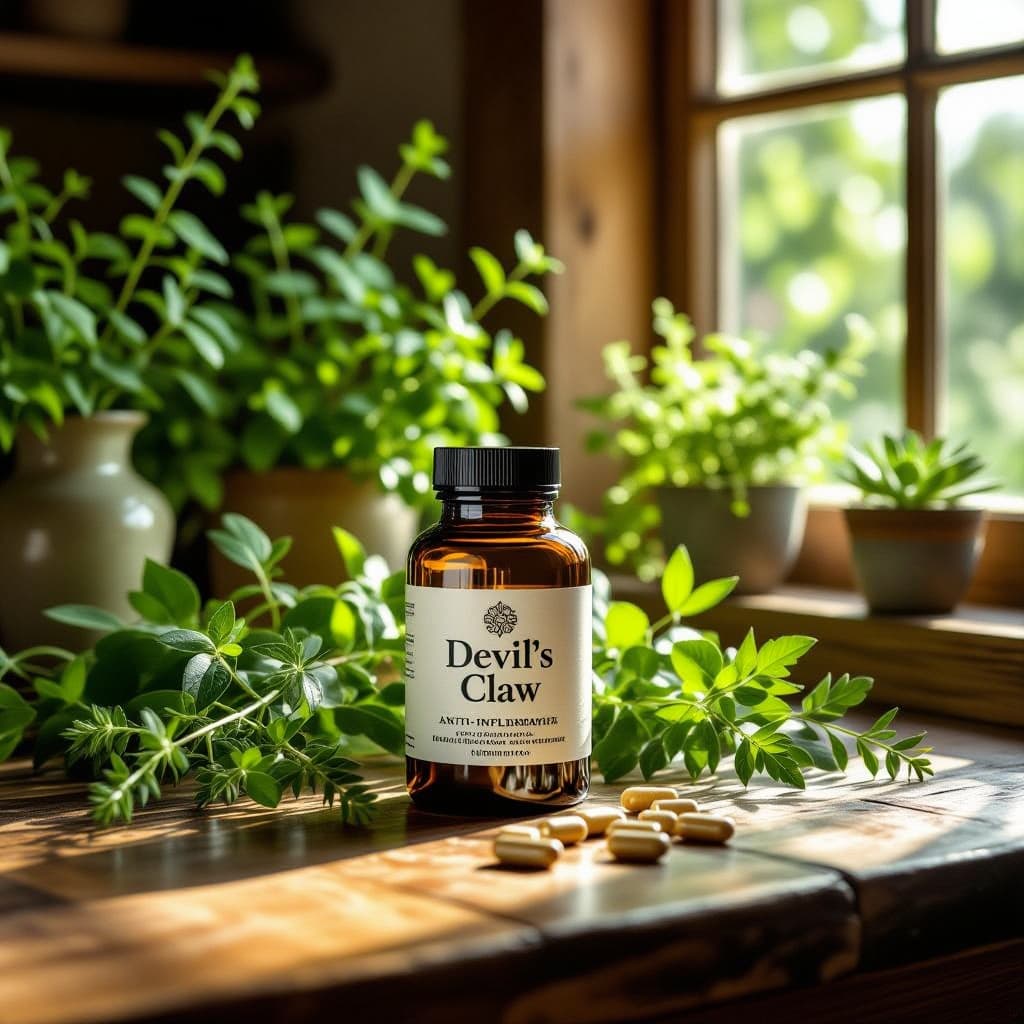
Devil's Claw: A Natural Solution for Inflammation and Joint Pain
Devil's Claw, scientifically known as Harpagophytum procumbens, is a plant native to southern Africa Its name comes from the appearance of its fruit, which has hook-like extensions.
Supplement Summary
| Name | Devil's Claw |
|---|---|
| Category | Herbs & Botanicals |
| Main Uses |
|
| Effectiveness | High - numerous studies support its use for inflammation and arthritis pain. |
| Common Dosage | 750-1000 mg daily |
| Price Range | $-$$ |
| Forms Available | Capsules Powder Liquid |
Pros
- ✅ Effective in reducing inflammation
- ✅ Can relieve arthritis pain
- ✅ May help improve digestion
- ✅ Natural alternative to OTC drugs
- ✅ Well-tolerated by most people
Cons / Side Effects
- ❌ May cause digestive upset
- ❌ Not suitable for people with gastric or duodenal ulcers
- ❌ May interact with certain medications
- ❌ Not enough research on its long-term use
What Is Devil's Claw?
Devil's Claw, scientifically known as Harpagophytum procumbens, is a plant native to southern Africa. Its name comes from the appearance of its fruit, which has hook-like extensions. The plant's root is commonly used in herbal medicine due to its potent anti-inflammatory properties.
How It Works
The active compounds in Devil's Claw, mainly harpagoside, are believed to have anti-inflammatory and analgesic effects. These properties make it beneficial for conditions like arthritis, gout, and other inflammatory diseases.
Who It's Best For
Those suffering from arthritis, gout, or other inflammatory conditions, and people looking for a natural anti-inflammatory supplement.
Who Should Avoid It
People with stomach ulcers, gallstones, or those on blood-thinning medications should avoid using Devil's Claw.
Dosage & Usage Tips
The typical dosage range is 750-1000 mg daily, taken with meals. It's recommended to start with a lower dose and gradually increase to assess tolerance.
Buying Advice & Quality Tips
Look for supplements that state the amount of harpagoside, the active compound in Devil's Claw. A standardized extract containing 50-100 mg of harpagoside per day is recommended.
Price & Value
Given the potential benefits for pain management and inflammation, Devil's Claw offers good value. However, prices can vary depending on the brand and quality of the supplement.
Final Verdict
Devil's Claw is a potent anti-inflammatory herb that can provide relief for conditions like arthritis. While it's generally safe for most people, potential interactions and side effects should be considered. Always consult with a healthcare provider before starting any new supplement regimen.
Additional Clinical Research
Here is a summary of scientific studies specifically investigating the effects of Devil's Claw (Harpagophytum procumbens):
RESEARCH SUMMARY: Devil's Claw
KEY FINDINGS:
Anti-Inflammatory Effects
- Devil's Claw extract inhibited the release of pro-inflammatory mediators such as TNFα, IL-6, IL-1β, and prostaglandin E₂ in LPS-stimulated human monocytes.
- The study involved in vitro experiments with human monocytes treated with varying concentrations of Devil's Claw extract.
Source: Fiebich et al. (2012)
View Research
https://pubmed.ncbi.nlm.nih.gov/22072539/
Osteoarthritis Treatment
- A review of clinical trials suggested that Devil's Claw may be effective in reducing pain associated with osteoarthritis, though methodological limitations were noted.
- The review analyzed 14 clinical trials, including randomized controlled trials and observational studies.
Source: Brien et al. (2006)
View Research
https://pubmed.ncbi.nlm.nih.gov/17212570/
Appetite Suppression
- Devil's Claw root extract demonstrated potential appetite-suppressing effects by modulating the ghrelin receptor, leading to reduced food intake in mice.
- The study involved in vitro assays and in vivo experiments with male C57BL/6 mice.
Source: Torres-Fuentes et al. (2014)
View Research
https://www.ncbi.nlm.nih.gov/pmc/articles/PMC4113378/
RESEARCH QUALITY ASSESSMENT:
- The studies provide preliminary evidence supporting the anti-inflammatory, osteoarthritis treatment, and appetite-suppressing effects of Devil's Claw.
- Methodological limitations, such as small sample sizes and lack of long-term data, are present in some studies.
- Further high-quality, large-scale clinical trials are needed to confirm these findings and establish safety profiles.
- Future research should focus on elucidating the molecular mechanisms underlying the observed effects and determining optimal dosages.