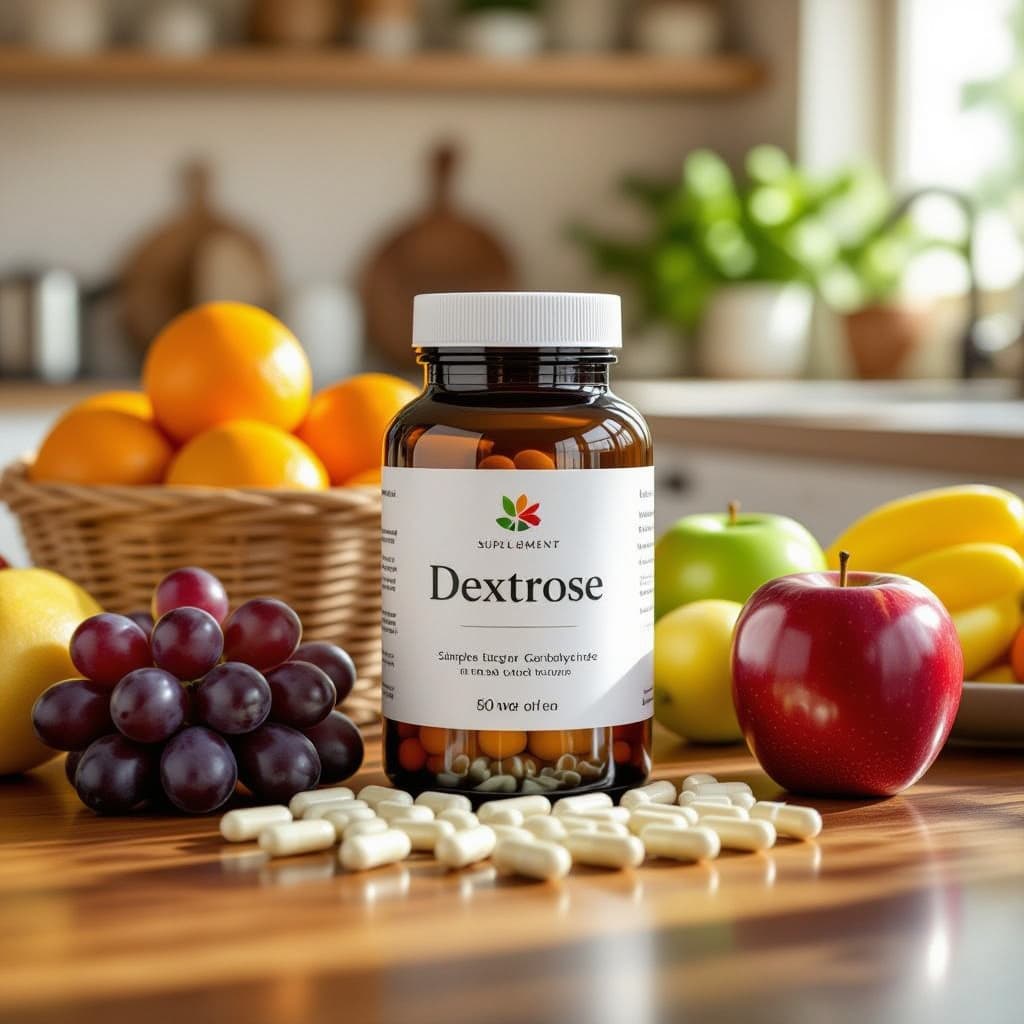
Dextrose: The Quick Energy Source for Optimal Workout Performance and Recovery
Dextrose, also known as glucose, is a simple sugar derived from corn It is a form of carbohydrate that is rapidly absorbed by the body, providing instant energy.
Supplement Summary
| Name | Dextrose |
|---|---|
| Category | Energy & Stamina |
| Main Uses |
|
| Effectiveness | High for energy and athletic performance, Moderate for blood sugar regulation |
| Common Dosage | 25-50 grams post-workout or as needed |
| Price Range | $-$$ |
| Forms Available | Powder |
Pros
- ✅ Provides instant energy
- ✅ Supports athletic performance
- ✅ Aids in muscle recovery
- ✅ Regulates blood sugar levels
- ✅ Easily mixed with water or protein shake
Cons / Side Effects
- ❌ Can spike blood sugar levels if not used properly
- ❌ May lead to weight gain if consumed excessively
- ❌ Not suitable for those with certain medical conditions, like diabetes
What Is Dextrose?
Dextrose, also known as glucose, is a simple sugar derived from corn. It is a form of carbohydrate that is rapidly absorbed by the body, providing instant energy. It is used in various physiological processes and is particularly beneficial for athletic performance and recovery.
How It Works
Once ingested, dextrose is quickly absorbed into the bloodstream, spiking insulin levels. This rapid absorption helps to drive nutrients into the muscles, aiding in recovery and growth. Dextrose also replenishes muscle glycogen stores, providing energy for future workouts.
Who It's Best For
Athletes, bodybuilders, or individuals needing a quick source of energy. It is particularly beneficial for those engaging in high-intensity or long-duration workouts.
Who Should Avoid It
People with diabetes or those looking to lose weight should avoid dextrose due to its potential to spike blood sugar levels and contribute to weight gain.
Dosage & Usage Tips
The typical dosage of dextrose is between 25-50 grams, taken post-workout or as needed for energy. It can be mixed with water or a protein shake for convenience.
Buying Advice & Quality Tips
Choose pure dextrose supplements without added sugars or artificial ingredients. It's best to buy from reputable brands to ensure quality and purity.
Price & Value
Dextrose is a relatively inexpensive supplement, offering good value for its price given its benefits for energy, performance, and recovery.
Final Verdict
For those in need of a quick and effective energy source, particularly athletes and bodybuilders, dextrose is a worthy addition to the supplement regimen. However, it should be used wisely and in moderation to avoid potential side effects.
Additional Clinical Research
RESEARCH SUMMARY: Dextrose
KEY FINDINGS:
Labor Duration
- Administration of 5% dextrose alternating with normal saline significantly decreased the duration of labor in term vaginally delivered nulliparous women in spontaneous active labor compared to normal saline alone.
- Study involved 250 nulliparous women; those receiving dextrose had a shorter labor duration and a lower incidence of prolonged labor.
Source: Sharma et al. (2012)
View Research
https://link.springer.com/article/10.1007/s00404-012-2485-1
Neonatal Hypoglycemia
- Oral 40% dextrose gel was more effective than feeding alone in reversing neonatal hypoglycemia in at-risk babies.
- Study included 237 neonates; treatment with dextrose gel reduced the frequency of treatment failure compared to placebo.
Source: Harris et al. (2013)
View Research
https://pubmed.ncbi.nlm.nih.gov/24075361/
Hypoglycemia Treatment
- Intravenous 10% dextrose administered in 5 g (50 ml) aliquots was as effective as 50% dextrose in 5 g (10 ml) aliquots for treating out-of-hospital hypoglycemia, with lower post-treatment blood glucose levels.
- Study involved 51 unresponsive adult patients; both treatments had similar recovery times, but the 10% dextrose group received a lower total dose.
Source: Moore and Woollard (2005)
View Research
https://europepmc.org/articles/PMC1726850
RESEARCH QUALITY ASSESSMENT:
- All studies were randomized controlled trials, enhancing the reliability of the findings.
- Sample sizes varied, with the largest study involving 250 participants, providing a reasonable basis for generalization.
- Limitations include potential variability in clinical practices and patient populations, which may affect the applicability of results.
- Further research is needed to confirm these findings across diverse settings and to explore long-term outcomes associated with dextrose administration.