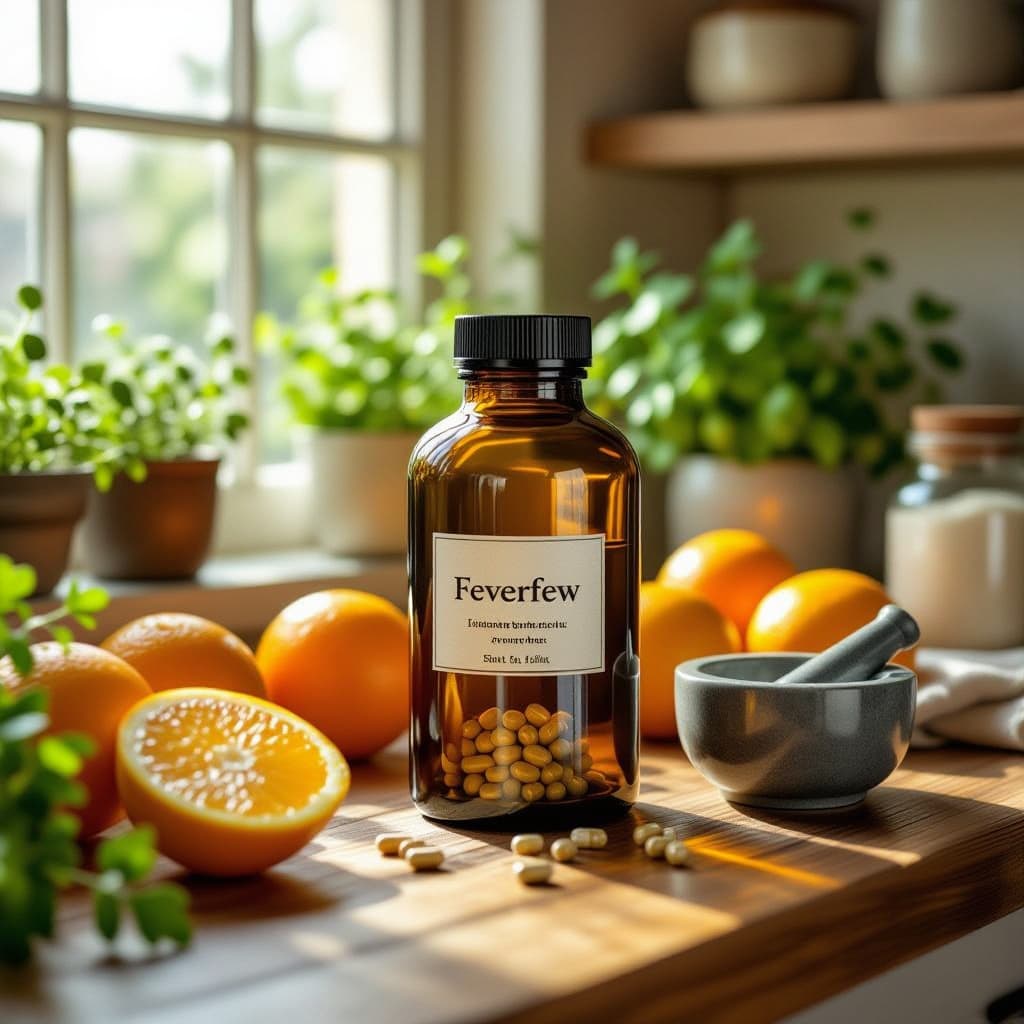
Feverfew: A Traditional Herb with Modern Benefits
Feverfew is an aromatic herb native to the Balkan Peninsula but is now found worldwide It belongs to the daisy family and has been used for centuries in traditional medicine for its anti-inflammatory and analgesic properties.
Supplement Summary
| Name | Feverfew |
|---|---|
| Category | Herbs & Botanicals |
| Main Uses |
|
| Effectiveness | Medium to High, depending on the individual and condition |
| Common Dosage | 50-150 milligrams daily |
| Price Range | $10-20 per month |
| Forms Available | Capsules Tablets Liquid Extract |
Pros
- ✅ Effective for migraine relief
- ✅ May alleviate arthritis symptoms
- ✅ Can improve digestive health
Cons / Side Effects
- ❌ May cause mouth ulcers and digestive discomfort
- ❌ Potential allergic reactions
What Is Feverfew?
Feverfew is an aromatic herb native to the Balkan Peninsula but is now found worldwide. It belongs to the daisy family and has been used for centuries in traditional medicine for its anti-inflammatory and analgesic properties.
How It Works
The primary active component of Feverfew, parthenolide, works by inhibiting the release of inflammatory substances in the body, effectively reducing inflammation and pain.
Who It's Best For
Feverfew is ideal for individuals suffering from migraines, arthritis, or digestive problems. It's also beneficial for those seeking natural anti-inflammatory remedies.
Who Should Avoid It
People allergic to plants in the daisy family should avoid Feverfew. It's also not recommended for pregnant and breastfeeding women.
Dosage & Usage Tips
The typical dosage of Feverfew is 50-150 milligrams daily, taken with meals. It's important to start with a lower dose and gradually increase as tolerated.
Buying Advice & Quality Tips
When buying Feverfew, look for products that list the amount of parthenolide, the active ingredient. Choose a reputable brand to ensure quality and potency.
Price & Value
Feverfew is a cost-effective solution for managing migraines and inflammation compared to many pharmaceutical options.
Final Verdict
Feverfew is a potent herb with well-documented benefits, particularly for migraines and inflammation. However, it should be used judiciously due to potential side effects.
Additional Clinical Research
RESEARCH SUMMARY: Feverfew
KEY FINDINGS:
Migraine Prevention
- Feverfew supplementation was associated with a reduction in the mean number and severity of migraine attacks, as well as a decrease in the degree of vomiting. However, the duration of individual attacks remained unchanged.
- Study details: Randomized, double-blind, placebo-controlled crossover study involving 72 volunteers; 60 completed the study. Participants received either dried feverfew leaves or placebo for four months, then switched to the other treatment for another four months.
Source: Murphy et al. (1988)
View Research
https://pubmed.ncbi.nlm.nih.gov/2899663/
Migraine Prophylaxis
- In a subgroup of patients with at least four migraine attacks during the baseline period, feverfew extract (MIG-99) at a dosage of 6.25 mg three times daily significantly reduced the frequency of migraine attacks compared to placebo.
- Study details: Double-blind, multicenter, randomized, placebo-controlled dose-response study with 147 patients; 49 patients in the predefined subgroup. Treatment lasted 12 weeks after a 4-week baseline period.
Source: Pfaffenrath et al. (2002)
View Research
https://pubmed.ncbi.nlm.nih.gov/12230594/
Migraine Prevention
- Feverfew extract (MIG-99) reduced migraine frequency by 1.9 attacks per month compared to a reduction of 1.3 attacks with placebo, resulting in a difference of 0.6 attacks per month. No significant differences were observed in the intensity or duration of migraine attacks.
- Study details: Double-blind, placebo-controlled, multicenter, parallel-group study with 218 patients; 170 analyzed. Participants received 6.25 mg of feverfew extract or placebo three times daily for 16 weeks.
Source: Diener et al. (2005)
View Research
https://pubmed.ncbi.nlm.nih.gov/16232154/
RESEARCH QUALITY ASSESSMENT:
- Studies employed randomized, double-blind, placebo-controlled designs, enhancing the reliability of findings.
- Sample sizes varied, with some studies having limited participants, which may affect the generalizability of results.
- Variations in feverfew formulations and dosages across studies could influence outcomes.
- Further large-scale, standardized trials are needed to confirm efficacy and establish optimal dosing regimens.