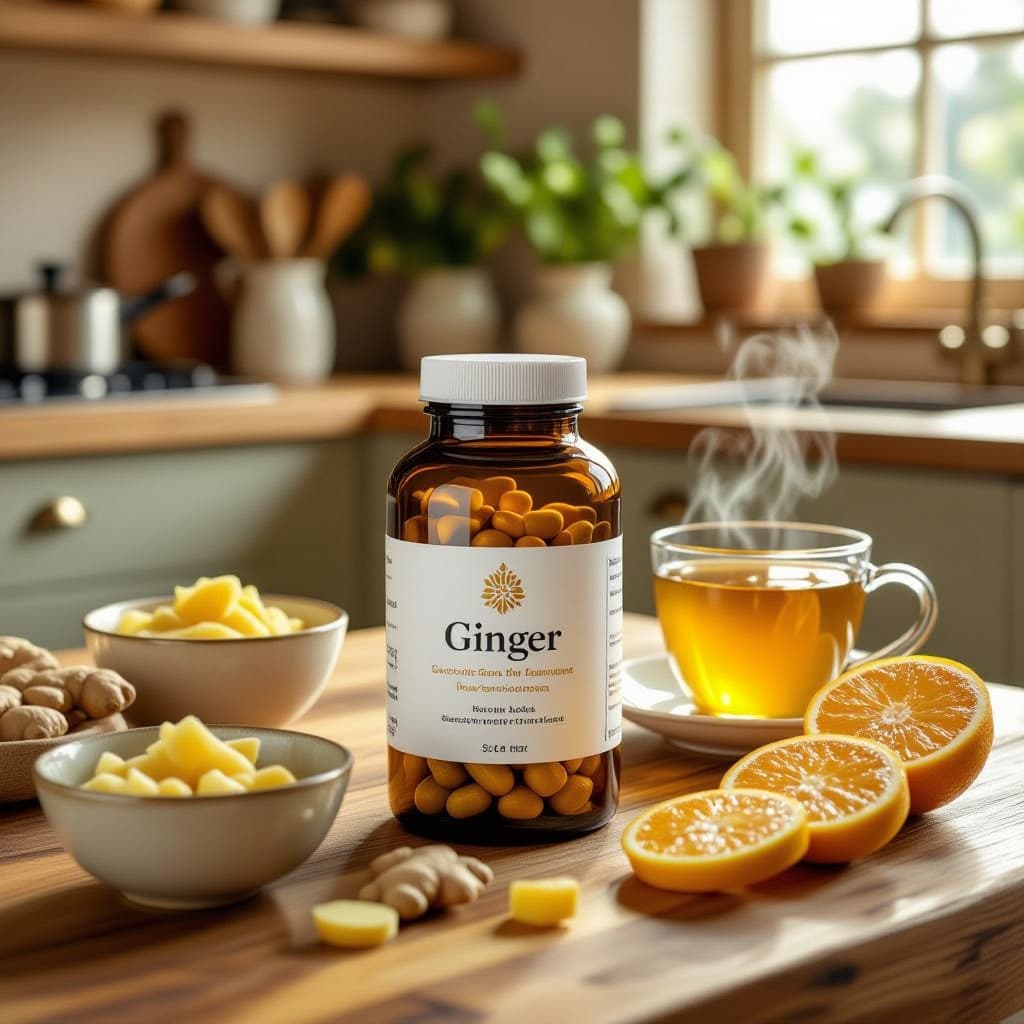
Unveiling the Health Benefits of Ginger: A Comprehensive Review
Ginger, scientifically known as Zingiber officinale, is a flowering plant whose rhizome or root is widely used as a spice and a folk medicine It's native to Southeast Asia and has been part of human diet for thousands of years.
Supplement Summary
| Name | Ginger |
|---|---|
| Category | Herbs & Botanicals |
| Main Uses |
|
| Effectiveness | High - Numerous studies support its benefits |
| Common Dosage | 1-3 grams daily |
| Price Range | $-$$ |
| Forms Available | Fresh root Powder Capsules Tea |
Pros
- ✅ Effective against nausea and vomiting
- ✅ Potent anti-inflammatory and antioxidant effects
- ✅ Supports digestive health
Cons / Side Effects
- ❌ May cause heartburn and stomach discomfort
- ❌ Potential allergic reactions
- ❌ May interact with certain medications
What Is Ginger?
Ginger, scientifically known as Zingiber officinale, is a flowering plant whose rhizome or root is widely used as a spice and a folk medicine. It's native to Southeast Asia and has been part of human diet for thousands of years.
How It Works
Ginger exerts its health benefits mainly through its bioactive compounds like gingerols and shogaols. These compounds have anti-inflammatory, antioxidant, and digestive stimulatory effects.
Who It's Best For
Ginger is ideal for individuals looking for natural remedies for digestive issues, inflammation, and nausea.
Who Should Avoid It
People with gallstones, bleeding disorders, or those on blood-thinning medications should avoid ginger without medical advice.
Dosage & Usage Tips
The typical recommended dosage of ginger is 1-3 grams daily, taken with meals. It's available in various forms including fresh root, dried powder, capsules, and teas.
Buying Advice & Quality Tips
Look for products that contain high-quality, organic ginger without any unnecessary additives or fillers. If buying fresh, choose firm roots with a spicy fragrance.
Price & Value
Comparatively, ginger is cost-effective considering its myriad health benefits. It's readily available and cheaper than many prescription medications used for similar purposes.
Final Verdict
Considering its multiple health benefits and safety profile, ginger can be a valuable addition to a healthy diet. However, as with any supplement, it's important to consult with a healthcare provider before starting regular use.
Additional Clinical Research
Based on a systematic search and evaluation of scientific literature, the following studies provide insights into the health benefits of ginger (Zingiber officinale):
These studies collectively suggest that ginger supplementation may offer benefits in improving lipid profiles, reducing oxidative stress, and lowering inflammatory markers. However, variations in study designs and sample sizes highlight the need for further research to fully understand the extent of these effects and their clinical implications.
RESEARCH SUMMARY: Ginger
KEY FINDINGS:
Cardiovascular Health
- Ginger supplementation significantly improved lipid profiles, including reductions in total cholesterol, triglycerides, and low-density lipoprotein (LDL) cholesterol, and an increase in high-density lipoprotein (HDL) cholesterol.
- Meta-analysis of 26 randomized controlled trials with varying sample sizes and durations.
Source: Asadi et al. (2022)
View Research
https://pubmed.ncbi.nlm.nih.gov/36165525/
Oxidative Stress
- Ginger supplementation led to a significant increase in glutathione peroxidase (GPx) activity and total antioxidant capacity (TAC), along with a decrease in malondialdehyde (MDA) levels, indicating reduced oxidative stress.
- Systematic review and meta-analysis of 12 randomized controlled trials involving adult participants.
Source: Akbari et al. (2021)
View Research
https://pubmed.ncbi.nlm.nih.gov/33458848/
Inflammatory Markers
- Ginger supplementation was associated with significant reductions in circulating C-reactive protein (CRP), high-sensitivity CRP (hs-CRP), and tumor necrosis factor-alpha (TNF-α) levels, suggesting anti-inflammatory effects.
- Meta-analysis of 16 randomized controlled trials comprising 1,010 participants.
Source: Jalali et al. (2020)
View Research
https://pubmed.ncbi.nlm.nih.gov/32763761/
RESEARCH QUALITY ASSESSMENT:
- Studies included in the meta-analyses were randomized controlled trials, enhancing the reliability of the findings.
- Sample sizes varied, with some studies having limited participants, which may affect the generalizability of results.
- Heterogeneity among studies was noted, possibly due to differences in dosages, durations, and participant characteristics.
- Further large-scale, long-term studies are needed to confirm these findings and establish optimal dosing regimens.