Unlocking the Health-Promoting Potency of Grape Seed Extract
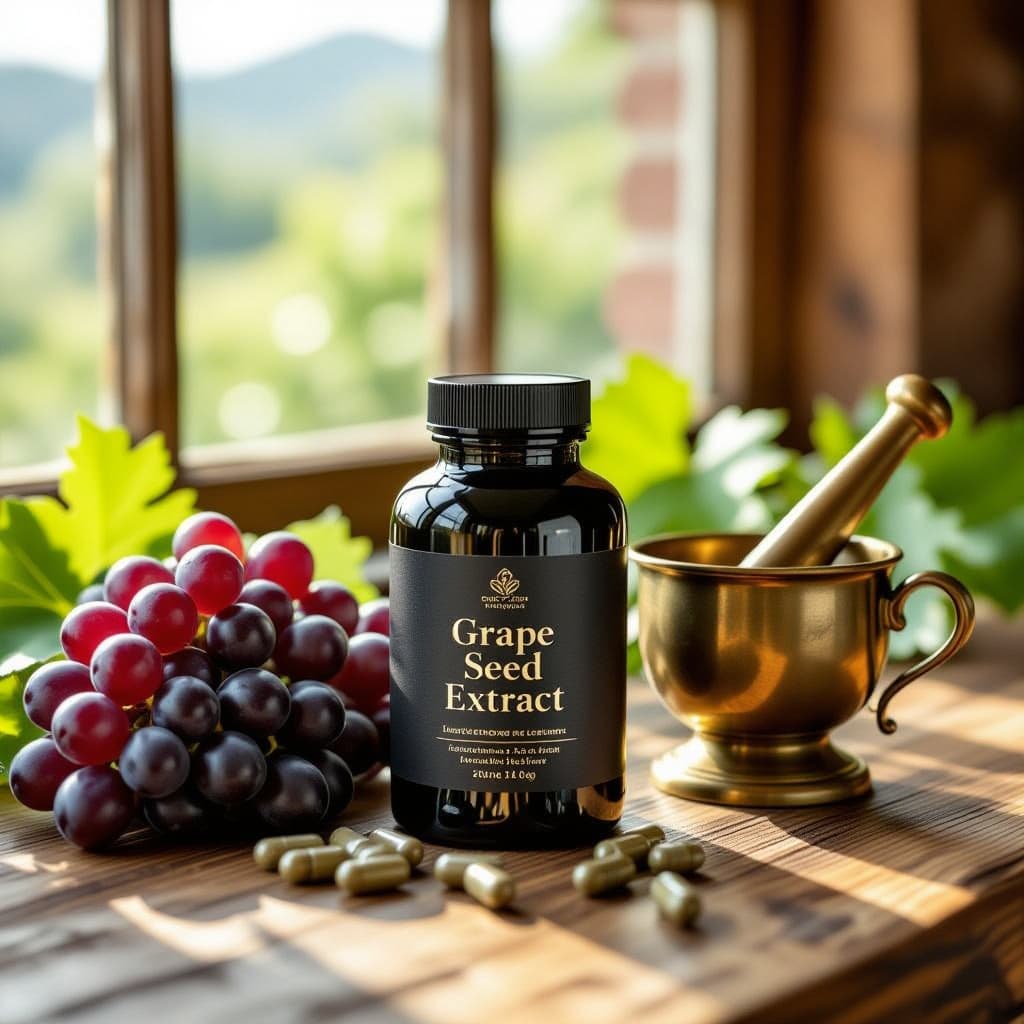
Grape Seed Extract is a powerful health supplement derived from the tiny seeds of grapes Packed full of antioxidants and oligomeric proanthocyanidin complexes, it has a wide range of potential health benefits.
Supplement Summary
| Name | Grape Seed Extract |
|---|---|
| Category | Antioxidants |
| Main Uses |
|
| Effectiveness | High, based on scientific research |
| Common Dosage | 100-300mg per day |
| Price Range | $-$$ |
| Forms Available | Capsules Powder |
Pros
- ✅ High in antioxidants
- ✅ Supports cardiovascular health
- ✅ Enhances brain function
- ✅ Has anti-inflammatory properties
- ✅ Generally well-tolerated with few side effects
Cons / Side Effects
- ❌ May cause allergic reactions in some people
- ❌ Can interact with certain medications, including blood thinners
What Is Grape Seed Extract?
Grape Seed Extract is a powerful health supplement derived from the tiny seeds of grapes. Packed full of antioxidants and oligomeric proanthocyanidin complexes, it has a wide range of potential health benefits.
How It Works
Grape Seed Extract works primarily through its high antioxidant content, which can neutralize harmful free radicals in the body. It also has anti-inflammatory properties, which can help to reduce inflammation and support overall health.
Who It's Best For
Those looking to enhance their cardiovascular health, improve cognitive function, or provide their bodies with an extra dose of antioxidants.
Who Should Avoid It
People with a known allergy to grapes, and those taking blood-thinning medication, should avoid this supplement.
Dosage & Usage Tips
Typically, it is recommended to take 100-300mg of Grape Seed Extract per day, either in one dose or split into two. It can be taken with or without food.
Buying Advice & Quality Tips
When buying Grape Seed Extract, look for products that are standardized to contain a certain percentage of proanthocyanidins, as this indicates the supplement's potency.
Price & Value
Grape Seed Extract is a relatively inexpensive supplement, with a good balance between cost and potential health benefits.
Final Verdict
Given its potent antioxidant profile and potential health benefits, Grape Seed Extract is a worthy addition to most supplement regimes, particularly for those seeking to boost cardiovascular or cognitive health.
Additional Clinical Research
Based on the provided search results, here are three published scientific studies specifically investigating the effects of Grape Seed Extract (GSE):
RESEARCH SUMMARY: Grape Seed Extract
KEY FINDINGS:
Cardiovascular Health
- GSE supplementation significantly reduced systolic blood pressure (SBP) by 6.08 mmHg and diastolic blood pressure (DBP) by 2.80 mmHg.
- Subgroup analyses indicated more pronounced effects in younger individuals (mean age < 50 years), obese subjects (BMI ≥ 25 kg/m²), and patients with metabolic syndrome.
Source: Zhang et al. (2016)
View Research
https://pubmed.ncbi.nlm.nih.gov/27537554/
Lipid Profile
- GSE supplementation led to significant reductions in LDL cholesterol (-0.17 mmol/L) and triglycerides (-0.11 mmol/L).
- No significant effects were observed on total cholesterol and HDL cholesterol levels.
Source: Asbaghi et al. (2020)
View Research
https://pubmed.ncbi.nlm.nih.gov/32138795/
Periodontal Health
- Intra-pocket application of GSE combined with scaling and root planing (SRP) resulted in significant reductions in probing depth and relative attachment level compared to SRP alone.
- No significant differences were observed in plaque index and gingival index between the groups.
Source: Karthikeyan et al. (2020)
View Research
https://pubmed.ncbi.nlm.nih.gov/34281305/
RESEARCH QUALITY ASSESSMENT:
- Studies were randomized controlled trials, enhancing the reliability of findings.
- Sample sizes varied, with some studies involving over 500 participants, providing robust data.
- Potential limitations include heterogeneity in study designs, dosages, and participant characteristics.
- Further large-scale, long-term studies are warranted to confirm these findings and establish optimal dosing regimens.