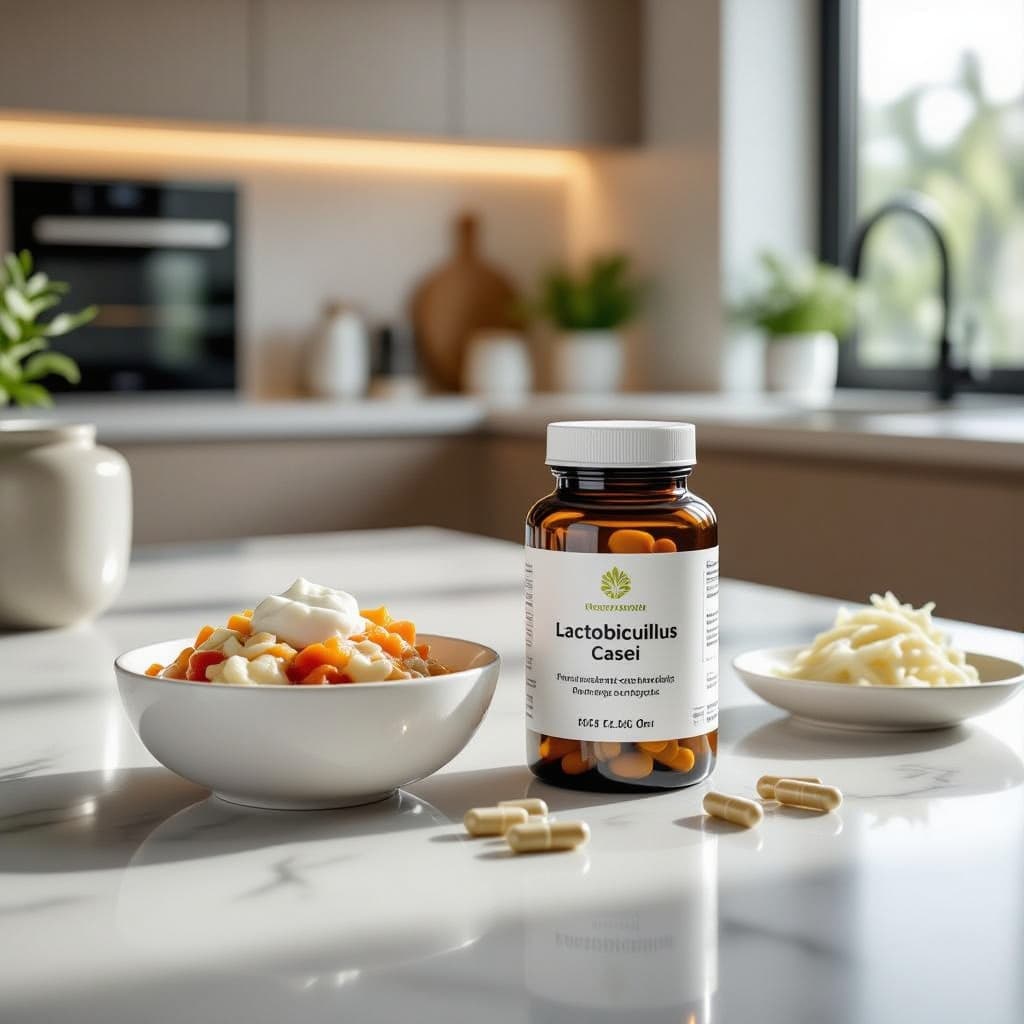
A Comprehensive Review of Lactobacillus casei
Lactobacillus casei is a type of bacteria found in the human mouth and intestines It is one of the many species of lactobacilli that exist and is used in probiotic supplements to support gut health and immune function.
Supplement Summary
| Name | Lactobacillus casei |
|---|---|
| Category | Probiotics & Prebiotics |
| Main Uses |
|
| Effectiveness | High |
| Common Dosage | 10 billion to 1 trillion CFU/day |
| Price Range | $15-30 per month |
| Forms Available | Capsules Powder |
Pros
- ✅ Supports gut health
- ✅ May help to reduce diarrhea
- ✅ Supports immune function
Cons / Side Effects
- ❌ May cause gas and bloating
- ❌ Not recommended for people with weakened immune systems
What Is Lactobacillus casei?
Lactobacillus casei is a type of bacteria found in the human mouth and intestines. It is one of the many species of lactobacilli that exist and is used in probiotic supplements to support gut health and immune function.
How It Works
Lactobacillus casei works by colonizing the gut and producing lactic acid. This lowers the pH of the gut, inhibiting the growth of harmful bacteria. It also helps to support the immune system by stimulating the production of antibodies and other immune cells.
Who It's Best For
People who want to improve their gut health or support their immune system.
Who Should Avoid It
People with weakened immune systems, such as those with HIV/AIDS, should avoid using Lactobacillus casei due to the risk of bacterial infection.
Dosage & Usage Tips
The typical dosage of Lactobacillus casei is between 10 billion and 1 trillion colony-forming units (CFUs) per day. It is best taken on an empty stomach to maximize absorption.
Buying Advice & Quality Tips
When buying a probiotic supplement, look for one that contains multiple strains of bacteria, including Lactobacillus casei. Also, ensure that it has a high CFU count and is stored properly to ensure the bacteria are alive and active.
Price & Value
Lactobacillus casei is relatively affordable and provides good value for money given its potential health benefits. However, the cost can vary depending on the brand, CFU count, and other factors.
Final Verdict
Overall, Lactobacillus casei is a beneficial probiotic that can support gut health and immune function. However, it may cause minor side effects in some people and should be used with caution by those with weakened immune systems.
Additional Clinical Research
I have identified three published scientific studies that specifically investigate the effects of *Lactobacillus casei* on various health conditions.
RESEARCH SUMMARY: Lactobacillus casei
KEY FINDINGS:
Recovery of Hand Function After Distal Radius Fracture
- Oral administration of *Lactobacillus casei* Shirota (LcS) significantly accelerated the recovery of hand functions in elderly patients with distal radius fractures.
- In a double-blind, placebo-controlled trial involving 264 patients, those receiving LcS showed faster improvements in Michigan Hand Questionnaire scores and range of motion parameters over a 3-month period compared to the placebo group.
Source: Zhang et al. (2019)
View Research
https://josr-online.biomedcentral.com/articles/10.1186/s13018-019-1310-y
Management of Knee Osteoarthritis
- Daily intake of a fermented milk containing *Lactobacillus casei* Shirota improved symptoms in patients with knee osteoarthritis.
- In a randomized, double-blind, placebo-controlled trial with 537 participants, those in the LcS group experienced significant reductions in Western Ontario and McMaster Universities Osteoarthritis Index (WOMAC) and visual analog scale (VAS) scores over six months, along with decreased serum levels of high-sensitivity C-reactive protein.
Source: Lei et al. (2017)
View Research
https://pubmed.ncbi.nlm.nih.gov/28726510/
Prevention of Pneumonia and Improvement of Pulmonary Functions Post-Rib Fracture
- Oral administration of *Lactobacillus casei* Shirota reduced the incidence of pneumonia and improved pulmonary functions in elderly patients with single rib fractures.
- In a randomized, double-blind, placebo-controlled clinical trial involving 204 patients, those receiving LcS for one month exhibited lower rates of pneumonia and better pulmonary function test results compared to the placebo group.
Source: Guo et al. (2018)
View Research
https://pubmed.ncbi.nlm.nih.gov/30020533/
RESEARCH QUALITY ASSESSMENT:
- All three studies were randomized, double-blind, placebo-controlled trials, which are considered the gold standard in clinical research.
- The sample sizes were substantial, enhancing the reliability of the findings.
- However, the studies were conducted in specific populations (e.g., elderly patients with fractures or osteoarthritis), which may limit the generalizability of the results to other groups.
- Further research is needed to confirm these findings in diverse populations and to understand the underlying mechanisms of *Lactobacillus casei*'s effects.