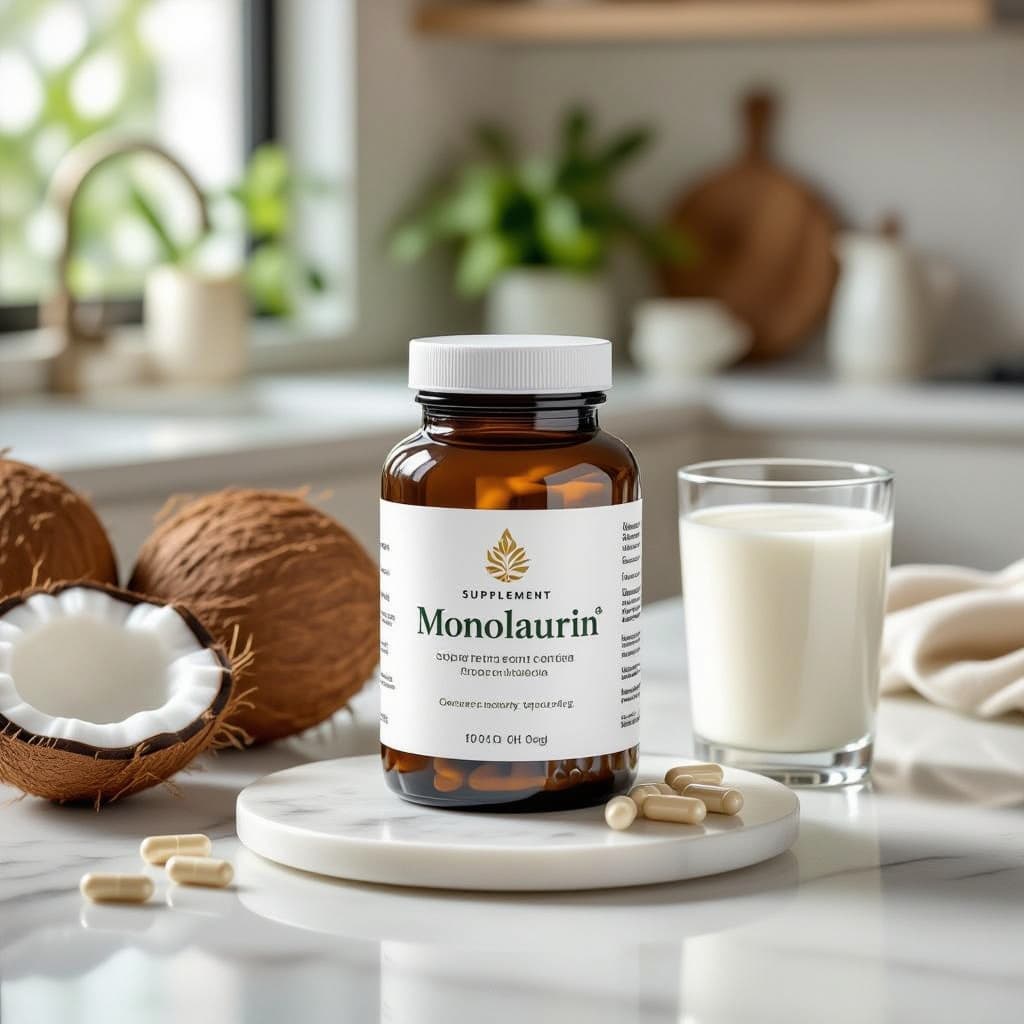
Monolaurin: A Potent Immune Booster Derived From Nature
Monolaurin is a glyceride compound derived from lauric acid, a fatty acid found in coconut oil and human breast milk It is recognized for its potent antimicrobial and immune-boosting properties.
Supplement Summary
| Name | Monolaurin |
|---|---|
| Category | Immune Support |
| Main Uses |
|
| Effectiveness | Moderate to High based on current research |
| Common Dosage | 300-1200 mg per day |
| Price Range | $10-20 per month |
| Forms Available | Capsules |
Pros
- ✅ Potent antimicrobial properties
- ✅ Boosts immune system
- ✅ Has anti-inflammatory benefits
- ✅ Derived from natural sources
- ✅ Generally well-tolerated
Cons / Side Effects
- ❌ Can cause allergic reactions in some people
- ❌ May cause gastrointestinal discomfort
- ❌ More research is needed to fully understand its effects
What Is Monolaurin?
Monolaurin is a glyceride compound derived from lauric acid, a fatty acid found in coconut oil and human breast milk. It is recognized for its potent antimicrobial and immune-boosting properties.
How It Works
Monolaurin works by disrupting the lipid membranes of certain viruses and bacteria, thus deactivating them. It also bolsters the immune system by enhancing the body's defense mechanisms.
Who It's Best For
Individuals looking to strengthen their immune system, those prone to bacterial or viral infections, and people seeking natural anti-inflammatory supplements.
Who Should Avoid It
People with known allergies to Monolaurin or its constituents, and those with certain gastrointestinal conditions.
Dosage & Usage Tips
Monolaurin is typically taken as a dietary supplement in capsule form. The recommended dosage is between 300 and 1200 mg per day, taken with meals. Always start with a lower dose and gradually increase to assess tolerance.
Buying Advice & Quality Tips
Choose Monolaurin supplements from reputable brands that guarantee purity and potency. It's best to select products free from unnecessary additives or fillers.
Price & Value
Given its potential health benefits, Monolaurin offers good value for money. Prices can vary depending on the brand and dosage.
Final Verdict
Monolaurin presents as a promising supplement for immune support and combating infections. However, individuals should consult with a healthcare professional before starting any new supplement regimen.
Additional Clinical Research
RESEARCH SUMMARY: Monolaurin
KEY FINDINGS:
Antiviral Activity
- Monolaurin inhibited Seneca Valley virus (SVV) replication by up to 80% in vitro and reduced clinical symptoms, viral load, and organ damage in SVV-infected piglets.
- Study details: In vitro experiments and in vivo studies on piglets; monolaurin significantly reduced inflammatory cytokines and promoted interferon-γ release.
Source: Su et al. (2023)
View Research
https://pubmed.ncbi.nlm.nih.gov/36777661/
Antifungal Activity
- Monolaurin exhibited antifungal activity against Candida albicans biofilms, with MIC and MFC ranges of 62.5–125 µM and 125–250 µM, respectively.
- Study details: In vitro study; monolaurin significantly reduced fungal load in biofilms and down-regulated pro-inflammatory cytokines IL-1α and IL-1β.
Source: Seleem et al. (2016)
View Research
https://www.ncbi.nlm.nih.gov/pmc/articles/PMC4924139/
Antibacterial Activity
- Monolaurin demonstrated significant inhibitory effects on methicillin-resistant Staphylococcus aureus (MRSA) biofilms, with MIC values ranging from 500 to 2000 μg/mL.
- Study details: In vitro study; monolaurin inhibited biofilm formation and eradicated preformed MRSA biofilms, showing synergistic effects with β-lactam antibiotics.
Source: Abd El-Ghany et al. (2024)
View Research
https://pubmed.ncbi.nlm.nih.gov/39129910/
RESEARCH QUALITY ASSESSMENT:
- Studies utilized both in vitro and in vivo models, providing comprehensive insights into monolaurin's antimicrobial properties.
- Sample sizes varied, with in vivo studies involving piglets and in vitro studies using microbial cultures, which may limit direct applicability to human health.
- While results are promising, further research, including human clinical trials, is necessary to confirm efficacy and safety in human populations.
- Future studies should explore optimal dosing, potential side effects, and mechanisms of action in humans.