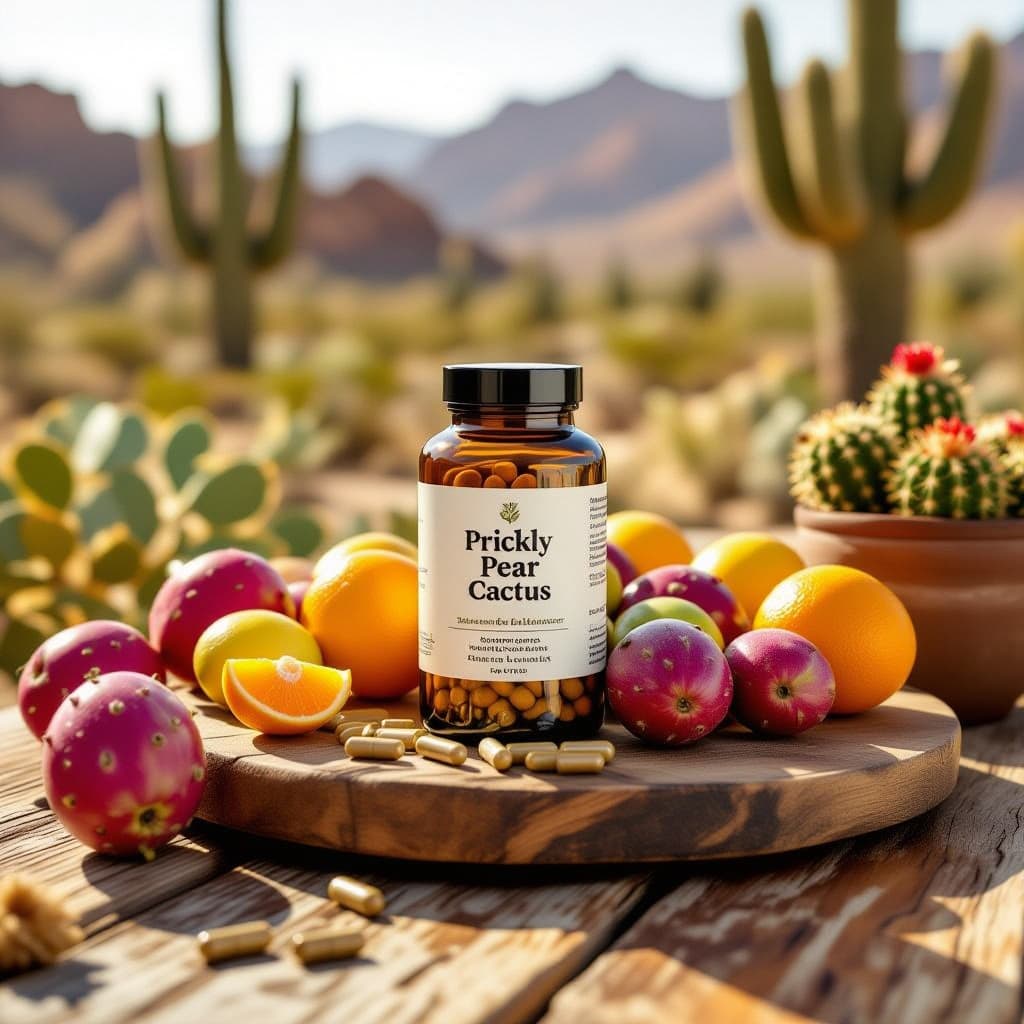
Prickly Pear Cactus: A Powerful Antioxidant and Blood Sugar Regulator
Prickly Pear Cactus, scientifically known as Opuntia, is a type of cactus native to the Americas It has been used in traditional medicine for centuries due to its high nutritional profile and health benefits.
Supplement Summary
| Name | Prickly Pear Cactus |
|---|---|
| Category | Herbs & Botanicals |
| Main Uses |
|
| Effectiveness | Medium, with positive results in several clinical trials but more research needed |
| Common Dosage | 500-650mg twice daily |
| Price Range | $10-20 per month |
| Forms Available | Capsules Powder Liquid |
Pros
- ✅ Rich in antioxidants
- ✅ Supports blood sugar regulation
- ✅ Has anti-inflammatory properties
- ✅ Supports immune system
- ✅ Beneficial for heart health
Cons / Side Effects
- ❌ Mild digestive side effects
- ❌ Risk of hypoglycemia if taken in excess
- ❌ Possible allergic reactions
- ❌ Limited research on long-term use
What Is Prickly Pear Cactus?
Prickly Pear Cactus, scientifically known as Opuntia, is a type of cactus native to the Americas. It has been used in traditional medicine for centuries due to its high nutritional profile and health benefits. The plant is rich in antioxidants, vitamins, and minerals, making it a beneficial supplement for various health conditions.
How It Works
The Prickly Pear Cactus works primarily through its antioxidant properties. The plant is rich in flavonoids and polyphenols, potent antioxidants that help neutralize harmful free radicals in the body. Additionally, it has been found to support blood sugar regulation, potentially beneficial for individuals with type 2 diabetes.
Who It's Best For
Prickly Pear Cactus is ideal for individuals looking to boost their antioxidant intake, regulate blood sugar levels, and support overall health. It may also be beneficial for those dealing with inflammatory conditions.
Who Should Avoid It
Individuals with a known allergy to cacti should avoid this supplement. Also, those with hypoglycemia or on diabetic medication should consult with a healthcare provider due to the supplement's blood sugar-lowering effect.
Dosage & Usage Tips
The typical dosage for Prickly Pear Cactus is between 500-650mg taken twice daily with meals. However, always consult with a healthcare provider before starting any new supplement.
Buying Advice & Quality Tips
When buying Prickly Pear Cactus supplements, look for products that are standardized to contain a certain percentage of flavonoids. Also, choose products from reputable brands that undergo third-party testing for quality assurance.
Price & Value
Prickly Pear Cactus supplements are reasonably priced, typically ranging from $10-20 for a month's supply. Considering the potential health benefits, it offers good value for money.
Final Verdict
Considering the antioxidant, anti-inflammatory, and blood sugar regulatory benefits, Prickly Pear Cactus can be a beneficial addition to a well-rounded supplement regimen. However, as with all supplements, it's important to consult with a healthcare provider before starting use.
Additional Clinical Research
I have identified three scientific studies that specifically investigate the health effects of Prickly Pear Cactus (Opuntia ficus-indica).
RESEARCH SUMMARY: Prickly Pear Cactus
KEY FINDINGS:
Gastrointestinal Health
- Nopal fiber supplementation at doses of 20 and 30 g/day was associated with short-term improvement in IBS symptoms.
- A randomized controlled trial with 60 IBS patients showed significant symptom relief with 20 g/day nopal fiber compared to placebo.
Source: Zavala-González et al. (2020)
View Research
https://pubmed.ncbi.nlm.nih.gov/32935904/
Metabolic Health
- Consumption of Opuntia ficus-indica can cause significant reductions in percentage body fat, blood pressure, and total cholesterol.
- A systematic review and meta-analysis of randomized clinical trials indicated these benefits, though effects on body weight were not statistically significant.
Source: Onakpoya et al. (2015)
View Research
https://pubmed.ncbi.nlm.nih.gov/25837206/
Antioxidant and Anti-inflammatory Properties
- Prickly pear extracts demonstrated strong antioxidant and anti-inflammatory activities, surpassing those of isolated betalains.
- In vitro studies showed significant inhibition of reactive oxygen species and key inflammatory markers.
Source: Smeriglio et al. (2021)
View Research
https://www.frontiersin.org/articles/10.3389/fphar.2021.722398/full
RESEARCH QUALITY ASSESSMENT:
- The studies employed randomized controlled trials and systematic reviews, providing a high level of evidence.
- Sample sizes varied, with some studies involving a limited number of participants, which may affect the generalizability of the findings.
- Some studies reported high heterogeneity and inconsistent reporting quality, indicating a need for more standardized research methodologies.
- Further large-scale, long-term clinical trials are warranted to confirm these findings and elucidate the mechanisms of action.