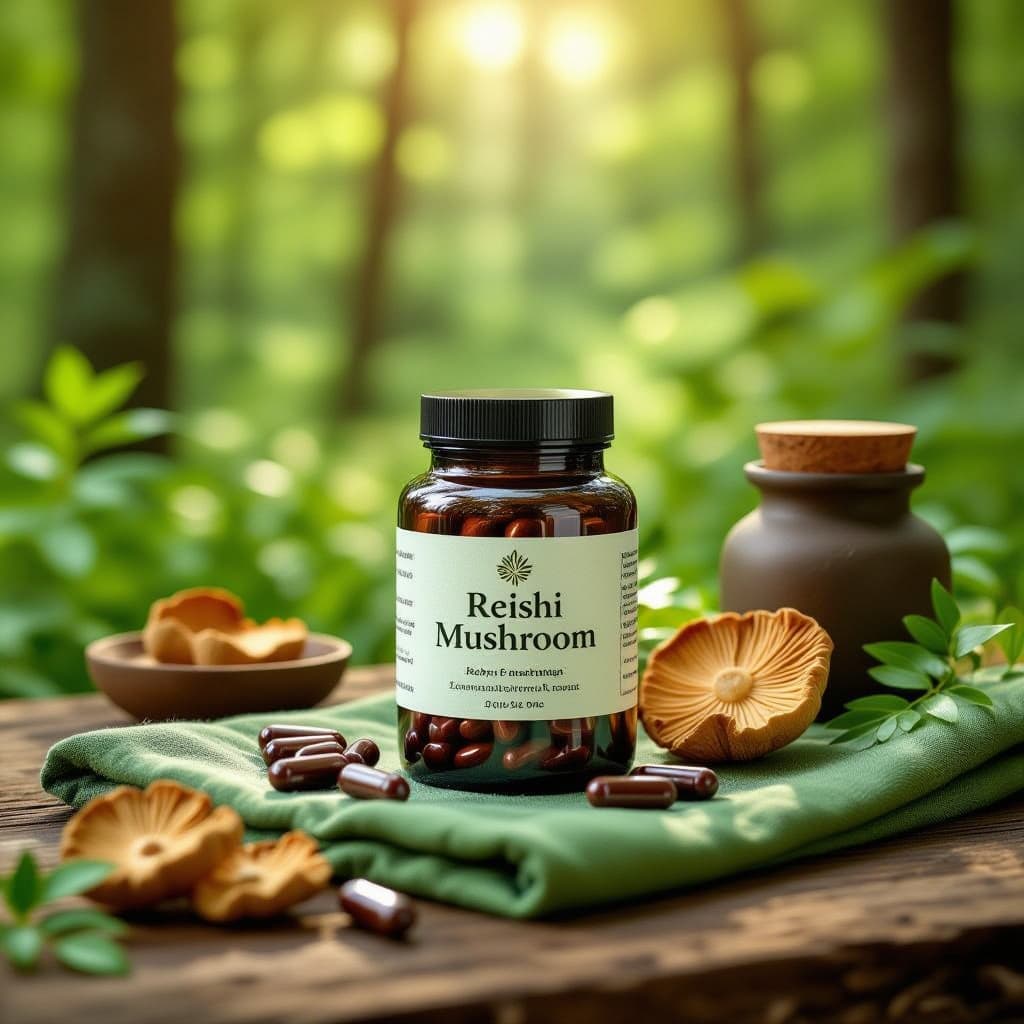
Unraveling the Health Promoting Potential of Reishi Mushroom
Reishi Mushroom, also known as Ganoderma lucidum, is a type of medicinal mushroom with a rich history in traditional Chinese medicine This fungus, which grows on hardwoods in hot and humid climates, is revered for its potential health-promoting properties.
Supplement Summary
| Name | Reishi Mushroom |
|---|---|
| Category | Herbs & Botanicals |
| Main Uses |
|
| Effectiveness | Moderate - findings from studies are promising but more research is needed |
| Common Dosage | 1-2 grams daily |
| Price Range | $15-30 per month |
| Forms Available | Capsules Powder Liquid |
Pros
- ✅ Boosts immune system
- ✅ Possesses antioxidant properties
- ✅ May improve heart health
- ✅ Might help regulate blood sugar
- ✅ Can potentially enhance mental clarity
Cons / Side Effects
- ❌ Stomach upset
- ❌ Allergic reactions in sensitive individuals
- ❌ Potential interactions with certain medications
What Is Reishi Mushroom?
Reishi Mushroom, also known as Ganoderma lucidum, is a type of medicinal mushroom with a rich history in traditional Chinese medicine. This fungus, which grows on hardwoods in hot and humid climates, is revered for its potential health-promoting properties.
How It Works
Reishi Mushroom exerts its effects through various bioactive compounds, including polysaccharides and triterpenes. These compounds have been studied for their immune-modulating, antioxidant, anti-inflammatory, and anticancer properties. They exert their effect by modulating cellular functions and fighting oxidative stress.
Who It's Best For
Reishi Mushroom may be beneficial for individuals seeking to boost their immunity, improve heart health, and combat oxidative stress.
Who Should Avoid It
People allergic to mushrooms, those on blood-thinning medications, or those with immune disorders should avoid this supplement.
Dosage & Usage Tips
Typically, the recommended dosage of Reishi Mushroom is 1-2 grams daily, taken with meals. However, dosage may vary depending on the individual's health status and the product's potency.
Buying Advice & Quality Tips
When choosing a Reishi Mushroom product, look for ones that specify the amount of active compounds, are organically grown, and do not contain unnecessary additives.
Price & Value
The cost of Reishi Mushroom supplements may vary. However, considering its potential health benefits, it can be a valuable addition to a wellness regimen.
Final Verdict
The Reishi Mushroom, with its potential health-promoting properties, can be a valuable supplement. However, it's important to consult with a healthcare provider before starting any new supplement regimen.
Additional Clinical Research
Here is a summary of three scientific studies specifically investigating the effects of Reishi Mushroom (Ganoderma lucidum):
RESEARCH SUMMARY: Reishi Mushroom
KEY FINDINGS:
Cardiovascular Risk Factors in Metabolic Syndrome
- A 16-week double-blind, randomized, placebo-controlled trial assessed the efficacy of Ganoderma lucidum in treating hyperglycemia and other cardiovascular risk factors in individuals with type 2 diabetes mellitus and metabolic syndrome.
- 84 participants were divided into three groups: Ganoderma lucidum, Ganoderma lucidum with Cordyceps sinensis, or placebo, receiving 3 g/day of the respective treatments.
- The study found no significant effects of Ganoderma lucidum on primary outcomes (HbA1c and fasting plasma glucose) or secondary outcomes (blood pressure, triglycerides, waist circumference, BMI, etc.).
- No overall increased risk of adverse events was observed with Ganoderma lucidum treatment.
Source: Klupp et al. (2016)
View Research
https://www.ncbi.nlm.nih.gov/pmc/articles/PMC4980683/
Quality of Life in Non–Small Cell Lung Cancer Patients Undergoing Chemotherapy
- A phase II randomized, double-blind, placebo-controlled clinical trial evaluated the preliminary efficacy and safety of Reishi & Privet Formula (RPF) in maintaining quality of life among patients with non–small cell lung cancer (NSCLC) undergoing chemotherapy.
- 82 participants were randomly assigned to receive either RPF (3.36 g/day) or placebo daily for 6 weeks.
- The RPF group showed a non-statistically significant trend towards higher quality of life scores compared to the placebo group, with better general health and emotional well-being.
- Adverse event rates did not differ between the RPF and placebo groups.
Source: Liu et al. (2020)
View Research
https://journals.sagepub.com/doi/full/10.1177/1534735420944491
Lower Urinary Tract Symptoms in Men
- A double-blind, placebo-controlled, randomized, dose-ranging study evaluated the safety and efficacy of an ethanol extract of Ganoderma lucidum in men with slight-to-moderate lower urinary tract symptoms (LUTS).
- 88 men over the age of 49 were randomly assigned to receive either 6 mg of Ganoderma lucidum extract or placebo once daily for 12 weeks.
- The Ganoderma lucidum group showed a significant improvement in the International Prostate Symptom Score (IPSS) compared to the placebo group, with a mean difference of -1.18 points.
- No significant changes were observed in quality of life scores, peak urinary flow, mean urinary flow, residual urine, prostate volume, serum prostate-specific antigen, or testosterone levels.
- The treatment was well tolerated with no severe adverse effects reported.
Source: Ushijima et al. (2008)
View Research
https://pubmed.ncbi.nlm.nih.gov/18097505/
RESEARCH QUALITY ASSESSMENT:
- All three studies were randomized, double-blind, placebo-controlled trials, which are considered the gold standard in clinical research.
- Sample sizes varied, with the largest study including 88 participants, which may limit the generalizability of the findings.
- While the studies were well-designed, some reported non-statistically significant trends, indicating the need for larger, more adequately powered trials to confirm efficacy.
- Future research should focus on larger sample sizes and longer follow-up periods to better assess the long-term effects and safety of Ganoderma lucidum.