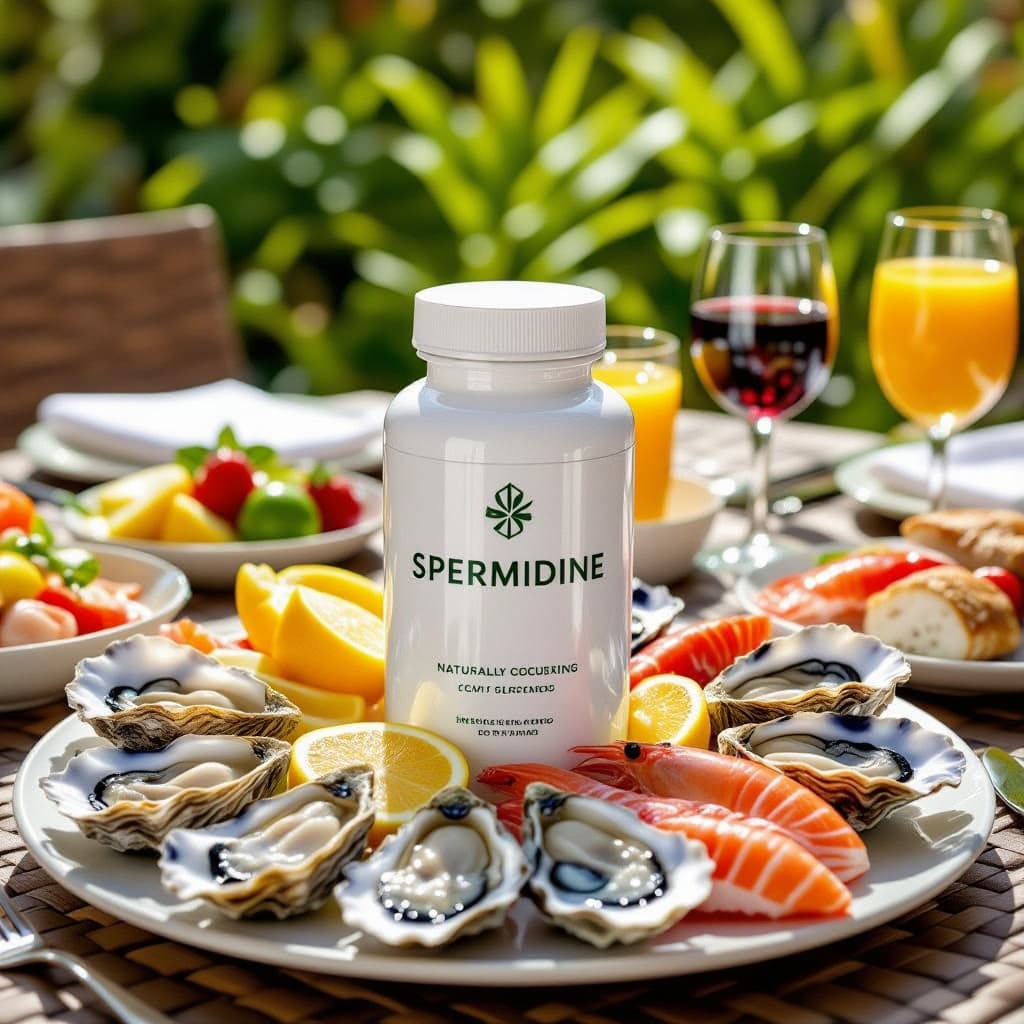
Unleashing the Potential of Spermidine: A Review
Spermidine is a naturally occurring polyamine, found in various foods and within the human body It plays a crucial role in cellular growth, differentiation, and apoptosis.
Supplement Summary
| Name | Spermidine |
|---|---|
| Category | Anti-Aging / Longevity |
| Main Uses |
|
| Effectiveness | Moderate to High based on current research |
| Common Dosage | 1-2 mg daily |
| Price Range | $$$ |
| Forms Available | Capsules Powder |
Pros
- ✅ Promotes cellular autophagy
- ✅ Potential anti-aging benefits
- ✅ Supports cardiovascular health
- ✅ May enhance cognitive function
- ✅ Generally well-tolerated with minimal side effects
Cons / Side Effects
- ❌ Research is still emerging
- ❌ Optimal dosage is not yet established
- ❌ May cause mild gastrointestinal disturbances
What Is Spermidine?
Spermidine is a naturally occurring polyamine, found in various foods and within the human body. It plays a crucial role in cellular growth, differentiation, and apoptosis. Its key feature is its ability to stimulate autophagy, the body's process of recycling damaged cell parts to maintain cellular health.
How It Works
Spermidine works by inducing autophagy, a cellular recycling process that removes damaged proteins and organelles. This process is crucial for cellular health, aging, and resistance to stress. Additionally, it may have a role in regulating gene expression and stabilizing DNA.
Who It's Best For
Spermidine may be beneficial for those seeking to support cellular health, aging, cardiovascular health, and cognitive function. It may also be of interest to individuals seeking to enhance their body's natural autophagy processes.
Who Should Avoid It
Those with known allergies to Spermidine or pregnant and breastfeeding women should avoid this supplement until more safety data is available.
Dosage & Usage Tips
Spermidine is typically taken in doses of 1-2 mg daily. As always, it's important to consult with a healthcare professional before starting any new supplement regimen.
Buying Advice & Quality Tips
When selecting a Spermidine supplement, look for products from reputable manufacturers that provide transparency in their ingredient sourcing and manufacturing processes.
Price & Value
While Spermidine supplements can be on the higher end of the price spectrum, the potential benefits in cellular health, longevity, and cardiovascular support may justify the cost for many individuals.
Final Verdict
While research is ongoing, the potential benefits of Spermidine related to cellular health, longevity, and cardiovascular support make it a supplement worth considering for many individuals.
Additional Clinical Research
RESEARCH SUMMARY: Spermidine
KEY FINDINGS:
Hair Growth
- Spermidine supplementation prolonged the anagen phase of hair follicles, indicating potential benefits for hair growth.
- Study involved 100 healthy males and females in a randomized, double-blind, placebo-controlled trial over 90 days.
Source: Rinaldi et al. (2017)
View Research
https://pubmed.ncbi.nlm.nih.gov/29214104/
Cognitive Function
- Spermidine intake was associated with improved memory performance in older adults with subjective cognitive decline.
- Study included 30 participants aged 60–80 years in a 3-month randomized, placebo-controlled, double-blind trial.
Source: Wirth et al. (2018)
View Research
https://pubmed.ncbi.nlm.nih.gov/30388439/
Biological Age and Immune Function
- Supplementation with spermidine, AM3, and hesperidin decreased biological age by 11 years and improved immune function.
- Study involved 41 participants aged 30–63 years in a 2-month randomized, placebo-controlled trial.
Source: Félix et al. (2024)
View Research
https://pubmed.ncbi.nlm.nih.gov/39594533/
RESEARCH QUALITY ASSESSMENT:
- Studies were randomized, double-blind, and placebo-controlled, enhancing reliability.
- Sample sizes were relatively small, which may limit generalizability.
- Short intervention durations; long-term effects remain unknown.
- Further large-scale, long-term studies are needed to confirm findings and assess safety.

