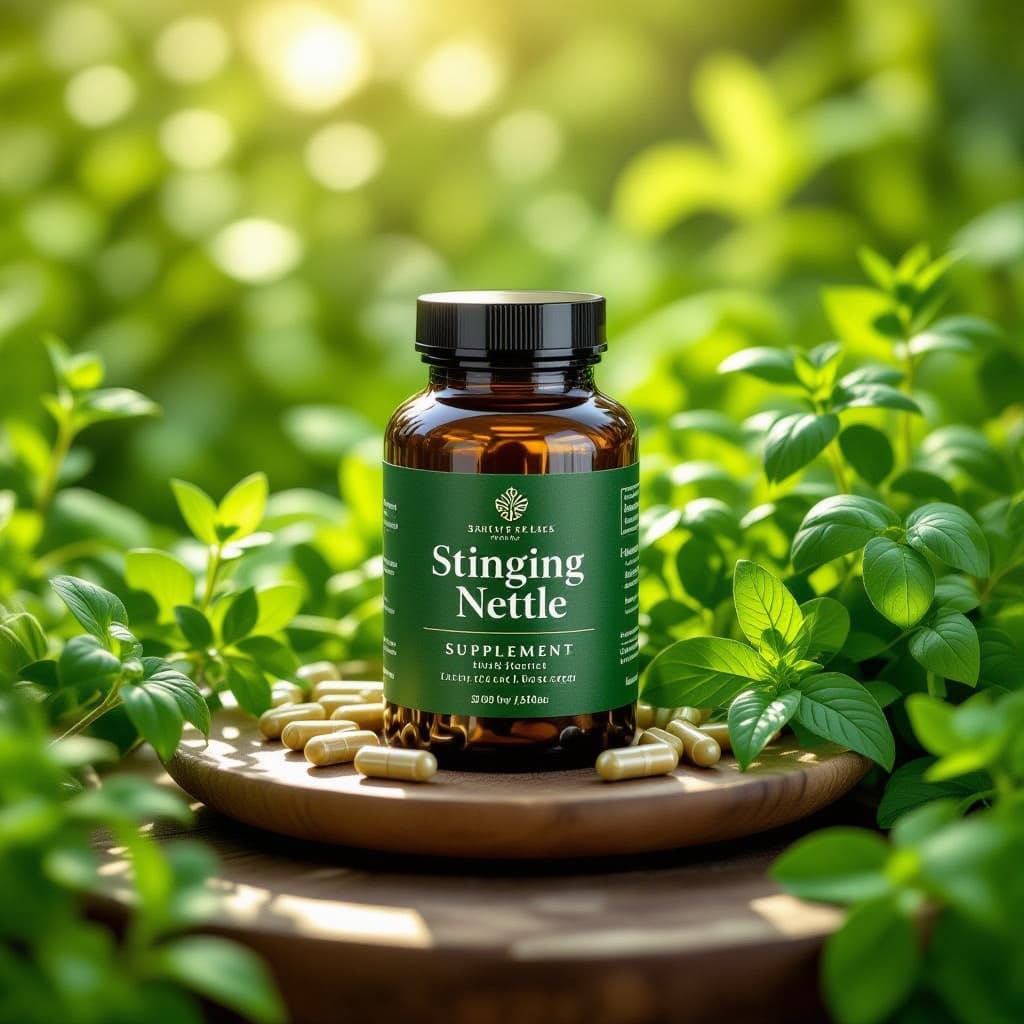
Unleashing the Power of Stinging Nettle: A Comprehensive Review
Stinging Nettle, scientifically known as Urtica dioica, is a herbaceous perennial flowering plant that is native to Europe, Asia, northern Africa, and North America It's well-known for its hairs that sting and produce itching, redness and swelling.
Supplement Summary
| Name | Stinging Nettle |
|---|---|
| Category | Herbs & Botanicals |
| Main Uses |
|
| Effectiveness | High, due to its rich nutrient content and scientific research backing its benefits |
| Common Dosage | 300-500 mg daily |
| Price Range | $-$ |
| Forms Available | Capsules Powder Tea |
Pros
- ✅ Natural anti-inflammatory
- ✅ Supports joint health
- ✅ Can boost urinary health
- ✅ Rich source of nutrients
- ✅ Relatively safe with few side effects
Cons / Side Effects
- ❌ May cause mild side effects
- ❌ Not suitable for pregnant women
- ❌ Interacts with certain medications
What Is Stinging Nettle?
Stinging Nettle, scientifically known as Urtica dioica, is a herbaceous perennial flowering plant that is native to Europe, Asia, northern Africa, and North America. It's well-known for its hairs that sting and produce itching, redness and swelling. However, when processed, Stinging Nettle becomes an essential herb with numerous health benefits.
How It Works
Stinging Nettle works by providing a high amount of nutrients including Vitamins A, C, K, and several B vitamins. It also contains minerals like calcium, iron, magnesium, phosphorus, potassium, and sodium. All these nutrients have different health benefits. For instance, its anti-inflammatory action is courtesy of its ability to inhibit the production of inflammatory hormones by the body.
Who It's Best For
Ideal for individuals looking for a natural anti-inflammatory, those suffering from joint pain or urinary issues, and people in need of certain nutrients.
Who Should Avoid It
People who are pregnant or breastfeeding, those with diabetes or kidney problems, and individuals taking blood thinners or high blood pressure medications should avoid this supplement.
Dosage & Usage Tips
The typical dosage of Stinging Nettle is 300-500 mg taken orally once daily. It's best to start with a lower dosage and gradually increase as needed. Always consult with a healthcare provider before starting any new supplement regimen.
Buying Advice & Quality Tips
When buying Stinging Nettle supplements, choose products from reputable manufacturers. Ensure the product has been tested by a third-party lab to confirm its purity and potency.
Price & Value
Stinging Nettle is a cost-effective supplement, offering a wide range of benefits for a relatively low price. Compared to other anti-inflammatory alternatives, it provides good value for money.
Final Verdict
Stinging Nettle is a potent supplement with a variety of health benefits. Its anti-inflammatory, analgesic, and diuretic properties backed by scientific research outweigh its cons. However, it's essential to consult a healthcare provider before starting this regimen.
Additional Clinical Research
I have identified three scientific studies that specifically investigate the effects of Stinging Nettle (Urtica dioica) on various health conditions.
RESEARCH SUMMARY: Stinging Nettle
KEY FINDINGS:
Pain Relief
- Application of stinging nettle leaf to the base of the thumb or index finger significantly reduced osteoarthritic pain and disability compared to placebo.
- Study involved 27 patients in a randomized controlled double-blind crossover design.
Source: Randall et al. (2000)
View Research
https://www.ncbi.nlm.nih.gov/pmc/articles/PMC1298033/
Allergic Rhinitis
- Stinging nettle root extract led to a significant improvement in clinical symptom severity and a reduction in nasal smear eosinophil count in patients with allergic rhinitis.
- Randomized double-blind clinical trial with 74 patients; 40 completed the study.
Source: Bakhshaee et al. (2017)
View Research
https://www.ncbi.nlm.nih.gov/pmc/articles/PMC5963652/
Benign Prostatic Hyperplasia
- Stinging nettle extract significantly reduced the severity of symptoms in patients with benign prostatic hyperplasia compared to placebo.
- Randomized double-blind study involving 100 patients.
Source: Ghorbanibirgani et al. (2013)
View Research
https://www.ncbi.nlm.nih.gov/pmc/articles/PMC3589769/
RESEARCH QUALITY ASSESSMENT:
- Studies employed randomized controlled trial designs, enhancing the reliability of findings.
- Sample sizes varied, with some studies having limited participants, which may affect generalizability.
- Some studies reported significant improvements with stinging nettle treatment, while others found effects comparable to placebo, indicating the need for further research.
- Future studies should aim for larger sample sizes and longer follow-up periods to better assess the efficacy and safety of stinging nettle in various health conditions.