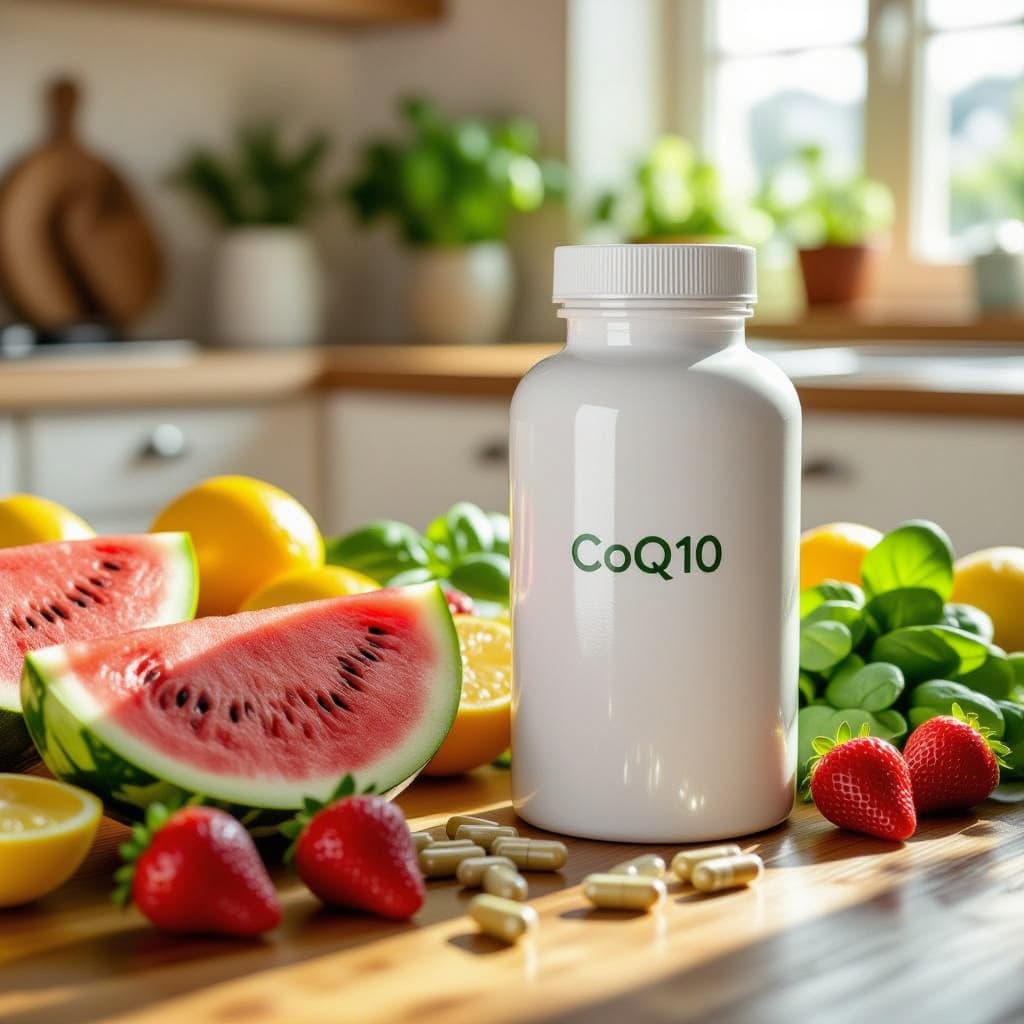
CoQ10: The Antioxidant Powerhouse for Heart and Energy Support
Coenzyme Q10 (CoQ10) is a naturally occurring antioxidant that plays a pivotal role in the mitochondrial electron transport chain, facilitating the production of ATP, the body's primary form of energy Widely recognized for its heart health and energy boosting benefits, CoQ10 is also believed to slow down the aging process due to its potent antioxidant properties.
Supplement Summary
| Name | CoQ10 |
|---|---|
| Category | Antioxidants |
| Main Uses |
|
| Effectiveness | Very High |
| Common Dosage | 100-200 mg per day |
| Price Range | $20-40 per month |
| Forms Available | Capsules Softgels Liquid |
Pros
- ✅ Boosts cellular energy production
- ✅ Supports heart health
- ✅ Potent antioxidant properties
- ✅ May enhance physical performance
- ✅ May slow down aging process
Cons / Side Effects
- ❌ Potential mild side effects
- ❌ May interact with some medications
- ❌ Less effective if not taken with fats
What Is CoQ10?
Coenzyme Q10 (CoQ10) is a naturally occurring antioxidant that plays a pivotal role in the mitochondrial electron transport chain, facilitating the production of ATP, the body's primary form of energy. Widely recognized for its heart health and energy boosting benefits, CoQ10 is also believed to slow down the aging process due to its potent antioxidant properties.
How It Works
CoQ10 works by aiding the mitochondria, the powerhouse of cells, in energy production. It also acts as a free radical scavenger, protecting cells from oxidative damage, a key factor in aging and many chronic diseases.
Who It's Best For
Those seeking to improve energy levels, support heart health, or slow aging process
Who Should Avoid It
People on blood thinning medications or those with low blood pressure should consult their physician before taking CoQ10.
Dosage & Usage Tips
For optimal absorption, CoQ10 should be taken with meals, particularly those containing fats. The typical dosage is 100-200mg per day.
Buying Advice & Quality Tips
Choose CoQ10 supplements from reputable brands that offer products in softgel form with added fats for better absorption.
Price & Value
While CoQ10 supplements can be somewhat costly, the wide range of health benefits they offer present a positive cost-benefit ratio.
Final Verdict
Given its potent antioxidant properties and its role in energy production and heart health, CoQ10 is a highly recommended supplement for most individuals, especially those over 40.
Additional Clinical Research
Coenzyme Q10 (CoQ10) has been the subject of numerous scientific studies investigating its potential health benefits. Below is a summary of key findings from selected research:
RESEARCH SUMMARY: CoQ10
KEY FINDINGS:
Cardiovascular Health
- A 2014 Cochrane review found insufficient evidence to make a conclusion about CoQ10's use for the prevention of heart disease.
- A 2016 Cochrane review concluded that CoQ10 had no effect on blood pressure.
- A 2021 Cochrane review found "no convincing evidence to support or refute" the use of CoQ10 for the treatment of heart failure.
Source: Cochrane Database of Systematic Reviews
View Research
https://www.cochranelibrary.com/cdsr/doi/10.1002/14651858.CD007435.pub3/full
Heart Failure
- A 2017 meta-analysis of people with heart failure taking 30–100mg/d of CoQ10 found a 31% lower mortality and increased exercise capacity, with no significant difference in the endpoints of left heart ejection fraction.
Source: BMC Cardiovascular Disorders
View Research
https://bmccardiovascdisord.biomedcentral.com/articles/10.1186/s12872-017-0595-6
Statin-Induced Myopathy
- Although CoQ10 has been studied as a potential remedy to treat purported muscle-related side effects of statin medications, the results were mixed.
- A 2018 meta-analysis concluded that there was preliminary evidence for oral CoQ10 reducing statin-associated muscle symptoms, including muscle pain, muscle weakness, muscle cramps, and muscle tiredness.
- However, 2015 and 2024 meta-analyses found that CoQ10 had no effect on statin myopathy.
Source: Journal of the American Heart Association
View Research
https://www.ahajournals.org/doi/10.1161/JAHA.118.009835
RESEARCH QUALITY ASSESSMENT:
- The studies referenced are systematic reviews and meta-analyses, which are considered high-quality evidence in the hierarchy of research.
- However, the conclusions indicate a lack of sufficient evidence to support the efficacy of CoQ10 in various health conditions, suggesting the need for more rigorous, large-scale randomized controlled trials.
- Limitations include variability in study designs, dosages, and participant characteristics across the included studies.
- Further research is needed to conclusively determine the potential health benefits of CoQ10 supplementation.