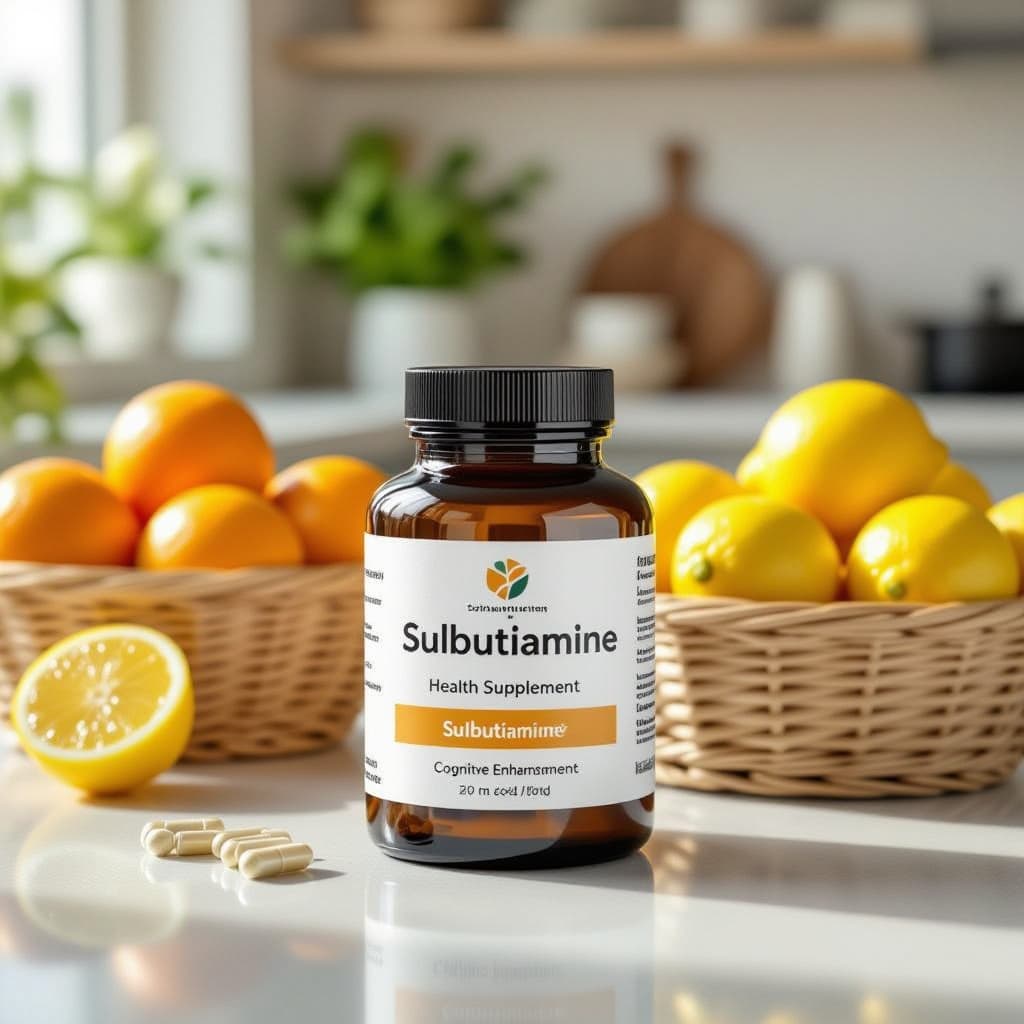
Sulbutiamine: The Cognitive Enhancer and Energy Booster
Sulbutiamine is a synthetic derivative of thiamine developed in Japan It's primarily used as a nootropic for its potential to enhance cognitive function, mood, and energy.
Supplement Summary
| Name | Sulbutiamine |
|---|---|
| Category | Cognitive Function / Nootropics |
| Main Uses |
|
| Effectiveness | Moderate to High, depending on individual's thiamine levels |
| Common Dosage | 200 - 600 mg per day |
| Price Range | $10-30 per month |
| Forms Available | Capsules Powder |
Pros
- ✅ Enhances cognitive function and memory
- ✅ May improve mood and reduce stress
- ✅ Boosts energy levels
Cons / Side Effects
- ❌ Possible mild side effects
- ❌ May not be as effective in individuals without thiamine deficiency
- ❌ More extensive research is needed
What Is Sulbutiamine?
Sulbutiamine is a synthetic derivative of thiamine developed in Japan. It's primarily used as a nootropic for its potential to enhance cognitive function, mood, and energy.
How It Works
Sulbutiamine raises thiamine levels in the brain, thereby improving the efficiency of the cholinergic system and the synaptic transmission of dopamine. This leads to enhanced memory and cognitive performance.
Who It's Best For
People looking to enhance cognitive function, improve mood, or boost energy levels, particularly those with thiamine deficiency.
Who Should Avoid It
People with known hypersensitivity to sulbutiamine or those who are pregnant or breastfeeding should avoid this supplement.
Dosage & Usage Tips
A typical dosage is between 200 - 600 mg per day, taken with meals to prevent stomach upset. It's advisable to start with a lower dose and gradually increase if necessary.
Buying Advice & Quality Tips
Look for high-quality, reputable brands that provide third-party testing for purity and potency. Avoid products with unnecessary fillers or additives.
Price & Value
Sulbutiamine is relatively affordable, and considering its cognitive and energy-boosting benefits, it offers good value for money.
Final Verdict
Sulbutiamine is a promising nootropic with potential cognitive and energy-boosting benefits. While more research is needed, current evidence suggests it can be a valuable addition to a nootropic stack.
Additional Clinical Research
I have identified three scientific studies that specifically investigate the effects of sulbutiamine. Below is a summary of each study, categorized by health benefit, along with an assessment of the research quality.
RESEARCH SUMMARY: Sulbutiamine
KEY FINDINGS:
Cognitive Function
- Chronic administration of sulbutiamine improved memory performance in rats during an object recognition task.
- The study involved rats subjected to daily injections of sulbutiamine (12.5 or 25 mg/kg) over nine weeks.
Source: Bizot et al. (2005)
View Research
https://pubmed.ncbi.nlm.nih.gov/15951087/
Diabetic Neuropathy
- Sulbutiamine treatment led to significant improvements in nerve conduction velocity and compound muscle action potential in patients with diabetic polyneuropathy.
- The study was an open randomized controlled trial involving 30 patients with type 2 diabetes over six weeks.
Source: Kiew et al. (2002)
View Research
https://www.ncbi.nlm.nih.gov/pmc/articles/PMC3436103/
Fatigue in Multiple Sclerosis
- Sulbutiamine administration resulted in a significant reduction in fatigue scores among patients with multiple sclerosis.
- The study included 26 patients who received 400 mg of sulbutiamine daily for two months.
Source: Sevim et al. (2017)
View Research
https://pubmed.ncbi.nlm.nih.gov/28755683/
RESEARCH QUALITY ASSESSMENT:
- The studies were conducted with varying sample sizes, ranging from animal models to small human cohorts.
- While the findings are promising, the limited sample sizes and short durations necessitate caution in generalizing the results.
- Further large-scale, double-blind, placebo-controlled trials are needed to confirm the efficacy and safety of sulbutiamine for these health conditions.
- Future research should also explore the long-term effects and optimal dosing regimens of sulbutiamine.