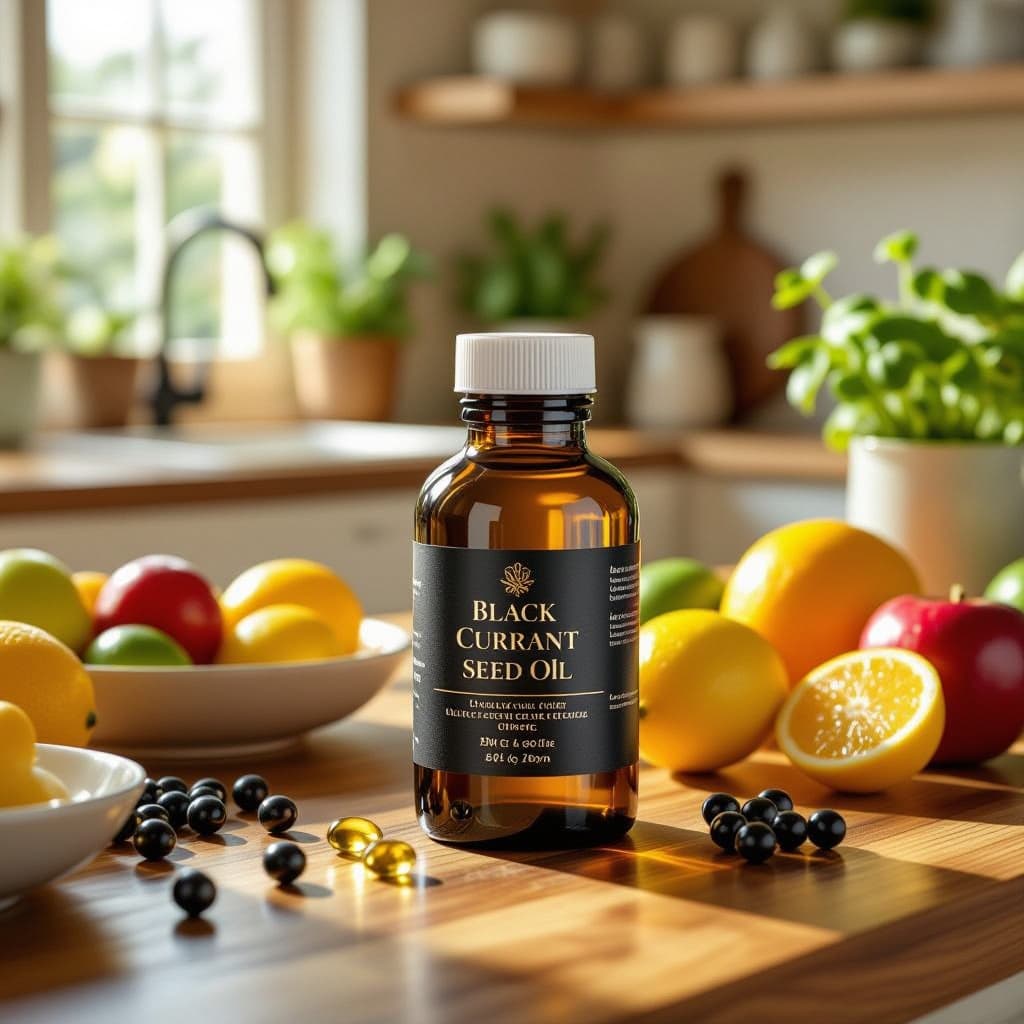
Unveiling the Health Benefits of Black Currant Seed Oil
Black Currant Seed Oil is a natural substance derived from the seeds of the black currant plant, scientifically known as Ribes nigrum It is rich in gamma-linolenic acid (GLA), an omega-6 fatty acid, along with other nutrients like vitamin C and anthocyanins.
Supplement Summary
| Name | Black Currant Seed Oil |
|---|---|
| Category | Essential Fatty Acids (EFAs) |
| Main Uses |
|
| Effectiveness | Medium - Several potential benefits, but more research is needed |
| Common Dosage | 500-1000 mg daily |
| Price Range | $$ |
| Forms Available | Capsules Oil |
Pros
- ✅ Rich source of GLA
- ✅ May support immune function
- ✅ Potential anti-inflammatory benefits
- ✅ May improve skin health
- ✅ Easy to incorporate into diet
Cons / Side Effects
- ❌ Potential allergic reactions
- ❌ May interact with blood thinners
- ❌ Not enough research on long-term use
What Is Black Currant Seed Oil?
Black Currant Seed Oil is a natural substance derived from the seeds of the black currant plant, scientifically known as Ribes nigrum. It is rich in gamma-linolenic acid (GLA), an omega-6 fatty acid, along with other nutrients like vitamin C and anthocyanins.
How It Works
The GLA in Black Currant Seed Oil gets converted in the body into substances that reduce inflammation and cell damage. It also boosts the immune system by enhancing the function of immune cells.
Who It's Best For
Individuals looking to boost their intake of essential fatty acids, support immune function, improve skin health, or manage inflammation.
Who Should Avoid It
Individuals who are allergic to black currant or have blood clotting disorders.
Dosage & Usage Tips
Typically, doses of 500-1000 mg daily are recommended, best taken with meals. Always consult a healthcare provider before starting any new supplement regimen.
Buying Advice & Quality Tips
Look for supplements that contain pure Black Currant Seed Oil, without unnecessary additives. Check for third-party testing to ensure quality and safety.
Price & Value
Compared to other sources of GLA, Black Currant Seed Oil offers good value for money. However, prices can vary based on factors like brand and quality.
Final Verdict
Black Currant Seed Oil may offer several health benefits, particularly due to its rich GLA content. However, more research is needed to fully understand its potential. Always consult with a healthcare provider before starting this supplement.
Additional Clinical Research
RESEARCH SUMMARY: Black Currant Seed Oil
KEY FINDINGS:
Rheumatoid Arthritis
- Black currant seed oil (BCSO) supplementation resulted in a reduction of signs and symptoms of disease activity in patients with rheumatoid arthritis (RA).
- Study details: Randomized, double-blind, placebo-controlled trial; 24-week duration; sample size not specified.
Source: Leventhal et al. (1994)
View Research
https://pubmed.ncbi.nlm.nih.gov/8081671/
Atopic Dermatitis Prevention
- Dietary supplementation with BCSO during pregnancy and breastfeeding reduced the prevalence and severity of atopic dermatitis in infants at 12 months of age.
- Study details: Randomized, double-blind, placebo-controlled trial; 313 pregnant mothers; intervention from 8-16 weeks of pregnancy until cessation of breastfeeding; infants followed until 24 months.
Source: Linnamaa et al. (2010)
View Research
https://pubmed.ncbi.nlm.nih.gov/20545710/
Immune Response in Elderly
- BCSO supplementation enhanced delayed-type hypersensitivity skin response and reduced prostaglandin E2 production in healthy elderly subjects, indicating a moderate immune-enhancing effect.
- Study details: Randomized, double-blind, placebo-controlled trial; 40 healthy subjects aged ≥65 years; 2-month supplementation period.
Source: Wu et al. (1999)
View Research
https://pubmed.ncbi.nlm.nih.gov/10500023/
RESEARCH QUALITY ASSESSMENT:
- Studies employed randomized, double-blind, placebo-controlled designs, enhancing the reliability of findings.
- Sample sizes varied, with some studies not specifying participant numbers, which may affect the generalizability of results.
- Limitations include potential biases in self-reported outcomes and the need for larger, more diverse populations to confirm findings.
- Further research is needed to explore long-term effects, optimal dosages, and mechanisms of action of BCSO in various health conditions.