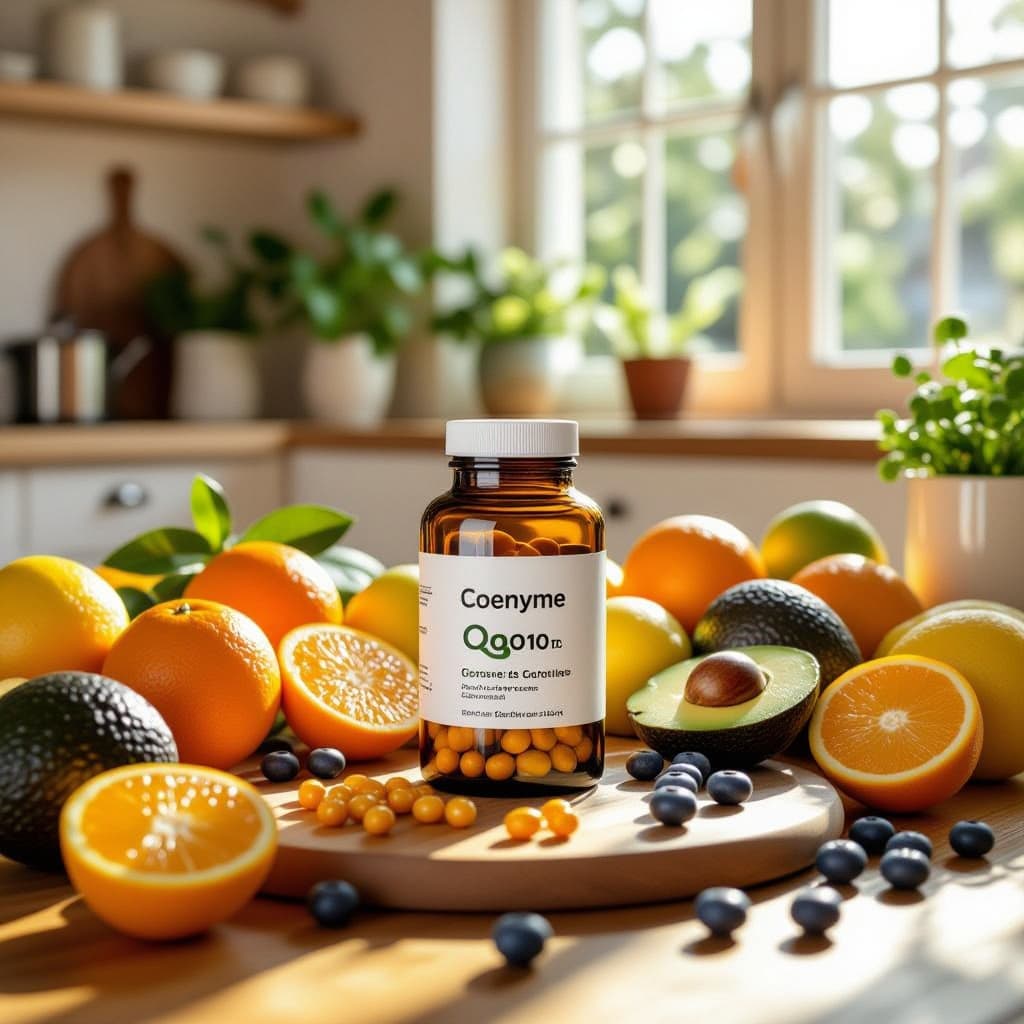

Coenzyme Q10 (CoQ10): A Powerful Antioxidant for Health & Vitality
Coenzyme Q10 (CoQ10) is a naturally occurring compound that plays a fundamental role in cellular energy production It's pivotal for the optimal functioning of heart, liver, and kidney where it's found in highest concentrations.
Supplement Summary
| Name | Coenzyme Q10 (CoQ10) |
|---|---|
| Category | Antioxidants |
| Main Uses |
|
| Effectiveness | Moderate to High, depending on usage |
| Common Dosage | 100-200mg daily |
| Price Range | $$-$$$ |
| Forms Available | Capsules Softgels Powder |
Pros
- ✅ Supports cellular energy production
- ✅ Potent antioxidant properties
- ✅ May support heart health
- ✅ Potential to enhance exercise performance
- ✅ Could alleviate migraines
Cons / Side Effects
- ❌ May cause gastrointestinal discomfort
- ❌ Potential to lower blood sugar
- ❌ Can interact with certain medications
What Is Coenzyme Q10 (CoQ10)?
Coenzyme Q10 (CoQ10) is a naturally occurring compound that plays a fundamental role in cellular energy production. It's pivotal for the optimal functioning of heart, liver, and kidney where it's found in highest concentrations.
How It Works
CoQ10 aids in the production of ATP, the primary energy currency of the cell. It also acts as a potent antioxidant, protecting cells from oxidative damage caused by free radicals.
Who It's Best For
Those looking to support energy production, heart health, and those needing antioxidant support. It may also benefit athletes and individuals prone to migraines.
Who Should Avoid It
People on medication for diabetes or blood thinners should consult healthcare professionals before use.
Dosage & Usage Tips
The commonly recommended dosage is 100-200mg daily, which can be taken with or without food. Always start with a lower dose and adjust based on tolerance and response.
Buying Advice & Quality Tips
Look for high-quality CoQ10 supplements from reputable manufacturers that undergo third-party testing. The form 'Ubiquinol' is highly bioavailable.
Price & Value
While CoQ10 is relatively expensive compared to other supplements, its potential health benefits make it a worthwhile investment for many.
Final Verdict
CoQ10 is a potent antioxidant that supports cellular energy production and heart health. While it has promising potential, it's important to consult a healthcare provider before starting a regimen.
Additional Clinical Research
Coenzyme Q10 (CoQ10) has been the subject of various scientific studies exploring its potential health benefits. Below is a summary of key findings from selected research:
RESEARCH SUMMARY: Coenzyme Q10 (CoQ10)
KEY FINDINGS:
Heart Failure Management
- CoQ10 supplementation (100 mg three times daily) over two years significantly reduced major adverse cardiovascular events, cardiovascular mortality, and all-cause mortality in patients with moderate to severe chronic heart failure.
- The study involved 420 patients across multiple centers, with a randomized, double-blind, placebo-controlled design.
Source: Mortensen et al. (2014)
View Research
https://en.wikipedia.org/wiki/Q-Symbio
Cardiovascular Mortality in Elderly
- Combined supplementation of CoQ10 (200 mg/day) and selenium (200 μg/day) over four years significantly reduced cardiovascular mortality and improved heart function in elderly individuals.
- The randomized, double-blind, placebo-controlled trial included 443 participants aged 70 to 88.
Source: Alehagen et al. (2013)
View Research
https://en.wikipedia.org/wiki/International_Coenzyme_Q10_Association
Endothelial Dysfunction in Ischemic Heart Disease
- CoQ10 supplementation improved endothelial dysfunction in statin-treated type 2 diabetic patients with ischemic heart disease.
- The study observed a sixfold greater improvement in endothelium-dependent relaxation in patients with plasma CoQ10 levels above 2.4 μg/mL compared to those below this threshold.
Source: Littarru et al. (2011)
View Research
https://en.wikipedia.org/wiki/International_Coenzyme_Q10_Association
RESEARCH QUALITY ASSESSMENT:
- The studies referenced are randomized, double-blind, placebo-controlled trials, which are considered the gold standard in clinical research.
- Sample sizes are substantial, enhancing the reliability of the findings.
- However, some studies combine CoQ10 with other supplements (e.g., selenium), making it challenging to attribute effects solely to CoQ10.
- Further research is needed to isolate the specific effects of CoQ10 and to explore its benefits across diverse populations and health conditions.