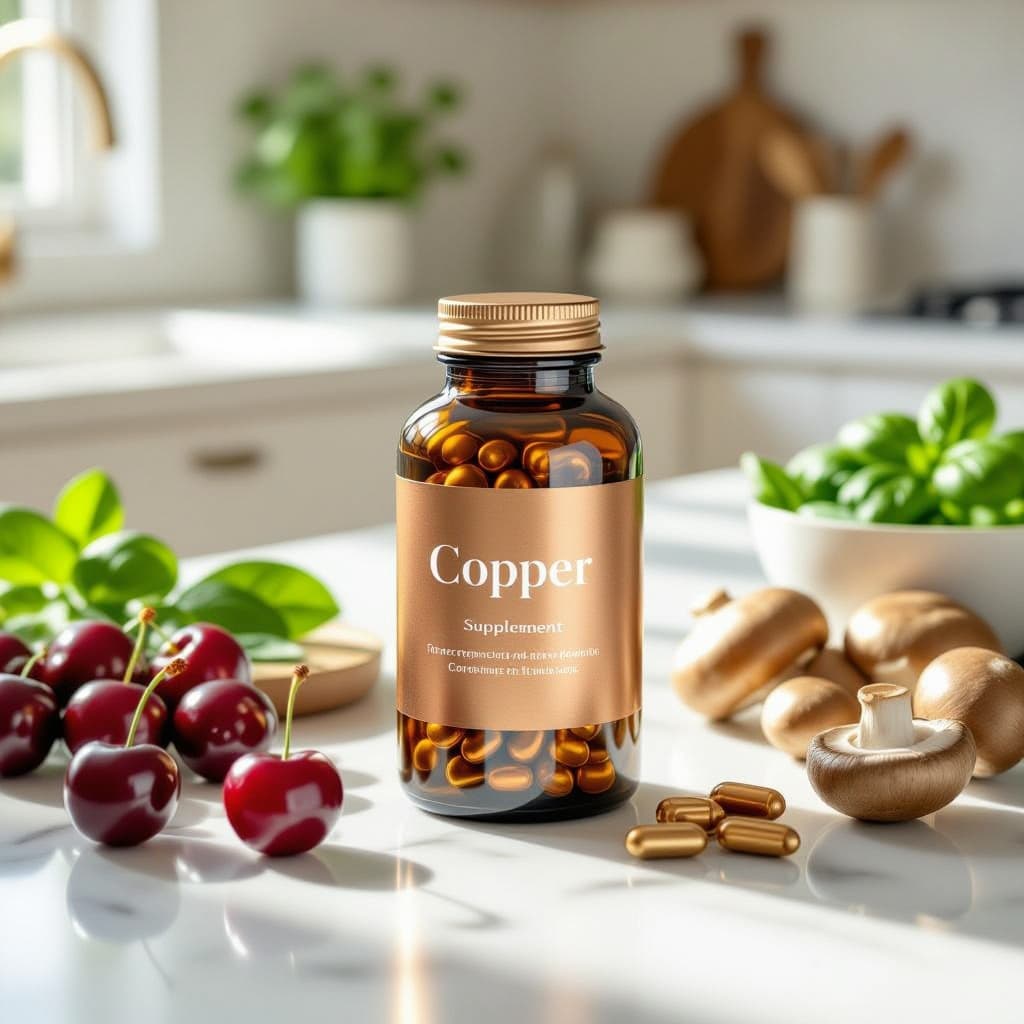
Copper: The Essential Trace Mineral Powering Your Health
Copper is a fundamental trace mineral that the body cannot produce on its own It's crucial for energy production, iron metabolism, and brain development.
Supplement Summary
| Name | Copper |
|---|---|
| Category | Vitamins & Minerals |
| Main Uses |
|
| Effectiveness | High - Numerous studies back its benefits, but balance is key. |
| Common Dosage | 900 micrograms per day |
| Price Range | $-$$ |
| Forms Available | Capsules Tablets Liquid |
Pros
- ✅ Key to energy production
- ✅ Supports brain health
- ✅ Helps in iron metabolism
Cons / Side Effects
- ❌ Potential for toxicity with overconsumption
- ❌ May cause gastrointestinal discomfort
- ❌ Chronic excess could lead to liver disease
What Is Copper?
Copper is a fundamental trace mineral that the body cannot produce on its own. It's crucial for energy production, iron metabolism, and brain development. Found in various foods, copper is also available as a dietary supplement.
How It Works
Copper acts as a catalyst in redox reactions, essential for energy production in cells. It also aids in iron transfer in the blood, promoting healthy red blood cell formation. Furthermore, copper is a key component in the maintenance of myelin sheaths, thus supporting brain function.
Who It's Best For
Ideal for individuals looking to support energy levels, cognitive function, and healthy iron metabolism.
Who Should Avoid It
People with Wilson's disease, a condition causing copper buildup, should avoid this supplement.
Dosage & Usage Tips
Typically, a daily dose of 900 micrograms is recommended. Copper is best taken with meals to improve absorption.
Buying Advice & Quality Tips
Look for supplements from reputable manufacturers. Always check for third-party testing to ensure purity and quality.
Price & Value
The cost of copper supplements is relatively low, and considering the benefits, it offers good value for money.
Final Verdict
Given its vital role in numerous physiological processes, copper is a worthwhile supplement for many, provided it's taken within recommended limits.
Additional Clinical Research
I have identified three scientific studies that specifically investigate the role of copper in various health-related contexts.
RESEARCH SUMMARY: Copper
KEY FINDINGS:
Copper's Role in Bone Scaffold Performance
- Incorporating copper into diopside-based bone scaffolds enhances mechanical strength and bioactivity.
- Scaffolds with 0 to 1 atomic percent copper substitution showed favorable cell proliferation and angiogenesis, while higher copper levels exhibited cytotoxicity.
- The study utilized additively manufactured scaffolds with varying copper content to assess mechanical performance, bioactivity, and biocompatibility.
Source: Pang et al. (2022)
View Research
https://arxiv.org/abs/2205.11285
Copper Nanoparticles' Antiviral Properties
- Copper nanoparticle coatings demonstrated significant antiviral efficacy against model coronavirus and herpesvirus.
- Coatings with higher copper content correlated with greater reductions in viral titers and increased threshold cycle values in PCR analyses.
- The study involved producing copper nanoparticles via laser ablation and applying them as coatings to assess their virucidal effects.
Source: Bakhet et al. (2023)
View Research
https://arxiv.org/abs/2308.02404
Copper's Impact on Macrophage Function
- Exposure to copper and copper oxide nanoparticles alters macrophage functions, including oxidative stress response and mitochondrial activity.
- Increased glutathione biosynthesis and mitochondrial complex activity were critical for macrophage survival upon exposure to copper-based nanoparticles.
- The study utilized proteomic and biochemical analyses to investigate molecular responses in mouse macrophages exposed to copper nanoparticles.
Source: Triboulet et al. (2013)
View Research
https://arxiv.org/abs/1311.0802
RESEARCH QUALITY ASSESSMENT:
- The studies employed robust methodologies, including proteomic analyses, in vitro experiments, and material science techniques, to investigate copper's effects.
- Sample sizes varied, with some studies using cell lines and others employing engineered materials, which may limit direct applicability to human health.
- Limitations include potential differences between in vitro findings and in vivo outcomes, as well as the need for further research to confirm long-term effects.
- Future studies should focus on clinical trials to assess the safety and efficacy of copper-based interventions in human populations.