Fisetin: A Powerful Antioxidant for Cognitive Support and Anti-Aging
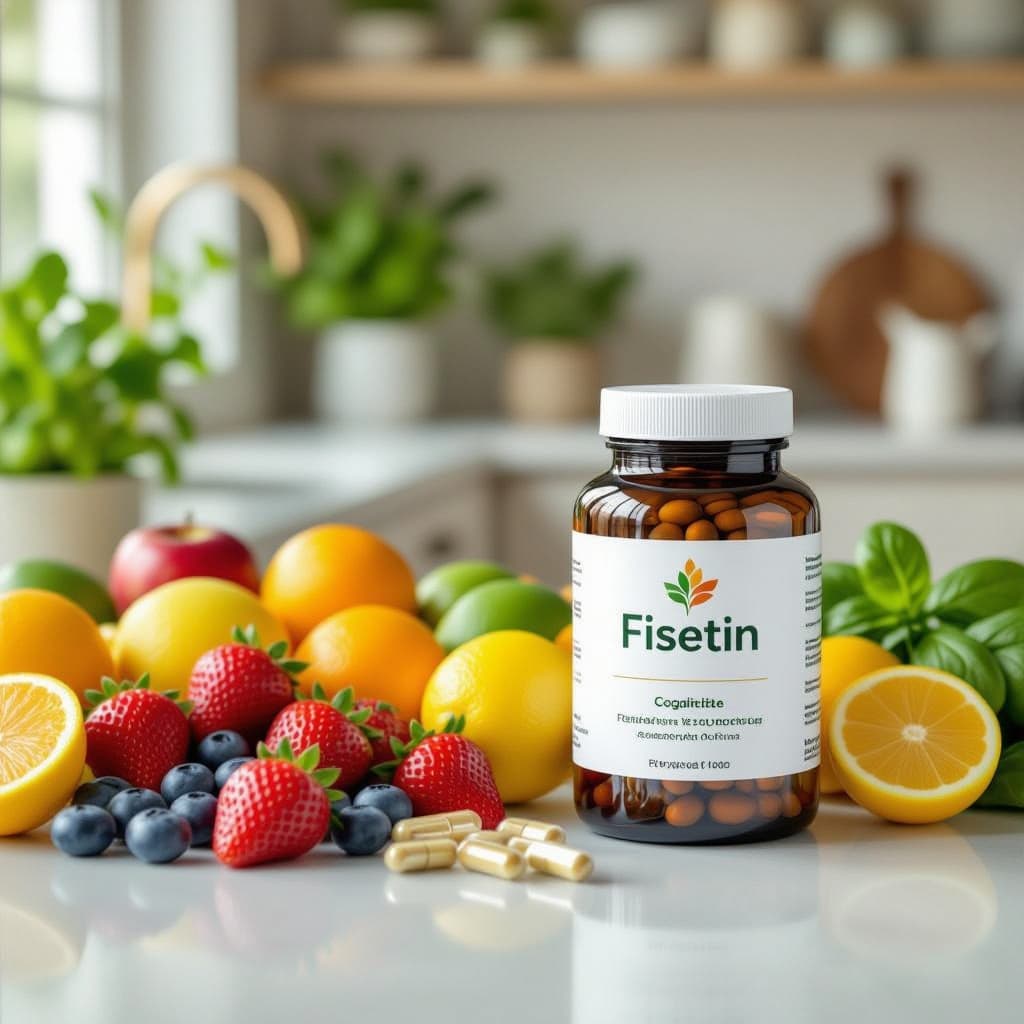
Fisetin is a naturally occurring flavonoid found in several fruits and vegetables like strawberries, apples, and cucumbers It's known for its potent antioxidant, anti-inflammatory, and neuroprotective properties, making it popular among those seeking cognitive support and anti-aging benefits.
Supplement Summary
| Name | Fisetin |
|---|---|
| Category | Antioxidants |
| Main Uses |
|
| Effectiveness | Moderate to High, depending on individual health status and goals |
| Common Dosage | 100-600 mg per day |
| Price Range | $15-30 per month |
| Forms Available | Capsules Powder |
Pros
- ✅ Potent antioxidant
- ✅ May improve cognitive function
- ✅ Potential anti-aging benefits
- ✅ Natural and plant-based
- ✅ Few reported side effects
Cons / Side Effects
- ❌ More human studies needed
- ❌ Potentially interacts with certain medications
- ❌ Not regulated by the FDA
What Is Fisetin?
Fisetin is a naturally occurring flavonoid found in several fruits and vegetables like strawberries, apples, and cucumbers. It's known for its potent antioxidant, anti-inflammatory, and neuroprotective properties, making it popular among those seeking cognitive support and anti-aging benefits.
How It Works
Fisetin works by neutralizing harmful free radicals in the body, reducing oxidative stress and inflammation. It also enhances nerve cell function and growth, potentially improving cognitive function and memory.
Who It's Best For
Fisetin is best for individuals seeking to improve their cognitive function, reduce inflammation, and those interested in natural anti-aging supplements.
Who Should Avoid It
People allergic to Fisetin or its source foods should avoid it. It may also not be suitable for those on certain medications, particularly blood thinners. Always consult with a healthcare professional before starting any new supplement.
Dosage & Usage Tips
The typical recommended dosage of Fisetin is between 100-600 mg per day, taken with food to enhance absorption. Always start with a lower dose and monitor your body's response.
Buying Advice & Quality Tips
Choose Fisetin supplements from reputable brands that test their products for quality and purity. Look for products with minimal fillers or additives.
Price & Value
Fisetin is moderately priced compared to other similar supplements. Given its potential benefits, it may provide good value for those seeking cognitive and anti-aging support.
Final Verdict
Fisetin is a promising supplement with a range of potential health benefits. However, as with all supplements, it's important to consider individual health needs and consult with a healthcare provider before use.
Additional Clinical Research
I have identified three published scientific studies that specifically investigate the effects of fisetin. Below is a summary of each study, categorized by health benefit, along with an assessment of the research quality.
RESEARCH SUMMARY: Fisetin
KEY FINDINGS:
Neuroprotection
- Fisetin, when combined with recombinant tissue plasminogen activator (rt-PA), extended the therapeutic window for treating ischemic stroke and improved patient outcomes.
- In a double-blind randomized placebo-controlled clinical trial involving 192 patients, those receiving fisetin and rt-PA showed significantly lower National Institutes of Health Stroke Scale (NIHSS) scores compared to the placebo group.
Source: Wang et al. (2019)
View Research
https://pubmed.ncbi.nlm.nih.gov/31434498/
Anti-Aging
- Fisetin demonstrated senolytic activity, reducing senescent cell burden and extending healthspan and lifespan in aged mice.
- In a study with aged wild-type mice, intermittent fisetin treatment reduced markers of cellular senescence and improved tissue function.
Source: Yousefzadeh et al. (2018)
View Research
https://pubmed.ncbi.nlm.nih.gov/30279143/
Inflammatory Conditions
- Fisetin was evaluated for its potential to alleviate symptoms of Gulf War Illness (GWI), a chronic multi-symptom condition.
- In a placebo-controlled, pseudo-randomized crossover trial involving 21 male veterans, fisetin did not show significant improvement in GWI symptoms compared to placebo.
Source: Hodgin et al. (2021)
View Research
https://pubmed.ncbi.nlm.nih.gov/33802381/
RESEARCH QUALITY ASSESSMENT:
- The studies were published in peer-reviewed journals, indicating a level of credibility and scientific rigor.
- Sample sizes varied, with the stroke study involving 192 patients, providing robust data, while the GWI study had a smaller cohort of 21 participants, which may limit generalizability.
- Methodologies included randomized controlled trials and animal studies, offering a range of evidence but also highlighting the need for more extensive human trials.
- Further research is necessary to confirm these findings, especially in larger and more diverse human populations, and to explore the mechanisms underlying fisetin's effects.