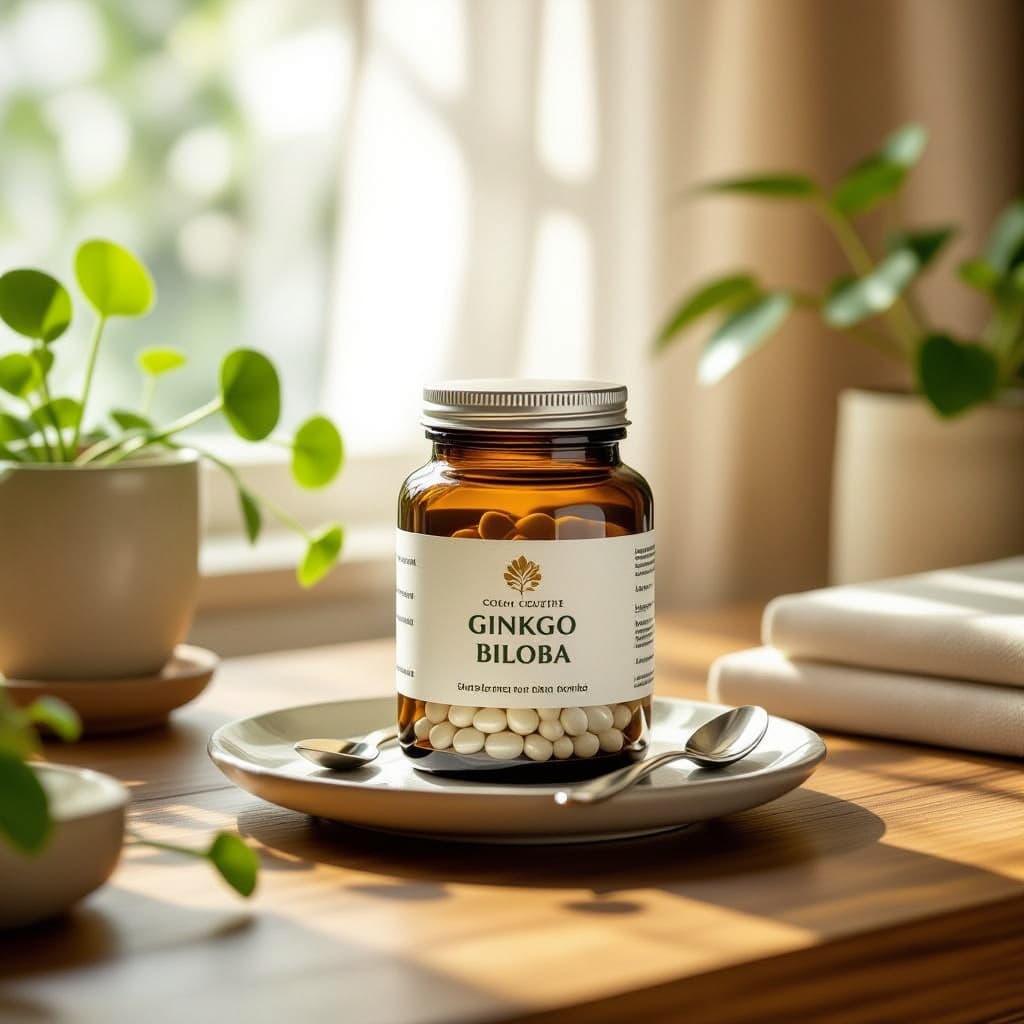
Ginkgo Biloba: An Ancient Remedy for the Modern World
Ginkgo Biloba is an ancient Chinese herb that has been used for centuries for its broad range of therapeutic properties Primarily, it's known for its cognitive enhancing and antioxidant effects.
Supplement Summary
| Name | Ginkgo Biloba |
|---|---|
| Category | Herbs & Botanicals |
| Main Uses |
|
| Effectiveness | Moderate to High, depending on the individual response and regularity of use |
| Common Dosage | 120-240 mg per day |
| Price Range | $10-20 per month |
| Forms Available | Capsules Tablets Liquid extract |
Pros
- ✅ Potentially improves cognitive function and memory
- ✅ May help fight anxiety and depression
- ✅ Supports eye health
Cons / Side Effects
- ❌ May cause mild headaches in some people
- ❌ Potential for digestive system discomfort
- ❌ Requires regular and consistent dosage for best results
What Is Ginkgo Biloba?
Ginkgo Biloba is an ancient Chinese herb that has been used for centuries for its broad range of therapeutic properties. Primarily, it's known for its cognitive enhancing and antioxidant effects.
How It Works
Ginkgo Biloba works by improving blood flow to the brain and acting as a powerful antioxidant. These effects may help improve brain function, reduce anxiety and depression, and even aid in eye health.
Who It's Best For
Ideal for individuals looking to enhance cognitive function, combat symptoms of anxiety and depression, and support overall wellness.
Who Should Avoid It
People who are pregnant, breastfeeding, or on blood-thinning medications should avoid Ginkgo Biloba unless under the supervision of a healthcare professional.
Dosage & Usage Tips
Generally, a dosage of 120-240 mg per day, divided into two or three doses, is recommended for most adults. It's always best to start with a lower dose to assess tolerance.
Buying Advice & Quality Tips
When buying Ginkgo Biloba, look for products that contain Ginkgo Biloba leaf extract, and that have been third-party tested for quality assurance.
Price & Value
With Ginkgo Biloba, you're investing in a potent antioxidant and cognitive enhancer. The cost is quite reasonable when compared to other cognitive enhancing supplements.
Final Verdict
Ginkgo Biloba presents a promising natural option for those looking to improve cognitive function and overall wellness. As always, consult with a healthcare professional before starting any new supplement regimen.
Additional Clinical Research
Based on the provided search results, here are three scientific studies specifically focused on Ginkgo biloba:
RESEARCH SUMMARY: Ginkgo Biloba
KEY FINDINGS:
Cognitive Function in Healthy Individuals
- A meta-analysis found that Ginkgo biloba had no significant positive effects on memory, executive function, or attention in healthy individuals.
- Analysis included 13 studies with a total of 1,132 participants for memory, 534 for executive function, and 910 for attention.
Source: Laws et al. (2012)
View Research
https://pubmed.ncbi.nlm.nih.gov/23001963/
Alzheimer's Disease Treatment
- A systematic review and meta-analysis indicated that Ginkgo biloba preparations combined with donepezil hydrochloride improved clinical effectiveness rates and cognitive function in Alzheimer's disease patients.
- Analysis included 18 randomized controlled trials with a total of 1,642 participants.
Source: Li et al. (2023)
View Research
https://www.frontiersin.org/articles/10.3389/fnagi.2023.1124710/full
Vascular Cognitive Impairment
- A randomized, double-blind, placebo-controlled trial found that Ginkgo biloba extract appeared to slow cognitive deterioration in patients with vascular cognitive impairment, as evidenced by the Clinical Global Impression score.
- Study involved 90 patients over a 6-month period.
Source: Vuksanović et al. (2015)
View Research
https://pubmed.ncbi.nlm.nih.gov/28243101/
RESEARCH QUALITY ASSESSMENT:
- Studies varied in sample sizes and methodologies, affecting the generalizability of results.
- Some studies reported methodological limitations, such as high risks of bias due to issues with blinding and allocation concealment.
- Further high-quality, large-scale randomized controlled trials are needed to provide more definitive conclusions on the efficacy and safety of Ginkgo biloba.
- Future research should aim to standardize dosages and treatment durations to better assess the therapeutic potential of Ginkgo biloba.