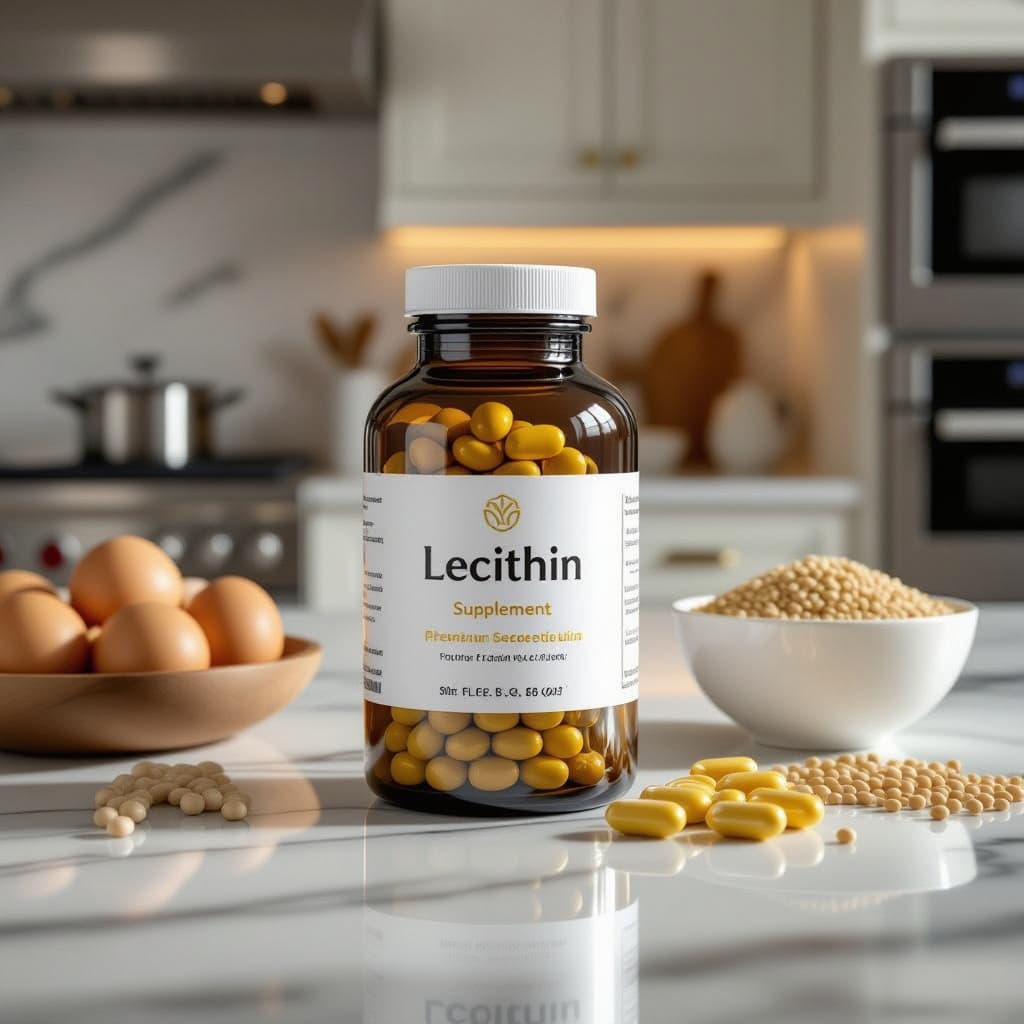
Lecithin: The Essential Fatty Acid That Supports Brain and Heart Health
Lecithin is a type of fat, or phospholipid, that is crucial for the functioning of our body's cells It is naturally present in a variety of foods, including eggs, soybeans, and whole grains, and can also be taken as a supplement.
Supplement Summary
| Name | Lecithin |
|---|---|
| Category | Essential Fatty Acids (EFAs) |
| Main Uses |
|
| Effectiveness | High, based on numerous scientific studies |
| Common Dosage | 1-3 grams daily |
| Price Range | $-$$ |
| Forms Available | Capsules Softgels Powder |
Pros
- ✅ Supports brain function
- ✅ Helps regulate cholesterol levels
- ✅ Supports liver health
- ✅ Easily integrated into diet
- ✅ Minimal side effects in recommended doses
Cons / Side Effects
- ❌ May cause stomach upset
- ❌ Can increase cholesterol if overconsumed
- ❌ Not suitable for those allergic to soy or eggs
What Is Lecithin?
Lecithin is a type of fat, or phospholipid, that is crucial for the functioning of our body's cells. It is naturally present in a variety of foods, including eggs, soybeans, and whole grains, and can also be taken as a supplement.
How It Works
Lecithin works by providing choline, a nutrient that is used by the body to produce acetylcholine, a neurotransmitter essential for brain function. It also helps to transport fats in the body, aiding in heart health by helping to regulate cholesterol levels.
Who It's Best For
Lecithin is best for individuals looking to support their brain health, regulate their cholesterol levels, or support their liver health.
Who Should Avoid It
People who are allergic to soy or eggs should avoid lecithin, as it is often derived from these foods. Additionally, those with high cholesterol should be cautious with lecithin, as overconsumption can increase cholesterol levels.
Dosage & Usage Tips
The typical recommended dosage of lecithin is 1-3 grams daily, and it can be consumed with or without food.
Buying Advice & Quality Tips
When buying lecithin, look for products that are non-GMO and free from unnecessary fillers or additives. If you have a soy or egg allergy, look for lecithin derived from other sources, such as sunflower lecithin.
Price & Value
Lecithin is generally affordable and provides good value for the price, especially when considering the benefits it provides for brain and heart health.
Final Verdict
Overall, lecithin is a beneficial supplement that can support brain function, regulate cholesterol levels, and support liver health. However, as with any supplement, it's important to speak with a healthcare provider before starting a new supplement regimen.
Additional Clinical Research
RESEARCH SUMMARY: Lecithin
KEY FINDINGS:
Cognitive Function
- A double-blind, placebo-controlled trial investigated the effects of high-dose lecithin (20-25 g/day) in 51 patients with Alzheimer's disease over six months. The study found no significant differences between the lecithin and placebo groups. However, a subgroup of older patients with intermediate plasma choline levels showed some improvement, suggesting a potential "therapeutic window" for lecithin's effects in this population.
- Study details: 51 participants; six-month duration; monitored plasma choline levels.
Source: Thorne et al. (1985)
View Research
https://pubmed.ncbi.nlm.nih.gov/3897460/
Fatigue and Menopausal Symptoms
- A randomized, double-blind, placebo-controlled study assessed the impact of soy lecithin on fatigue and menopausal symptoms in 96 middle-aged women over eight weeks. The high-dose lecithin group (1200 mg/day) experienced significant improvements in vigor, diastolic blood pressure, and cardio-ankle vascular index compared to the placebo group.
- Study details: 96 participants; eight-week duration; evaluated fatigue, menopausal symptoms, and cardiovascular parameters.
Source: Terauchi et al. (2018)
View Research
https://nutritionj.biomedcentral.com/articles/10.1186/s12937-018-0314-5
Ulcerative Colitis
- A meta-analysis of three clinical studies involving 160 patients with ulcerative colitis evaluated the efficacy of enteric lecithin (phosphatidylcholine) treatment. The analysis demonstrated that lecithin significantly improved remission rates, clinical and endoscopic outcomes, histology, and quality of life compared to placebo. The remission achieved was maintained longer with enteric lecithin, and the side effect profile was comparable to placebo.
- Study details: Meta-analysis of three studies; 160 participants; assessed remission rates, clinical outcomes, histology, and quality of life.
Source: Stremmel et al. (2022)
View Research
https://pubmed.ncbi.nlm.nih.gov/35831742/
RESEARCH QUALITY ASSESSMENT:
- The studies were well-designed, employing randomized, double-blind, placebo-controlled methodologies, enhancing the reliability of the findings.
- Sample sizes varied, with some studies having limited participants, which may affect the generalizability of the results.
- Some studies reported no significant effects of lecithin, indicating variability in outcomes and suggesting that lecithin's efficacy may depend on specific conditions or subpopulations.
- Further large-scale, long-term studies are needed to conclusively determine the therapeutic potential and safety profile of lecithin across different health conditions.