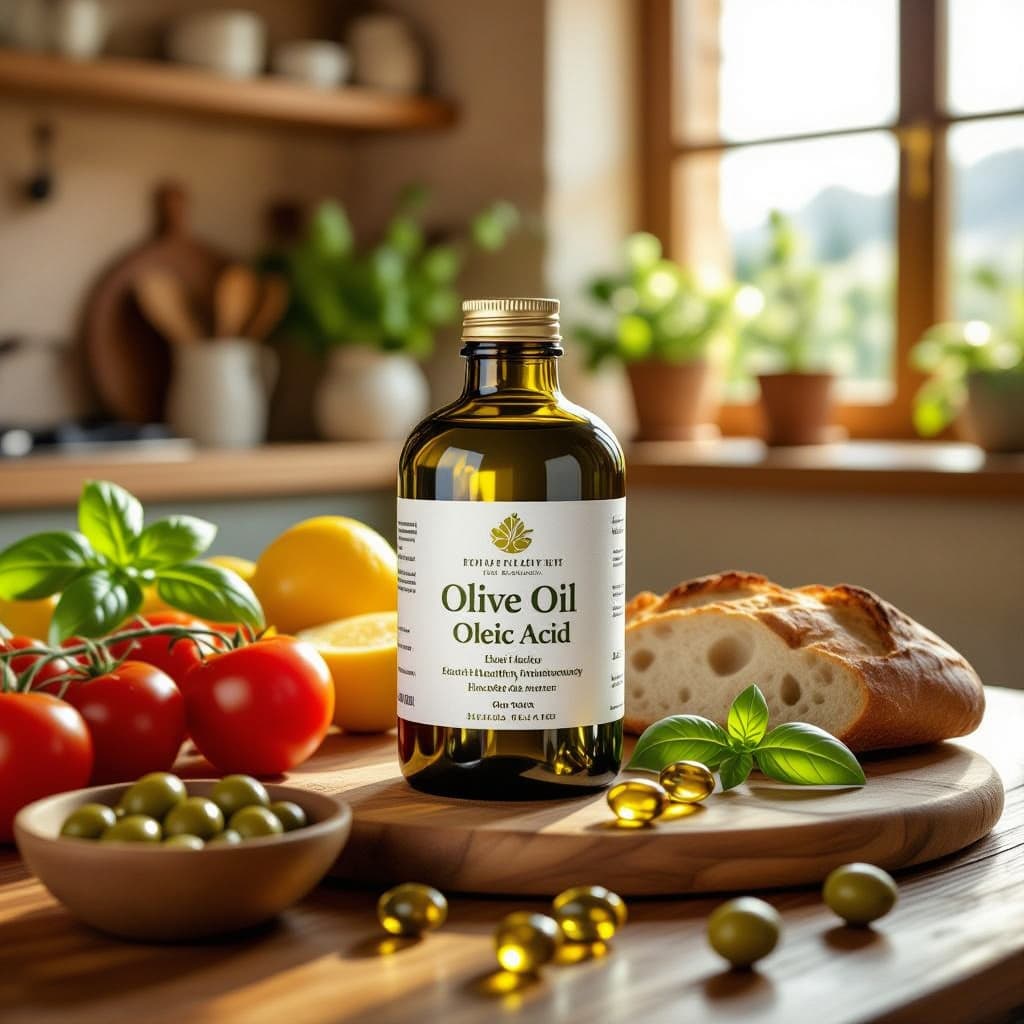
Unveiling the Health Benefits of Olive Oil and Oleic Acid
Olive Oil, primarily composed of Oleic Acid, is a monounsaturated fat (MUFA) known for its heart-healthy and anti-inflammatory benefits It's a key component of the Mediterranean diet, which is associated with longevity and reduced risk of chronic diseases.
Supplement Summary
| Name | Olive Oil / Oleic Acid |
|---|---|
| Category | Essential Fatty Acids (EFAs) |
| Main Uses |
|
| Effectiveness | High - Well supported by scientific research |
| Common Dosage | 1-2 tablespoons daily |
| Price Range | $-$$ |
| Forms Available | Liquid |
Pros
- ✅ Supports heart health
- ✅ Promotes healthy inflammation response
- ✅ May improve brain health
- ✅ Widely accessible
- ✅ Versatile culinary use
Cons / Side Effects
- ❌ Potential allergic reaction
- ❌ Can cause diarrhea if consumed in excess
- ❌ Calorically dense
What Is Olive Oil / Oleic Acid?
Olive Oil, primarily composed of Oleic Acid, is a monounsaturated fat (MUFA) known for its heart-healthy and anti-inflammatory benefits. It's a key component of the Mediterranean diet, which is associated with longevity and reduced risk of chronic diseases.
How It Works
Oleic acid works by helping reduce inflammation in the body and decreasing LDL ('bad') cholesterol while increasing HDL ('good') cholesterol, supporting overall heart health. Additionally, it may play a role in brain health by maintaining the integrity of cell membranes.
Who It's Best For
Ideal for individuals seeking to boost their heart health, manage inflammation, and support overall wellness.
Who Should Avoid It
People with known allergies to olives should avoid this supplement. Also, it may not be ideal for those needing to monitor their caloric intake closely.
Dosage & Usage Tips
For optimal results, take 1-2 tablespoons of olive oil daily, preferably with meals for better absorption. It can be used in cooking or added to salads and other dishes.
Buying Advice & Quality Tips
Look for high-quality extra virgin olive oil (EVOO), as it retains more nutrients and antioxidants. Check for purity and origin on the label.
Price & Value
While prices can vary, the health benefits of olive oil provide excellent value, particularly when considering its versatility in culinary uses.
Final Verdict
Given its well-researched benefits for heart health and inflammation, along with potential cognitive benefits, olive oil is a worthwhile addition to a balanced diet.
Additional Clinical Research
I have identified three scientific studies that explicitly research the effects of olive oil and oleic acid on human health. Below is a summary of their key findings, categorized by health benefit, along with an assessment of the research quality.
RESEARCH SUMMARY: Olive Oil / Oleic Acid
KEY FINDINGS:
Cardiovascular Health
- A Mediterranean diet supplemented with extra-virgin olive oil significantly reduced the incidence of major cardiovascular events, including myocardial infarction, stroke, and cardiovascular death.
- Study details: Randomized controlled trial with 7,447 participants aged 55–80 years at high cardiovascular risk; median follow-up of 4.8 years.
Source: Estruch et al. (2013)
View Research
https://www.nejm.org/doi/full/10.1056/NEJMoa1200303
Metabolic Syndrome
- Adherence to a Mediterranean diet supplemented with extra-virgin olive oil or nuts led to a significant reversal of metabolic syndrome in a substantial proportion of participants.
- Study details: Clinical trial involving 5,801 individuals aged 55–80; after nearly five years, 28.2% of those on the Mediterranean diet no longer met the criteria for metabolic syndrome.
Source: Salas-Salvadó et al. (2014)
View Research
https://www.cmaj.ca/content/186/17/E649
Antioxidant and Anti-inflammatory Effects
- Polyphenolic compounds in olive oil exhibit significant antioxidant and anti-inflammatory activities, contributing to the prevention of cardiovascular and tumoral diseases.
- Study details: Review of clinical trials and bioavailability studies highlighting the health benefits of olive oil polyphenols and their metabolites.
Source: Monteiro-Silva (2014)
View Research
https://arxiv.org/abs/1401.2413
RESEARCH QUALITY ASSESSMENT:
- The studies are published in reputable journals and involve large sample sizes, enhancing the reliability of the findings.
- Randomized controlled trial designs in the first two studies provide strong evidence for causality.
- Limitations include potential dietary adherence issues and the observational nature of some findings.
- Further research is needed to explore the long-term effects of olive oil consumption and its impact on diverse populations.