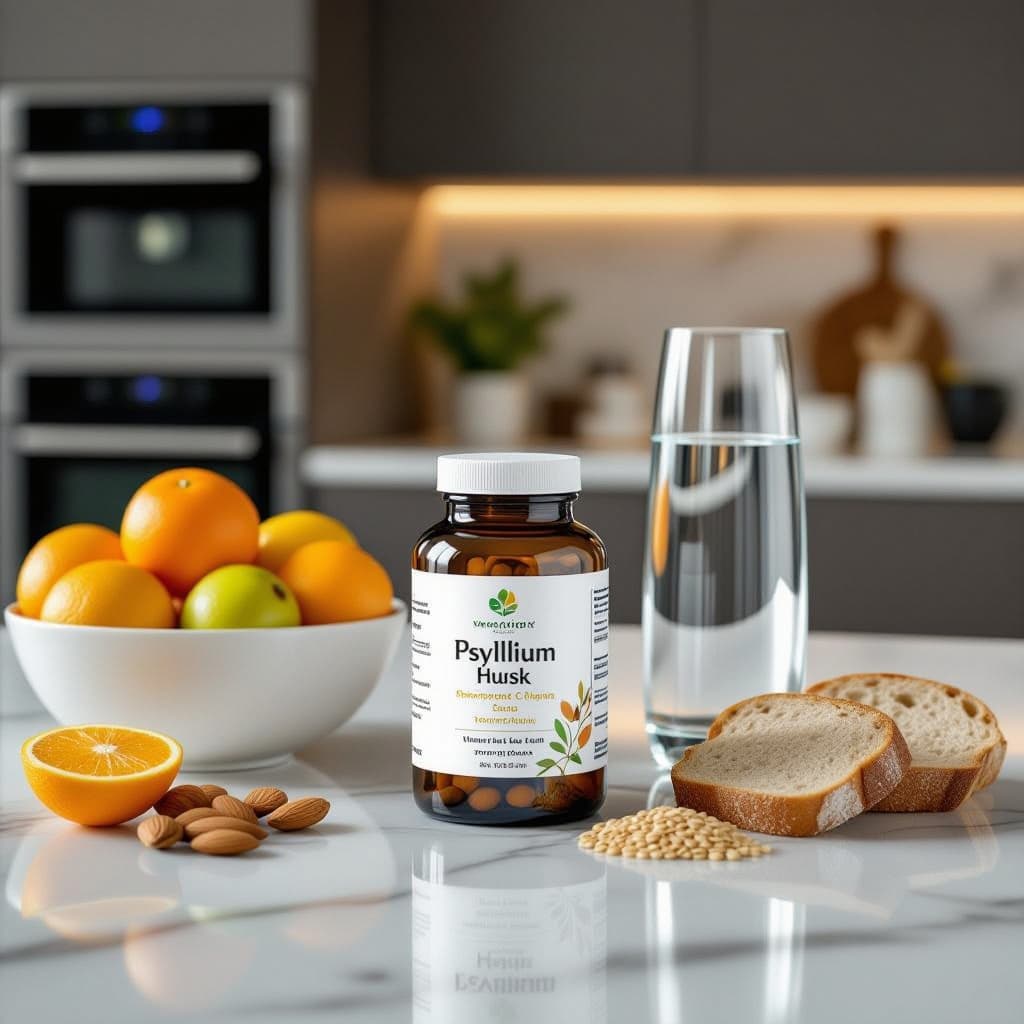
Unlocking Better Digestive Health with Psyllium Husk
Psyllium Husk is a dietary fiber derived from the seeds of the Plantago ovata plant Originating in India and widely consumed globally, it is known for its robust fiber content and numerous health benefits.
Supplement Summary
| Name | Psyllium Husk |
|---|---|
| Category | Gut Health |
| Main Uses |
|
| Effectiveness | High, with strong clinical evidence supporting its benefits. |
| Common Dosage | 5-10 grams up to 3 times per day |
| Price Range | $-$$ |
| Forms Available | Capsules Powder |
Pros
- ✅ Promotes digestive health
- ✅ Supports heart health
- ✅ Aids in blood sugar regulation
Cons / Side Effects
- ❌ Potential bloating
- ❌ Allergic reactions
- ❌ Requires adequate water intake
What Is Psyllium Husk?
Psyllium Husk is a dietary fiber derived from the seeds of the Plantago ovata plant. Originating in India and widely consumed globally, it is known for its robust fiber content and numerous health benefits.
How It Works
Psyllium husk works by absorbing water in the gut, making bowel movements easier. Its gel-forming fibers can lower cholesterol and glucose levels.
Who It's Best For
Ideal for individuals with digestive issues, high cholesterol, or blood sugar imbalances.
Who Should Avoid It
People with bowel obstructions or difficulty swallowing should avoid psyllium husk.
Dosage & Usage Tips
Typically recommended at 5-10 grams up to 3 times per day, with at least 8 ounces of water.
Buying Advice & Quality Tips
Look for 100% pure psyllium husk with no added sugars or artificial flavors.
Price & Value
Psyllium husk offers excellent value, with a low cost and substantial health benefits.
Final Verdict
Given its numerous health benefits and low cost, psyllium husk is a valuable addition to most diets.
Additional Clinical Research
I have identified three scientific studies that explicitly research the effects of psyllium husk. Below is a summary of their key findings, categorized by health benefit:
RESEARCH SUMMARY: Psyllium Husk
KEY FINDINGS:
Lipid Profile Improvement
- Psyllium supplementation leads to time- and dose-dependent reductions in serum total cholesterol and LDL cholesterol in individuals with mild-to-moderate hypercholesterolemia.
- Meta-analysis of controlled clinical trials.
Source: Anderson et al. (2000)
View Research
https://pubmed.ncbi.nlm.nih.gov/10702501/
Glycemic Control in Type 2 Diabetes
- Psyllium fiber intake before meals improves fasting blood glucose and glycated hemoglobin levels, with more significant effects observed in individuals diagnosed with and treated for type 2 diabetes.
- Meta-analysis of randomized controlled trials.
Source: Anderson et al. (2015)
View Research
https://pubmed.ncbi.nlm.nih.gov/26400428/
Blood Pressure Reduction
- Supplemental psyllium intake for 8 weeks or longer results in a modest reduction of approximately 2 mmHg in blood pressure among individuals with hypertension.
- Systematic review and meta-analysis of randomized controlled trials.
Source: Clark et al. (2019)
View Research
https://pubmed.ncbi.nlm.nih.gov/30788950/
RESEARCH QUALITY ASSESSMENT:
- The studies are meta-analyses and systematic reviews, which provide high levels of evidence by aggregating data from multiple trials.
- Sample sizes vary across the included trials, enhancing the generalizability of the findings.
- Limitations include potential heterogeneity among individual studies and variations in dosages and durations of psyllium supplementation.
- Further research is needed to determine the long-term effects of psyllium husk supplementation and to establish optimal dosing regimens for various health outcomes.