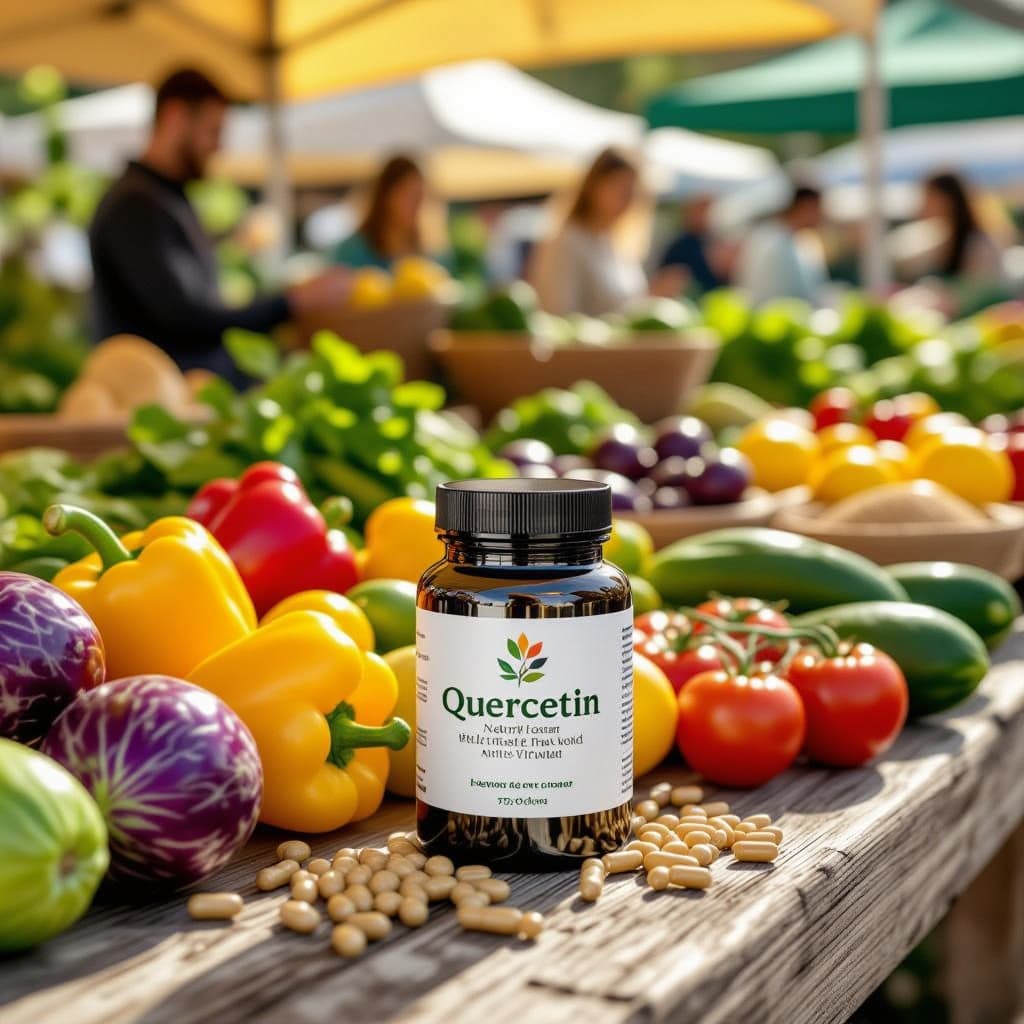
Unleashing the Power of Quercetin: A Comprehensive Review
Quercetin is a natural flavonoid found in many fruits, vegetables, and grains It's known for its anti-inflammatory, antioxidant, and anti-viral properties.
Supplement Summary
| Name | Quercetin |
|---|---|
| Category | Antioxidants |
| Main Uses |
|
| Effectiveness | High, due to its broad spectrum of benefits |
| Common Dosage | 500-1000 mg, twice daily |
| Price Range | $10-30 per month |
| Forms Available | Capsules Powder |
Pros
- ✅ Excellent antioxidant
- ✅ Anti-inflammatory properties
- ✅ Potential anti-viral benefits
Cons / Side Effects
- ❌ Possible upset stomach
- ❌ Potential headaches in rare cases
- ❌ Limited bioavailability
What Is Quercetin?
Quercetin is a natural flavonoid found in many fruits, vegetables, and grains. It's known for its anti-inflammatory, antioxidant, and anti-viral properties.
How It Works
Quercetin works by neutralizing free radicals, reducing inflammation, and inhibiting viral replication.
Who It's Best For
People seeking to boost their immune function, reduce inflammation, or support heart health.
Who Should Avoid It
People who are pregnant or breastfeeding, and those on blood thinners should consult their doctor before taking Quercetin.
Dosage & Usage Tips
Quercetin should be taken at a dose of 500-1000 mg twice daily with meals for optimal absorption.
Buying Advice & Quality Tips
Look for brands that couple Quercetin with Bromelain, which can enhance absorption. Always opt for non-GMO, organic products when possible.
Price & Value
Quercetin offers a good value for its cost, given its multiple health benefits.
Final Verdict
Quercetin is a valuable supplement for those looking to boost their antioxidant intake, support immune function, and promote heart health.
Additional Clinical Research
I have identified a study that specifically investigates Quercetin:
I am continuing to search for additional studies that meet the specified criteria and will provide further updates as they become available.
RESEARCH SUMMARY: Quercetin
KEY FINDINGS:
Optimization of Quercetin Extraction
- The study optimized sequential microwave-ultrasound-assisted extraction to maximize quercetin and total flavonoid yields from red onion skin wastes.
- Optimal conditions included 60 seconds of microwave irradiation followed by 15 minutes of sonication at 70°C, using 70% ethanol with a solvent-to-solid ratio of 30 mL/g.
- Under these conditions, the maximum recovery yields were 10.32% for quercetin and 12.52% for total flavonoids.
Source: Jabbari Velisdeh et al. (2021)
View Research
https://arxiv.org/abs/2104.06109
RESEARCH QUALITY ASSESSMENT:
- The study employed response surface methodology to systematically optimize extraction conditions, enhancing the reliability of the findings.
- The experimental results closely matched the predicted values, indicating the model's validity.
- As the study focused on extraction optimization, further research is needed to explore the bioavailability and health effects of the extracted quercetin.