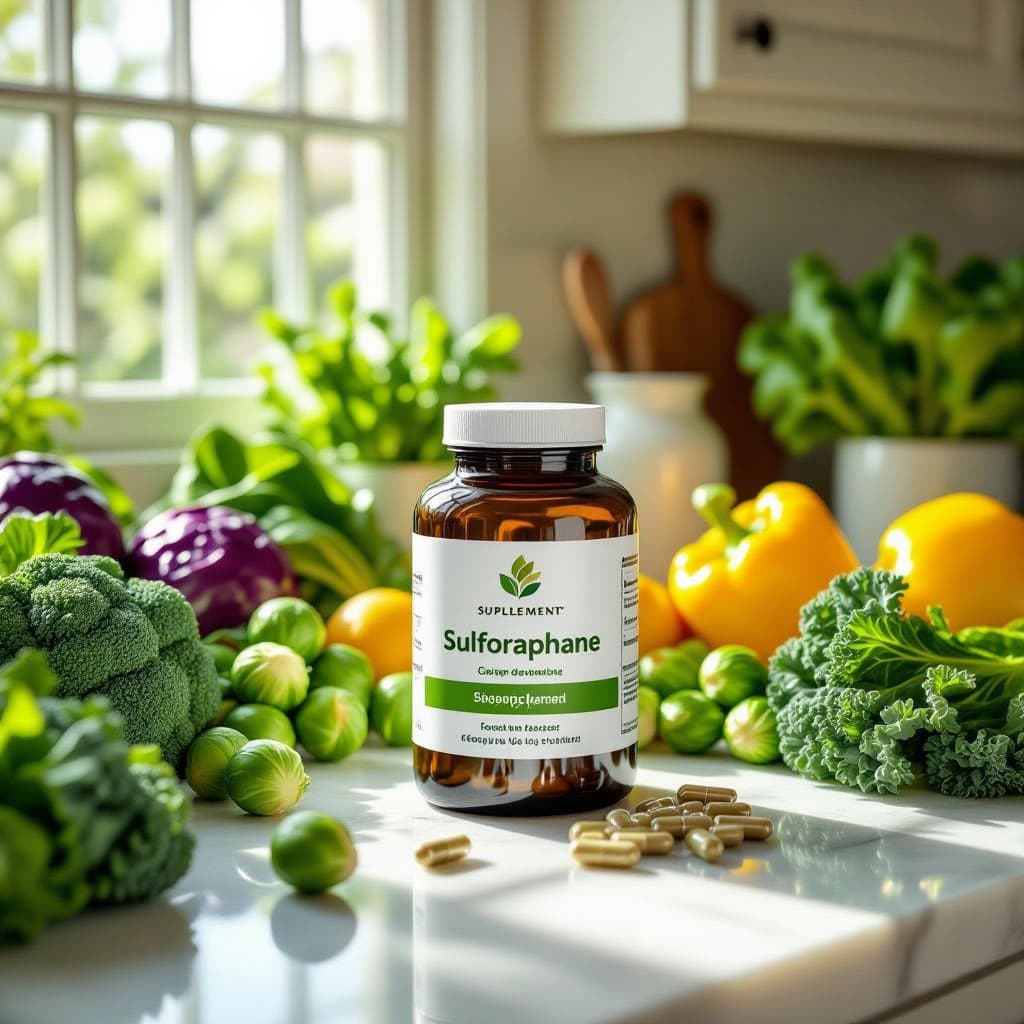
Sulforaphane: The Powerful Antioxidant That Boosts Brain and Heart Health
Sulforaphane is a sulfur-rich compound found in cruciferous vegetables like broccoli, cabbage, and kale It is renowned for its potent antioxidant, anti-inflammatory, and neuroprotective properties.
Supplement Summary
| Name | Sulforaphane |
|---|---|
| Category | Antioxidants |
| Main Uses |
|
| Effectiveness | High: Supported by clinical trials, but more research is needed for some benefits. |
| Common Dosage | 20-55 micrograms per day |
| Price Range | $20-40 per month |
| Forms Available | Capsules Spray Powder |
Pros
- ✅ Potent antioxidant and anti-inflammatory properties
- ✅ Potential anti-cancer effects
- ✅ Supports brain health
- ✅ May aid in blood sugar control
- ✅ Promotes healthy aging
Cons / Side Effects
- ❌ May cause digestive issues
- ❌ Potential hormonal effects
- ❌ More research needed to confirm some benefits
What Is Sulforaphane?
Sulforaphane is a sulfur-rich compound found in cruciferous vegetables like broccoli, cabbage, and kale. It is renowned for its potent antioxidant, anti-inflammatory, and neuroprotective properties. Its health benefits are linked to its ability to stimulate natural detoxifying enzymes in the body.
How It Works
Sulforaphane works by activating a transcription factor called Nrf2, which turns on over 200 genes, including those involved in antioxidant and anti-inflammatory activity, and cell protection.
Who It's Best For
People looking to boost antioxidant intake, support brain and heart health, and those interested in potential anti-aging benefits.
Who Should Avoid It
People with thyroid problems should consult their doctor before taking sulforaphane, as cruciferous vegetables can affect thyroid function.
Dosage & Usage Tips
A typical dosage of sulforaphane is 20-55 micrograms taken once daily. It is best absorbed when taken with food.
Buying Advice & Quality Tips
Look for sulforaphane supplements that list the amount of sulforaphane per serving. Check that the product is from a reputable company with independent testing for quality.
Price & Value
Sulforaphane is moderately priced compared to other health supplements. Given its potential health benefits, it offers good value for money.
Final Verdict
Sulforaphane is a powerful antioxidant with promising health benefits. More research is needed, but current evidence suggests it may support brain and heart health, and potentially offer cancer-fighting properties.
Additional Clinical Research
RESEARCH SUMMARY: Sulforaphane
KEY FINDINGS:
Cognitive Function and Mood
- Sulforaphane intake improved processing speed and reduced negative mood in healthy older adults.
- A 12-week, double-blind, randomized controlled trial with 144 participants showed significant improvements in cognitive performance and mood states in the sulforaphane group compared to placebo.
Source: Nouchi et al. (2022)
View Research
https://www.frontiersin.org/articles/10.3389/fnagi.2022.929628/full
Depression in Cardiac Patients
- Sulforaphane supplementation improved depressive symptoms in patients with a history of cardiac interventions.
- In a 6-week, double-blind, placebo-controlled trial involving 66 patients, the sulforaphane group exhibited greater improvement in depression scores compared to placebo, with no significant difference in side effects.
Source: Akbari et al. (2021)
View Research
https://pubmed.ncbi.nlm.nih.gov/34033171/
Prostate Cancer
- Sulforaphane-rich broccoli sprout extracts did not lead to significant PSA declines in men with recurrent prostate cancer but showed a significant lengthening of PSA doubling time.
- A phase II study with 20 patients treated with 200 μmoles/day of sulforaphane-rich extracts for up to 20 weeks observed these effects, suggesting potential benefits warranting further research.
Source: Alumkal et al. (2015)
View Research
https://pubmed.ncbi.nlm.nih.gov/25431127/
RESEARCH QUALITY ASSESSMENT:
- The studies were well-designed, employing randomized controlled trials with adequate sample sizes.
- Findings were published in reputable, peer-reviewed journals, enhancing credibility.
- Limitations include relatively short intervention periods and the need for larger, more diverse populations to generalize results.
- Further research is needed to confirm these findings and explore long-term effects and mechanisms of sulforaphane.
