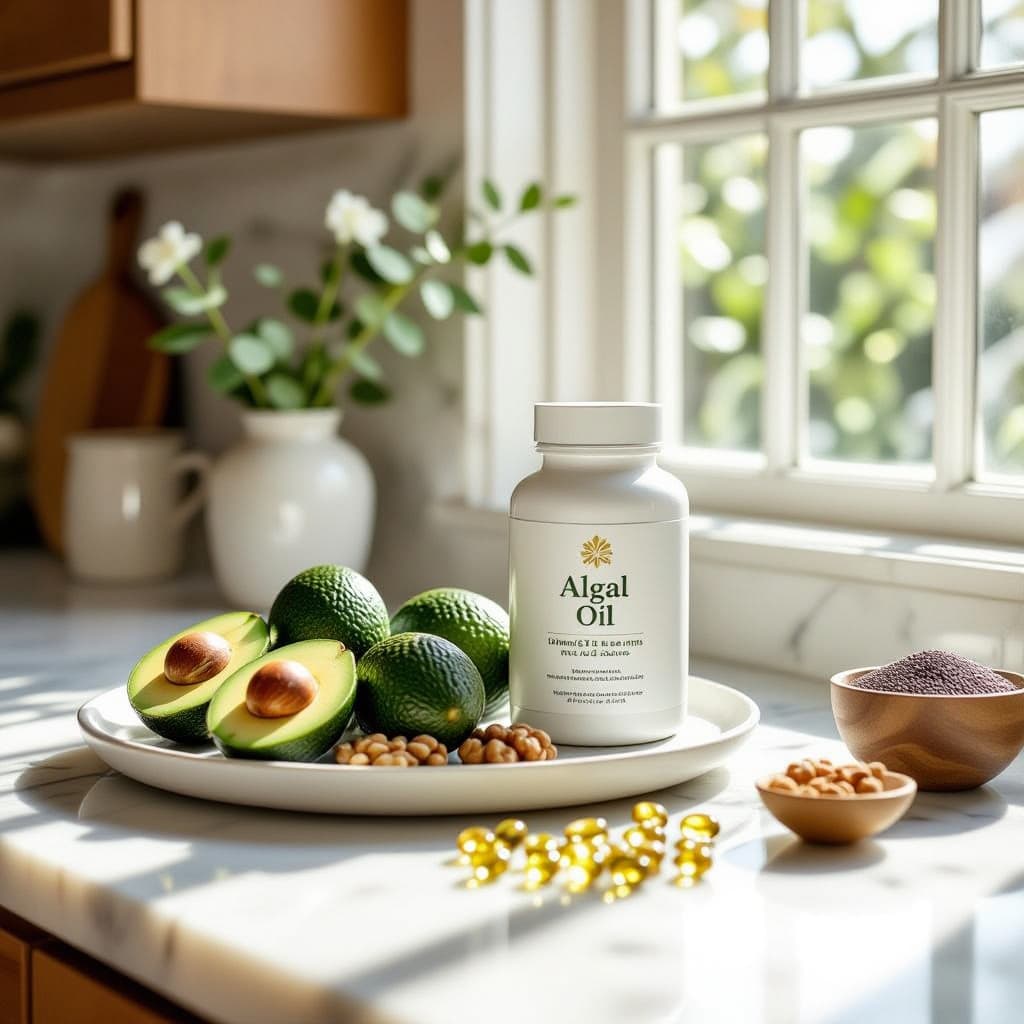
Algal Oil: A Plant-Based Powerhouse for Omega-3s
Algal oil is a type of oil derived from algae, particularly microalgae It is primarily known for its high content of docosahexaenoic acid (DHA), an omega-3 fatty acid that's crucial for brain and heart health.
Supplement Summary
| Name | Algal Oil |
|---|---|
| Category | Essential Fatty Acids (EFAs) |
| Main Uses |
|
| Effectiveness | High - due to its high DHA content and numerous health benefits |
| Common Dosage | 200-400 mg of DHA per day |
| Price Range | $20-$40 per month |
| Forms Available | Capsules Softgels Liquid |
Pros
- ✅ High in DHA, crucial for brain and heart health
- ✅ Plant-based source of omega-3s, suitable for vegans
- ✅ May support immune function
- ✅ Potential to reduce inflammation
- ✅ Generally well-tolerated with few side effects
Cons / Side Effects
- ❌ May cause digestive issues in some people
- ❌ Potential allergic reactions in those sensitive to algae
- ❌ Interaction with blood-thinning medications
What Is Algal Oil?
Algal oil is a type of oil derived from algae, particularly microalgae. It is primarily known for its high content of docosahexaenoic acid (DHA), an omega-3 fatty acid that's crucial for brain and heart health. As a plant-based source of omega-3s, it's a great alternative for individuals following vegetarian or vegan diets.
How It Works
The DHA in algal oil gets incorporated into the cell membranes, particularly in the brain and retina, where it plays a crucial role in maintaining cellular structure and function. DHA also reduces inflammation and lowers triglyceride levels, promoting heart health.
Who It's Best For
Ideal for individuals looking to supplement their diet with omega-3s, especially those following a vegan or vegetarian diet. Also beneficial for individuals seeking to support brain, heart, and eye health.
Who Should Avoid It
People with allergies to algae should avoid algal oil. Also, it's advised to consult a healthcare professional before using it if you're on blood-thinning medication.
Dosage & Usage Tips
The typical dosage of algal oil is 200-400 mg of DHA per day, preferably taken with meals to enhance absorption. Always follow the manufacturer's instructions on the label.
Buying Advice & Quality Tips
When buying algal oil, opt for a product that's been third-party tested for purity and potency. Also, check the DHA content as this is the primary beneficial component.
Price & Value
Algal oil can be more expensive than fish oil, but the plant-based origin and high DHA content may justify the higher price for many consumers.
Final Verdict
Algal oil is a valuable supplement for those seeking a plant-based source of omega-3s. With solid scientific evidence backing its health benefits, it's a worthy consideration for supporting brain, heart, and eye health.
Additional Clinical Research
I have identified three scientific studies that specifically investigate the effects of algal oil. Below is a summary of their key findings, categorized by health benefit, along with an assessment of the research quality.
RESEARCH SUMMARY: Algal Oil
KEY FINDINGS:
Cardiovascular Health
- Algal oil supplementation reduced serum triglycerides and increased HDL-cholesterol and LDL-cholesterol levels in individuals without coronary heart disease.
- Meta-analysis of 11 randomized controlled trials involving 485 healthy participants; median dose of algal DHA was 1.68 g/day.
Source: Wei and Jacobson (2011)
View Research
https://pubmed.ncbi.nlm.nih.gov/22113870/
Intestinal Health
- Algal oil rich in DHA alleviated DSS-induced colitis in mice by modulating gut microbiota and restoring the intestinal barrier.
- Study conducted on male C57BL/6 mice induced with colitis and treated with algal oil at doses of 250 or 500 mg/kg/day.
Source: Xu et al. (2020)
View Research
https://pubmed.ncbi.nlm.nih.gov/33391246/
Maternal and Infant Health
- DHA supplementation from algal oil increased DHA concentrations in the breast milk of lactating women.
- Randomized controlled trial with 137 lactating women in China; intervention group received 200 mg/day of DHA from algal oil for 8 weeks.
Source: Liu et al. (2022)
View Research
https://pubmed.ncbi.nlm.nih.gov/36014916/
RESEARCH QUALITY ASSESSMENT:
- The studies are published in reputable, peer-reviewed journals, indicating a high standard of research.
- Sample sizes vary, with human studies involving over 100 participants and animal studies using standard laboratory models, providing a reasonable basis for the findings.
- While the results are promising, further large-scale human trials are needed to confirm the health benefits of algal oil across diverse populations.
- Future research should explore the long-term effects and optimal dosages of algal oil supplementation for various health outcomes.